
BAAM AI Blog
Email Copywriting Niches That Convert: A Strategic Framework
Email copywriting isn’t just “writing emails.” It’s a specialized form of persuasive communication that drives sales, builds relationships, and fuels business growth through the inbox. When you pair that craft with a...
Email copywriting isn’t just “writing emails.” It’s a specialized form of persuasive communication that drives sales, builds relationships, and fuels business growth through the inbox. When you pair that craft with a clearly defined niche - a specific industry or audience segment - you build higher rates, better clients, and more reliable workflows than generalist writers typically earn.
Why Email Copywriting Niches Matter
A niche in email copywriting is more than a label. It’s a well-defined audience and context where your writing has a measurable impact. Copywriters who specialize in a niche deeply understand the audience’s pain points, language, buying triggers, and key metrics - and that’s what clients pay premiums for. Specialists command higher rates, face less competition from generalists, and often enjoy recurring engagements because their work directly influences revenue outcomes.
Email marketing still delivers one of the highest ROI channels for businesses of all sizes - which means the demand for high‑quality, niche‑specific email writers remains strong. Whether you’re writing welcome sequences or multi‑email funnels, having an industry focus sharpens your messaging and makes results easier to quantify and sell.
Framework Overview
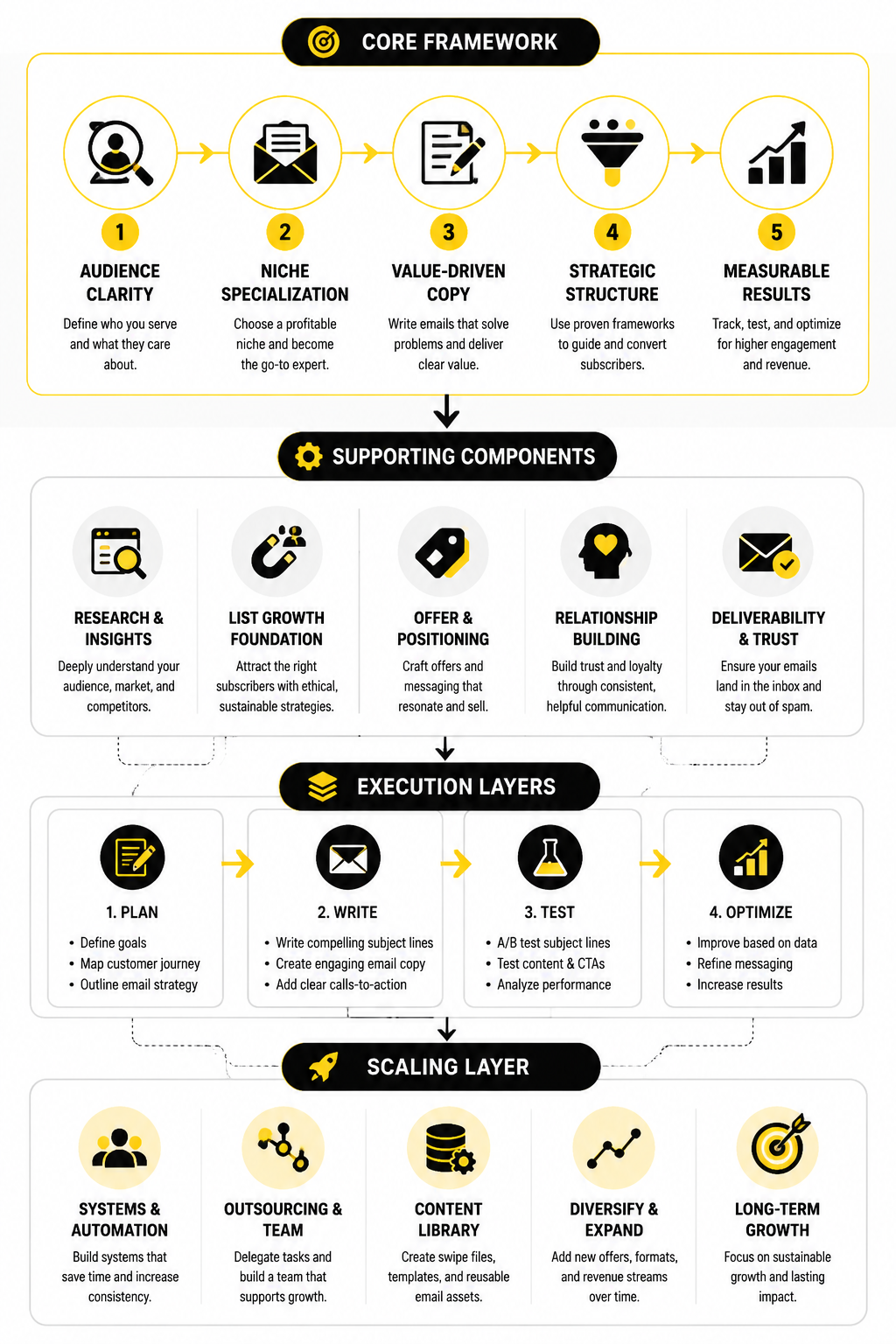
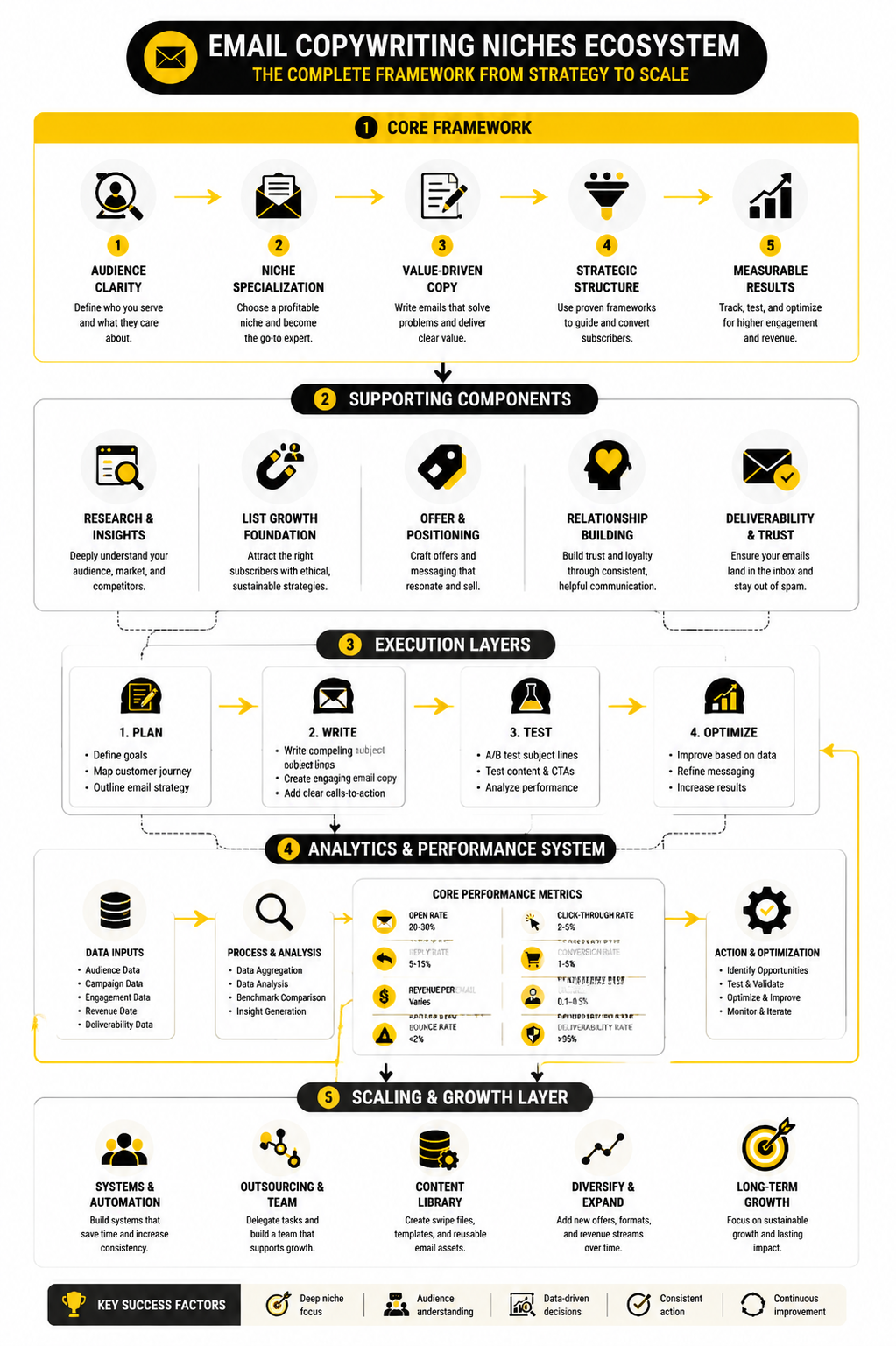
To choose and evaluate email copywriting niches effectively, use this simple framework:
This framework helps you balance getting into a niche quickly and positioning for long‑term profitability.
Core Niches and Their Email Needs
Some markets rely on email copy as a core revenue driver more than others. These tend to fall into a few broad categories that recur in marketing research and industry reports:
Each niche has common email types - from promotional and newsletter sequences to onboarding and retention flows - but the most successful campaigns customize messaging to the audience’s specific mindset and buying cycle.
How to Evaluate Niche Demand
Evaluating niche demand isn’t guesswork - you can use real data and client engagement signals:
Look for niches where email marketing influences measurable results like revenue, engagement, or retention - those are the spaces where skilled email copywriters are most valued.
How to Position Yourself as a Specialist
Once you choose a niche, establish authority by:
Clear positioning differentiates you from generalists and allows you to charge premium rates.
Getting Your First Clients and Growing
Start by targeting businesses already relying on email for revenue. Engage through:
Once you land initial clients, ask for referrals or expanded projects - niche specialists often grow through reputation and demonstrated ROI.
In the next parts, we’ll go deeper into execution tactics, templates, and case studies that show niche‑focused email copywriting in action.
How to Evaluate Niche Demand
Choosing the right email copywriting niche isn’t a shot in the dark - it’s a strategic decision grounded in real client demand and measurable business outcomes. You want to make sure you’re targeting sectors where businesses are already investing in email marketing and are willing to pay sustainable rates for high‑quality copy. Research across industry guides shows that demand for email copywriters remains strong because email still drives substantial ROI for companies of all sizes; many marketers struggle to produce compelling campaigns in‑house and outsource this work instead.
To evaluate whether a niche has enough demand and profit potential for email copywriting, consider the following real‑world criteria:
Look for Active Email Marketing Budgets
A niche that actively uses email as a core marketing or sales channel is more likely to pay for quality copy consistently. You can gauge this by:
Industries like SaaS, finance, and e‑commerce often have larger marketing budgets and established email programs, which translates into more opportunities for copywriters.
Measure Real Client Interest
Demand isn’t just theoretical - it shows up in what clients actually pay for. Examine:
For example, some freelance research highlights niches where experienced writers can earn premium rates for sequences, not just single emails.(10)
Evaluate Competition vs. Supply
A niche with heavy business demand but relatively few experienced email copywriters is an ideal sweet spot. Too much competition can squeeze rates and make client acquisition harder, while no competition often signals lack of demand. You can assess competitive density by:
Balanced demand - strong business need with manageable competition - is where specialists command higher rates and steadier workloads.
How to Position Yourself as a Specialist
Once you’ve validated that a niche has healthy demand, the next step is positioning yourself so clients see you as the obvious choice. The clearer your specialization, the easier it is for prospects to understand your value and for you to charge more than a generalist.
Develop Targeted Portfolio Pieces
Create a set of sample email sequences relevant to your niche that show your understanding of audience pain points and revenue goals. For example:
Targeted samples help prospects visualize what you can do and speak their language from the first conversation.
Speak Directly to Business Problems
When you craft your messaging - on your website, proposals, and outreach emails - focus on outcomes that matter to the niche. Instead of saying “I write emails,” say things like:
Being specific signals you understand not just email copywriting but the business context where it produces measurable results.
Publish Specialty Content
Author blog posts, guides, or email sequences that tackle the niche’s common challenges. This does three things:
Sharing insights shows you’re not just a practitioner - you’re someone shaping the conversation in that niche.
Getting Your First Clients and Growing
Landing your first niche‑focused clients is often the hardest step, but there are practical, research‑backed strategies you can use to shorten your runway to revenue.
Target Businesses With Existing Email Programs
Look for companies already sending out emails but with obvious room for improvement. These are prime prospects:
In outreach, offer a short audit or improvement suggestion - this adds immediate value and opens doors to paid work.
Network Within Niche Communities
Join industry communities where your ideal clients congregate - Slack groups, LinkedIn niches, niche‑specific forums - and contribute insights regularly. Being visible in the right communities makes it easier to get inbound inquiries.
Offer Introductory Audits
An audit that identifies key improvements and quick wins shows you understand the niche and can drive results faster than a generic pitch. This also reduces risk for the client and often leads to retainer engagements.
Once you land a couple of clients, ask for testimonials and track results of your campaigns to use as proof - that’s how specialists grow into more consistent and higher‑paying work.
The Implementation Process for Email Copywriting Niches
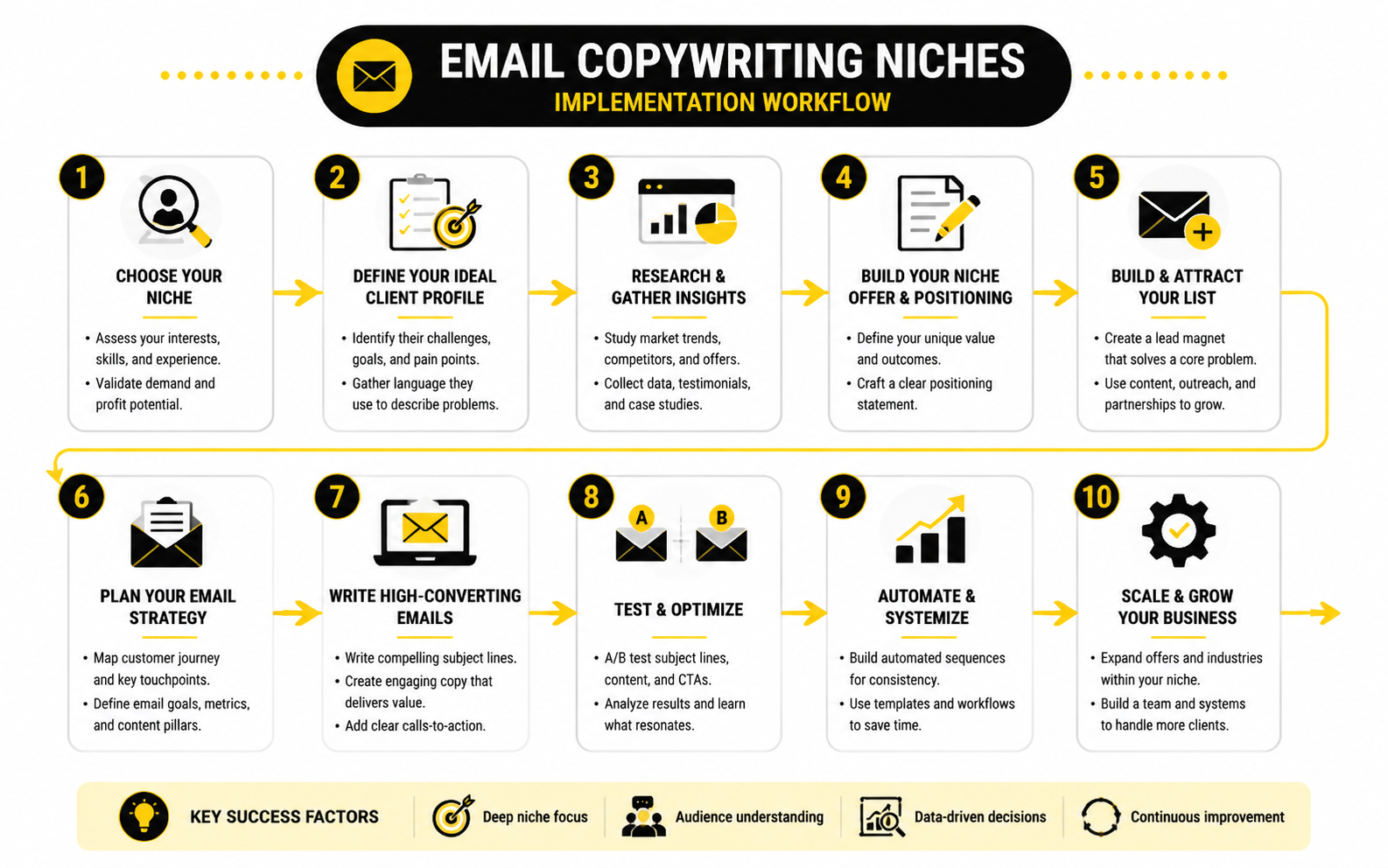
So far we’ve covered why niching matters and how to evaluate and position yourself strategically. Now let’s make the whole thing tangible and actionable by walking through a step‑by‑step implementation process you can apply when you’re writing email campaigns in your chosen niche.
This part moves from high‑level planning into the mechanics of execution - the repeatable process that turns audience insight into persuasive emails and sequences that actually perform.
A Repeatable Workflow You Can Use Every Time
Email copywriting isn’t random inspiration - it’s a series of intentional decisions that guide every message toward a clear outcome. Experts in the field use a structured workflow to keep their writing effective and consistent across niches.({0})
Step 1: Define the Goal of Each Email
Before writing a single line, decide what this particular email is meant to accomplish. Are you trying to:
Every email should have one primary goal. Defining this up front gives the rest of your process focus and prevents bloated or confusing copy.({12})
Step 2: Understand the Audience’s State
Email copywriters who work in niches pay special attention to where the reader is in their journey. Is the subscriber brand‑new and curious? Are they on the fence about a purchase? Are they already a customer who may buy again? Tailoring your message to the reader’s state makes the email feel specific, not generic - and that drives engagement.({0})
Step 3: Pick a Strong Angle
Once you know the goal and the reader’s state, choose an angle - the main lens through which your message will be framed. You might emphasize:
The angle determines your approach and helps shape every sentence in the email. It’s far easier to write a compelling message when you’re not staring at a blank page wondering what to say.
Step 4: Start With the CTA and Build Backwards
Great email copybuilders think about the call to action before they start writing. The reason is simple: if you know what action you want the reader to take, you can build the message in a way that makes that action feel like the natural next step.({0})
Working backward from the CTA helps you craft:
Step 5: Draft Quickly, Refine Purposefully
The first draft is about getting structure and substance on the page. Don’t worry about perfect wording. Focus on:
Once the skeleton is there, refine. Cut needless words, tighten logic, strengthen transitions, and make actions unmistakable.
Step 6: Review Through the Reader’s Eyes
Before you send, put yourself in the reader’s shoes. Ask:
Looking at your draft this way helps catch common issues before they hurt performance, like confusing offers, mixed messages, or calls to action that feel premature.({0})
Step 7: Test, Measure, and Iterate
Once your email is live, your work isn’t done. Track key performance indicators - opens, clicks, conversions - and use those insights to improve future emails. Testing variants of subject lines, preview text, or CTAs helps you understand what resonates best with your niche audience and boosts results over time.
Benchmarks, Metrics, and What the Data Really Tells You
When you’re writing email copywriting in any niche, you must understand not just what metrics to track, but what they actually mean. Numbers by themselves are only useful if they help you make decisions - like when to tweak your messaging, send time, or segmentation.
Good email copywriters don’t obsess over vanity metrics; they focus on what drives business outcomes, such as engagement that leads to actions (like clicks and conversions) and list health that protects deliverability over the long term.
Why Benchmarks Matter
Benchmarks give you context. A 40 % open rate might sound good, but without industry context you won’t know whether it’s underperforming, average, or truly strong for your niche. Because benchmarks are aggregated from thousands of campaigns across industries, they help you evaluate your results against real peers rather than guesses.({1}{3})
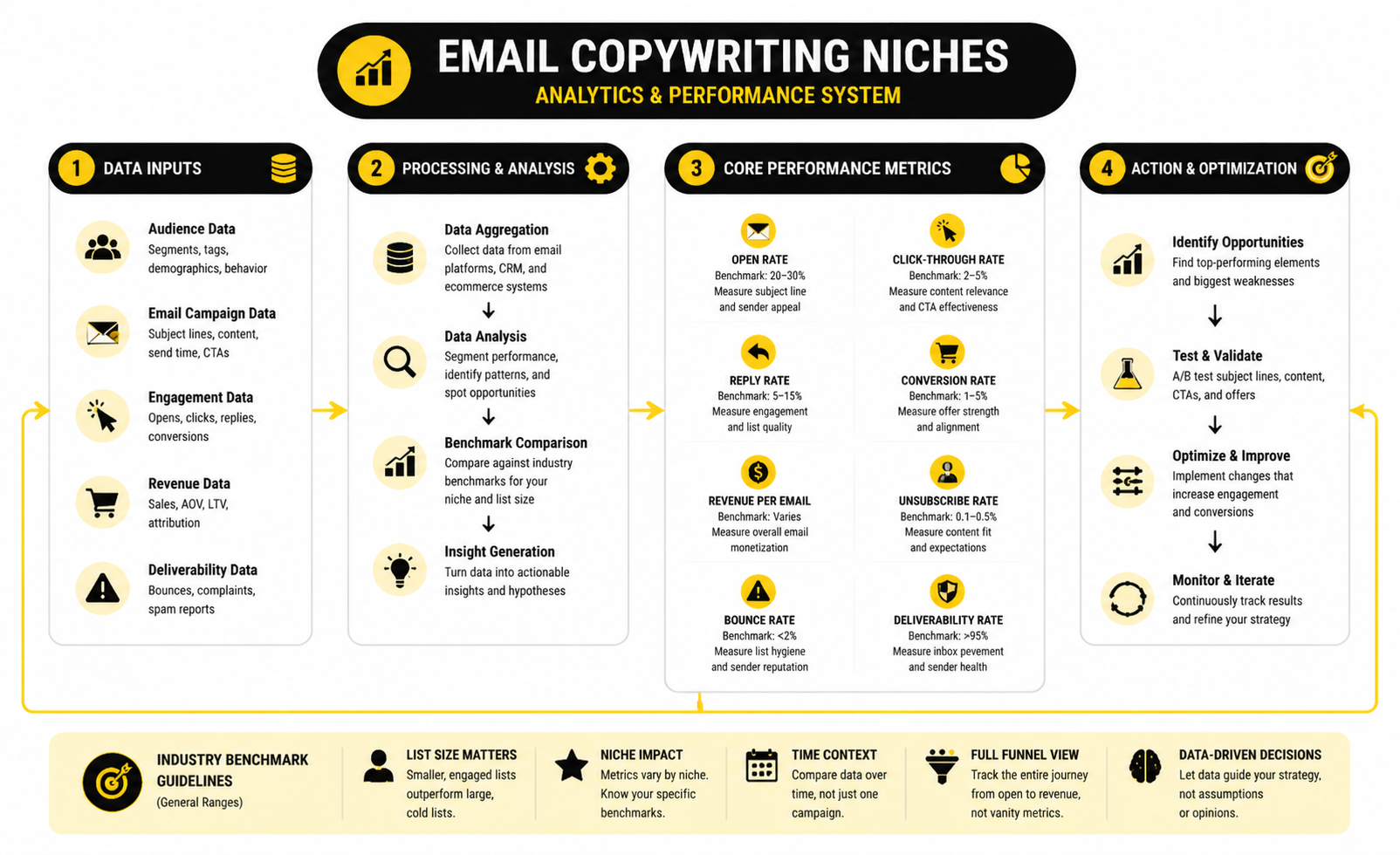
Core Metrics Every Specialist Should Track
Understanding which metrics matter and why they matter is essential to testing and optimizing your campaigns.
Typical Benchmark Ranges and What They Suggest
Benchmarks always vary by niche and campaign type (e.g., automated flows versus broadcast newsletters), but current data offers realistic ranges you can use as directional guides:
These aren’t rigid targets; they are directional benchmarks that help you identify when something is genuinely strong or when a campaign needs adjustment.
What the Numbers Should Drive You To Do
Benchmarks aren’t the end goal - they’re diagnostic:
Understanding these metrics and what they truly signal will help you improve campaign performance consistently - and position your email copywriting services as more than just words on a page, but as measurable revenue drivers for your clients.
Next, we’ll explore advanced tactics for growing your niche email copywriting practice and turning data insights into repeatable results.
Advanced Considerations for Scaling in Email Copywriting Niches
Once you’ve established yourself in a niche, the challenges shift from simply landing clients to maintaining quality, scaling efficiently, and managing risk. At this stage, strategic thinking becomes essential because what worked for a handful of clients may not translate directly when volume and complexity increase.
Balancing Niche Depth with Breadth
Specialization is a double-edged sword. Focusing too narrowly may limit opportunities, while expanding too broadly dilutes authority. Advanced specialists often manage this by:
Managing Client Expectations and Workflow
As your client base grows, so do communication and delivery complexities. Common pitfalls include overpromising, underestimating project scope, or failing to maintain consistent quality. Proactive steps include:
Navigating Compliance and Risk
Certain niches, such as finance, health, or education, have strict compliance rules around claims, privacy, and email consent. Scaling in these areas requires vigilance:
Leveraging Analytics for Strategic Growth
At scale, anecdotal feedback isn’t enough. Advanced copywriters rely on metrics to prioritize efforts:
Risk Management and Reputation
Reputation becomes a key asset in a niche. One poorly executed campaign can have amplified consequences when clients expect specialist-level expertise. Mitigation strategies include:
By integrating these advanced strategies, you not only maintain the quality and profitability of your email copywriting work but also position yourself as a trusted specialist capable of handling complex campaigns across high-stakes niches. This foundation sets up a natural transition into client acquisition at scale, recurring revenue, and long-term authority - which we’ll explore in the final part.
1. What exactly is a niche in email copywriting?
A niche is a focused segment of the market where your writing serves a specific audience or industry. By specializing, you understand their unique pain points, language, and triggers, which makes your emails more persuasive and effective.
2. How do I choose the right email copywriting niche?
Look for sectors with strong email marketing activity, measurable ROI from email campaigns, and gaps where skilled writers are scarce. Balance interest with potential revenue to ensure sustainability.
3. Do niches limit the number of clients I can work with?
Not necessarily. While a niche is focused, you can serve multiple clients within the same industry or related sub-niches. Depth often allows you to command higher rates and repeat business.
4. Can I switch niches if the first one doesn’t work out?
Yes, but approach strategically. Document what works, what doesn’t, and gradually pivot to niches where your skills transfer and demand is higher. Maintain credibility by showing expertise even in transition.
5. How do I measure the success of my emails?
Key metrics include open rates, click-through rates, click-to-open rates, conversions, and list health indicators like unsubscribes or bounces. Interpret these metrics in context of the niche and campaign goals, not just raw numbers.
6. Should I focus on writing individual emails or full sequences?
Both have value, but specialists often focus on sequences because they drive measurable outcomes like retention, upsells, or conversions. This allows you to demonstrate clear ROI for clients.
7. How important is compliance in niche email copywriting?
Extremely important in regulated sectors like finance, health, or education. Mistakes can create legal issues, so understanding rules like GDPR, HIPAA, or CAN-SPAM and using compliant templates is crucial.
8. What’s the difference between generalist and niche email copywriting rates?
Specialists command higher rates because their work directly affects results in a specific industry. Generalists may get more clients initially but often earn less per project and face more competition.
9. How can I scale my email copywriting business within a niche?
Use frameworks and templates, automate repetitive processes, leverage analytics to focus on high-performing campaigns, and build reputation through case studies and referrals. Focused specialization supports both quality and volume.
10. Are there tools that help manage niche email campaigns?
Yes. Platforms like GoHighLevel, ManyChat, and Brevo streamline automation, approvals, and analytics, letting you scale without losing quality.
11. How do I attract my first clients in a niche?
Target businesses already investing in email marketing, offer audits or insights upfront, and showcase specialized sample sequences. Networking in niche communities also accelerates credibility and inbound leads.
12. How often should I revisit my niche strategy?
Periodically review market demand, client feedback, and performance metrics. Adjust your focus or expand into adjacent sub-niches when opportunities arise without diluting expertise.
Build a stronger local presence with BAAM AI
Turn your website, Google profile, social channels, and AI visibility into one growth engine
Most businesses do not need more random marketing activity. They need a consistent presence system that helps the right people find them, trust them, and take action. BAAM AI brings strategy, local SEO, website updates, Google Maps visibility, social content, AI-search readiness, media production, and reporting into one practical monthly engine.
If you want your marketing to keep working after the campaign ends, start with a free BAAM AI presence audit. See how your business shows up today and where the fastest visibility wins are at BAAM AI.