BAAM AI Blog
Creative Social Media Marketing: A Practical Framework For Ideas That Earn Attention
Creative social media marketing is not “posting something fun” and hoping the algorithm notices. It is the disciplined process of turning brand strategy, audience insight, platform behavior, and sharp creative...
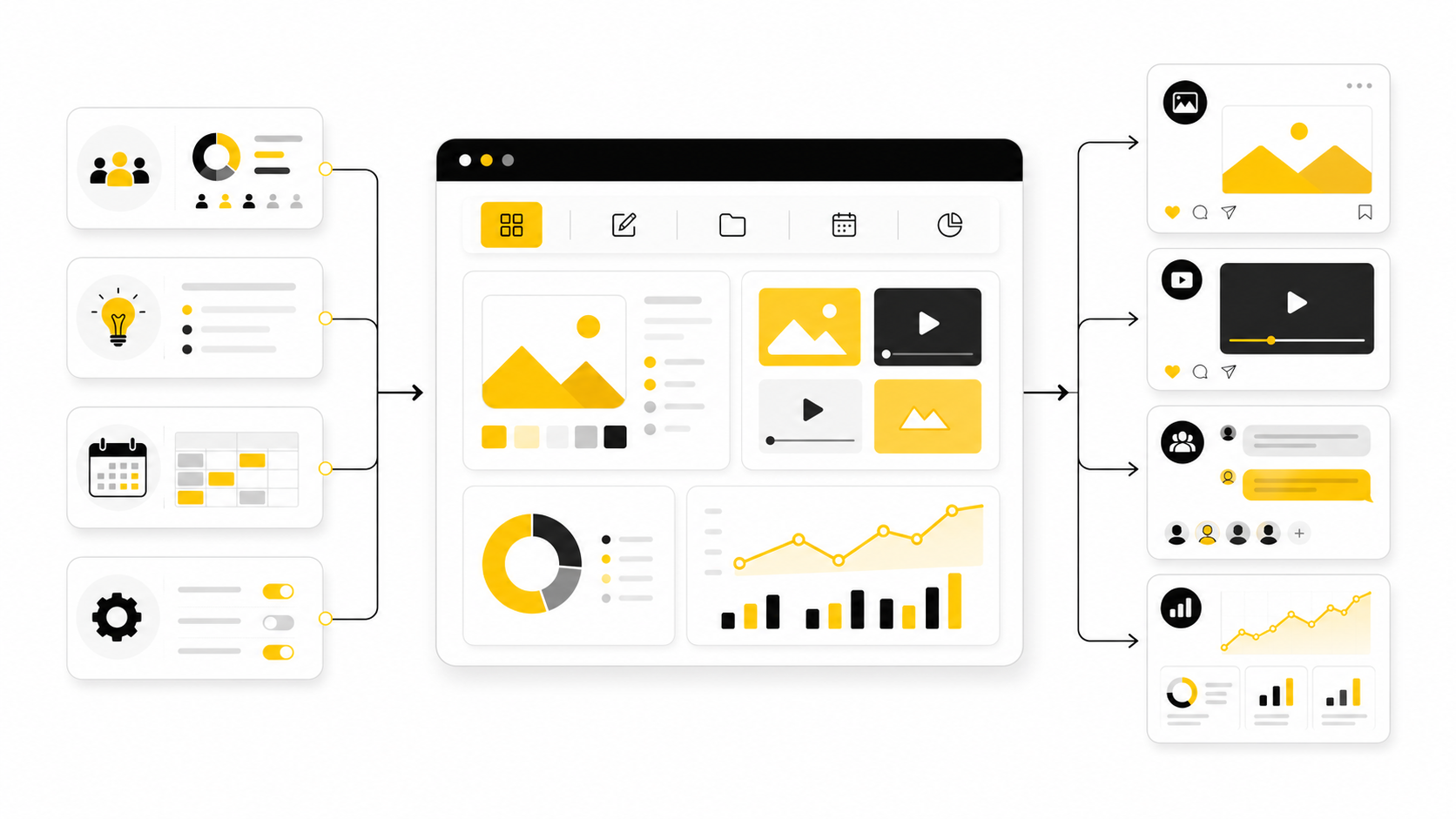
Creative social media marketing is not “posting something fun” and hoping the algorithm notices. It is the disciplined process of turning brand strategy, audience insight, platform behavior, and sharp creative execution into content people actually want to stop for, react to, share, save, search, message about, or buy from.
That distinction matters because the social feed is brutally competitive. Global social media use keeps expanding, with Digital 2026 reporting 5.66 billion active social media user identities worldwide, equal to roughly 68.7% of the global population in the Digital 2026 coverage. In the U.S., YouTube and Facebook still have mass reach, while Instagram, TikTok, WhatsApp, and Reddit continue shaping more specific behaviors and communities in Pew Research Center’s 2025 social media data.
The problem is that most brands respond to this pressure by producing more. More posts, more trends, more AI-assisted variations, more “quick wins.” But creative social media marketing works differently: it starts with a clear point of view, packages that point of view for the right platform, and builds repeatable systems so creativity does not depend on random inspiration.
this guide will be split into six parts and follow this structure:
Why Creative Social Media Marketing Matters Now
Creative social media marketing matters because attention is no longer won by being present. Presence is the baseline. The real advantage comes from making people feel that your content understands their problem, their taste, their identity, or their timing better than the next post in the feed.
This is also why generic content is getting punished, even when it looks polished. AI has made content production faster, but it has also made average content easier to ignore. HubSpot’s 2025 social media marketing report frames the shift clearly: originality is becoming more valuable as AI makes publishing easier in its 2025 social media marketing research.
The business case is not just emotional. Creative quality has a measurable relationship with performance, and Kantar’s work with WARC found that creative and effective ads generated more than four times as much profit as weaker work in Kantar’s analysis of creative quality and profit. Social media is not identical to traditional advertising, but the principle carries over: the idea, the framing, and the execution still matter.
What Creative Social Media Marketing Really Means
Creative social media marketing is the use of original angles, platform-native formats, audience insight, and brand consistency to create social content that earns a reaction. It includes posts, short-form videos, carousels, stories, livestreams, creator collaborations, community replies, social search content, paid social ads, and conversational campaigns. The creative part is not limited to visuals; it includes hooks, timing, structure, tone, audience participation, and the way the offer is framed.
A practical definition is this: creative social media marketing turns a business message into a social moment. A product feature becomes a relatable problem. A customer objection becomes a short video hook. A campaign becomes something people can participate in instead of simply observe.
This is where many teams go wrong. They treat creativity as decoration added after the strategy is finished. In reality, the creative decision is often the strategy, because the angle determines whether the audience sees the post as relevant, boring, helpful, funny, annoying, premium, desperate, or worth sharing.
The Creative Social Media Marketing Framework
The easiest way to make creative social media marketing repeatable is to separate it into a framework. Without a framework, teams usually bounce between trends, competitor copying, and last-minute content requests. With a framework, creativity becomes easier to brief, produce, review, test, and improve.
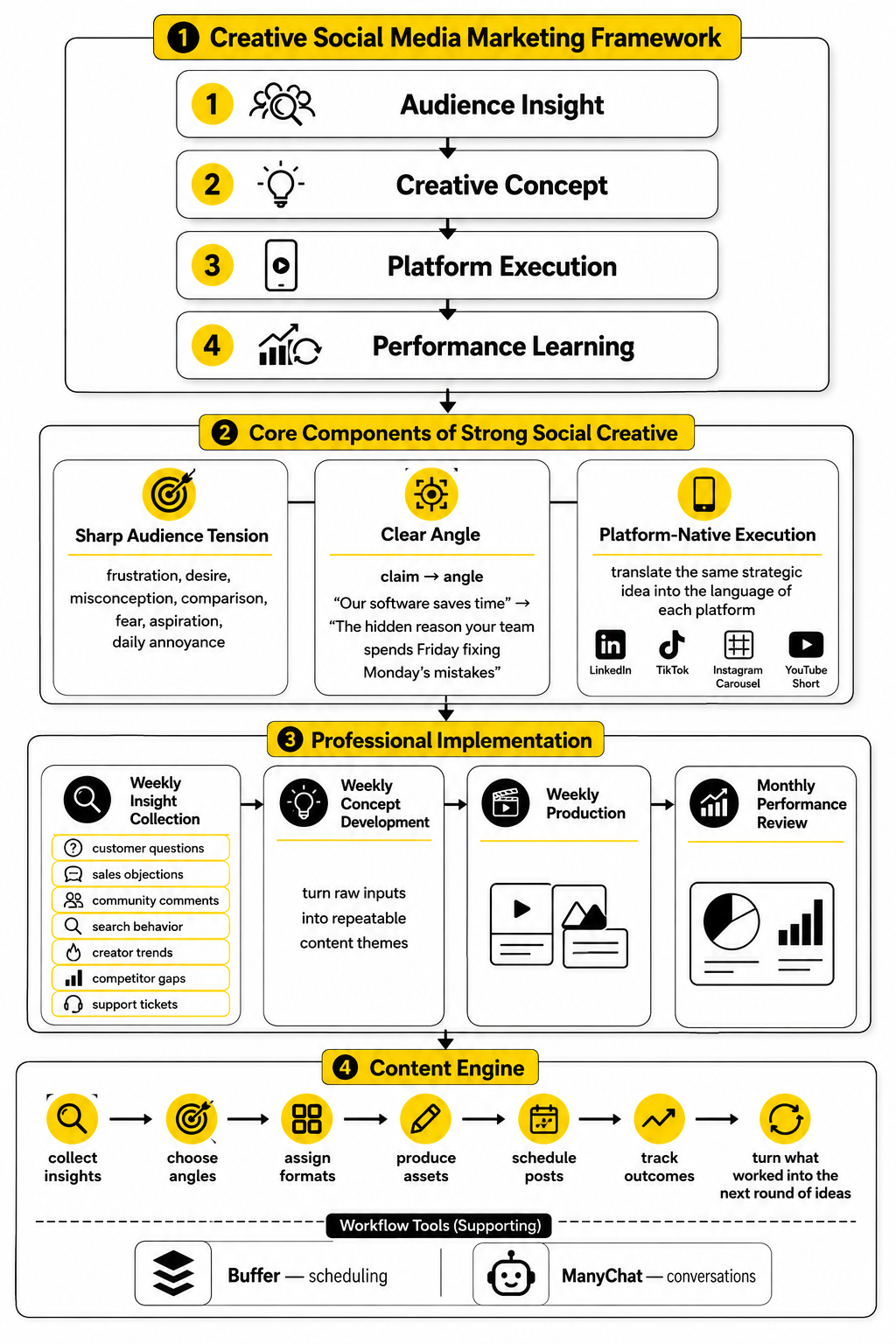
The framework used here has four layers: audience insight, creative concept, platform execution, and performance learning. Audience insight defines what people care about. The creative concept turns that insight into a strong content angle. Platform execution adapts the idea to the format, behavior, and expectations of each channel.
Performance learning closes the loop. It looks beyond vanity metrics and asks what the audience response tells you about the idea. A post with fewer views but high saves may reveal a strong educational angle, while a video with high reach and weak clicks may prove that the hook worked but the offer did not.
The Core Components Of Strong Social Creative
Strong social creative usually starts with a sharp audience tension. That tension could be a frustration, desire, misconception, comparison, fear, aspiration, or daily annoyance. When the tension is real, the content feels specific instead of forced.
The second component is a clear angle. The angle decides how the message enters the audience’s world. “Our software saves time” is a claim; “the hidden reason your team spends Friday fixing Monday’s mistakes” is an angle. The first asks for attention, while the second earns curiosity.
The third component is platform-native execution. A strong LinkedIn post may open with a contrarian observation, while a strong TikTok may open with a visual pattern interrupt. A strong Instagram carousel may build through clean sequencing, while a strong YouTube Short may need a tighter narrative payoff. Creative social media marketing is not about posting the same idea everywhere; it is about translating the same strategic idea into the language of each platform.
Professional Implementation Starts With A System
Professional implementation means building a content engine, not a content scramble. The team needs a way to collect insights, choose angles, assign formats, produce assets, schedule posts, track outcomes, and turn what worked into the next round of ideas. This is where creative work becomes much easier to scale.
A simple operating system can start with four recurring routines: weekly insight collection, weekly concept development, weekly production, and monthly performance review. The insight collection stage captures customer questions, sales objections, community comments, search behavior, creator trends, competitor gaps, and support tickets. The concept stage turns those raw inputs into repeatable content themes.
Tools can help, but they should support the strategy rather than replace it. A social scheduling tool like Buffer can help teams keep publishing consistent, while a conversation tool like ManyChat can support campaigns that move from comments or DMs into guided follow-up. The tool is not the creative strategy, but the right workflow makes the strategy easier to execute consistently.
Audience Insight And Platform Context
Creative social media marketing gets easier when you stop asking, “What should we post?” and start asking, “What does our audience already care about, and how does this platform shape that behavior?” That shift sounds simple, but it changes everything. Instead of forcing brand messages into the feed, you look for the moments where your message naturally belongs.
Audience insight is not just demographic data. Age, location, and job title can help, but they rarely produce a strong creative angle on their own. Better insight comes from pain points, objections, repeated questions, identity signals, buying triggers, emotional language, and the small frustrations people mention when they are not trying to sound polished.
Platform context matters just as much. A person may want the same outcome on TikTok, LinkedIn, Instagram, YouTube, Reddit, and Facebook, but they do not behave the same way on each one. The creative idea can stay consistent, but the format, pacing, proof, tone, and call to action need to match the environment.
Start With Real Audience Tension
The strongest social ideas usually come from tension. Your audience wants one thing but keeps running into another. They want growth without looking desperate, better results without wasting budget, consistency without becoming boring, or automation without losing the human feel of the brand.
This is why “know your audience” is too vague to be useful. A better question is: what does your audience believe, fear, want, misunderstand, complain about, or secretly wish someone would say out loud? Those details give creative social media marketing its edge because they make the content feel specific.
You can find these tensions in practical places. Look at sales calls, support tickets, review sites, comment sections, Reddit threads, YouTube comments, customer surveys, community discussions, and direct messages. The goal is not to copy people’s words blindly; the goal is to understand the pressure behind those words and turn it into content that lands.
Separate Surface Trends From Deeper Behavior
Trends are useful, but they are not a strategy. A trending audio, meme format, or editing style can help a post feel current, but it cannot rescue a weak idea. If the underlying message is generic, the trend simply makes the generic message move faster.
Deeper behavior is more valuable. People save useful checklists, share content that says something they wish they had said, comment when they feel seen, and click when the next step feels relevant to the moment. Sprout Social’s 2025 benchmarks show that social content performance is shaped by both publishing behavior and audience expectations across networks in its 2025 Content Benchmarks Report.
That means your creative process should not chase every visible pattern. Instead, look at why a pattern is working. Is the hook creating curiosity? Is the format reducing friction? Is the post giving people social currency? Is it helping them explain themselves, make a decision, or feel part of a group?
Build Audience Buckets Before Content Buckets
Most teams organize content by format first. They plan reels, carousels, stories, newsletters, and short clips before they understand the audience state behind each piece. That creates a busy calendar, but not necessarily a persuasive one.
A better approach is to create audience buckets. These buckets represent the different mental states your audience brings to social media. For example, one group may be problem-aware but skeptical, another may be comparing options, another may be loyal but inactive, and another may not know they need a solution yet.
Once those buckets are clear, formats become easier to choose. A skeptical audience may need proof, contrast, and objection handling. A problem-aware audience may need educational content and simple next steps. A loyal audience may respond better to behind-the-scenes posts, community prompts, launches, or referral-focused campaigns.
Match The Message To The Platform Mood
Every platform has a mood, and ignoring that mood makes content feel off. LinkedIn often rewards professional clarity, personal insight, and useful perspective. TikTok and Reels often reward speed, visual tension, personality, and immediate payoff.
YouTube Shorts can work well for compressed education, demonstrations, and curiosity-driven sequences, while long-form YouTube can carry deeper tutorials and stronger search intent. Reddit tends to punish obvious promotion but rewards specificity, honesty, and genuine participation. Facebook still has value for groups, local communities, retargeting, and older audience segments, depending on the market.
This does not mean your brand needs a different personality everywhere. It means your brand needs enough range to communicate naturally in each environment. Creative social media marketing works best when the audience feels like the brand understands the room it just walked into.
Use Social Search As Creative Research
Social search has become a serious part of the content process. People use platforms to find recommendations, explanations, reviews, comparisons, tutorials, and real opinions. That makes search behavior a direct source of creative ideas, not just an SEO concern.
Look at the phrases people type into TikTok, YouTube, Instagram, Pinterest, Reddit, and Google. These queries reveal the language people use when they are actively trying to solve something. A good social post can answer one of those questions quickly, then lead people into a deeper asset, offer, product page, or conversation.
This is where practical tooling can help. A tool like Flick Social can support hashtag and content planning, while a scheduling workflow through Buffer can help keep research-backed ideas moving into production. The point is not to automate taste; the point is to remove the chaos around publishing so the creative work has room to improve.
Turn Customer Language Into Creative Angles
Customer language is one of the best creative assets a brand has. The exact words people use often reveal stronger hooks than anything produced in a brainstorming session. If customers keep saying “I do not have time,” the creative angle is different from “I do not trust this will work.”
This matters because the hook should meet the audience at the point of friction. A time-based objection might become a post about speed, shortcuts, workflow, or opportunity cost. A trust-based objection might become a post about proof, transparency, process, guarantees, comparisons, or mistakes to avoid.
Do not over-polish this language until it loses its edge. Social content often works because it sounds close to how people actually think. Professional does not mean stiff, and brand-safe does not have to mean forgettable.
Map Content To Awareness Stages
Creative social media marketing should support different levels of awareness. Some people are not actively shopping and need a pattern interrupt or relatable problem. Others already understand the problem and need help comparing solutions.
At the top of the journey, creative should make the problem visible. In the middle, it should explain tradeoffs, remove confusion, and build trust. Near conversion, it should make the next step feel obvious, low-friction, and relevant.
This is where many brands overuse direct-response content. They ask for the sale before the audience has enough context to care. A stronger approach is to create a path: attention first, understanding second, trust third, action fourth.
Avoid The “One Audience” Trap
Most brands do not have one audience. They have buyers, users, influencers, internal champions, skeptics, repeat customers, casual followers, and people who only know the brand through one viral post. Treating all of them the same weakens the message.
For example, a founder may care about growth and efficiency, while a marketing manager may care about workload and reporting pressure. A customer may care about ease of use, while a finance stakeholder may care about cost and risk. The same product can matter to all of them, but the creative angle should not be identical.
This is why audience segmentation should influence the content calendar. You do not need endless personas or complicated documents. You need a clear enough understanding of who the post is for, what they already believe, and what they need to believe next.
Make The Audience Feel The Cost Of Inaction
Good creative does not only describe benefits. It helps people feel the cost of staying where they are. That cost might be wasted time, missed revenue, lower confidence, poor customer experience, inconsistent publishing, or a brand that looks less relevant than it really is.
The key is to do this without fearmongering. Social audiences are quick to reject exaggeration. The cost of inaction should feel grounded, specific, and recognizable.
For example, “you need better social media” is weak. “Your best ideas are stuck in calls, notes, and customer conversations while your feed keeps publishing generic tips” is much stronger. It names the real waste, and it gives the audience a reason to pay attention.
Connect Insight To A Clear Creative Brief
Audience research only becomes useful when it turns into a brief. A simple creative brief keeps the work focused and prevents every post from becoming a random opinion. It also makes it easier for writers, designers, editors, founders, and social managers to collaborate without watering down the idea.
A practical brief should answer five questions:
The brief does not need to be long. In fact, shorter is usually better. If the idea cannot be explained clearly in a few lines, the audience probably will not understand it in a crowded feed either.
Creative Concepts That Make People Care
Once the audience tension is clear, the next job is turning it into a creative concept. This is where many brands either become interesting or disappear into the feed. The concept is the bridge between strategy and execution, and it decides whether the post feels like an idea or just another asset.
A creative concept is not the same thing as a topic. “Social media tips” is a topic. “Your best content is probably trapped in sales calls” is a concept because it has tension, specificity, and a point of view. Creative social media marketing becomes much stronger when every post starts with a concept that can be explained in one sharp sentence.
The best concepts usually do one of four things. They reveal something the audience has not noticed, challenge something they believe, simplify something they find confusing, or dramatize a problem they already feel. If the concept does none of those things, the final post will probably need too much effort from the audience.
Turn Strategy Into A Repeatable Creative Process
Creativity feels random when there is no process behind it. A team sits down, stares at a blank content calendar, checks what competitors are doing, and then fills the week with whatever seems acceptable. That is not a creative system; it is content survival mode.
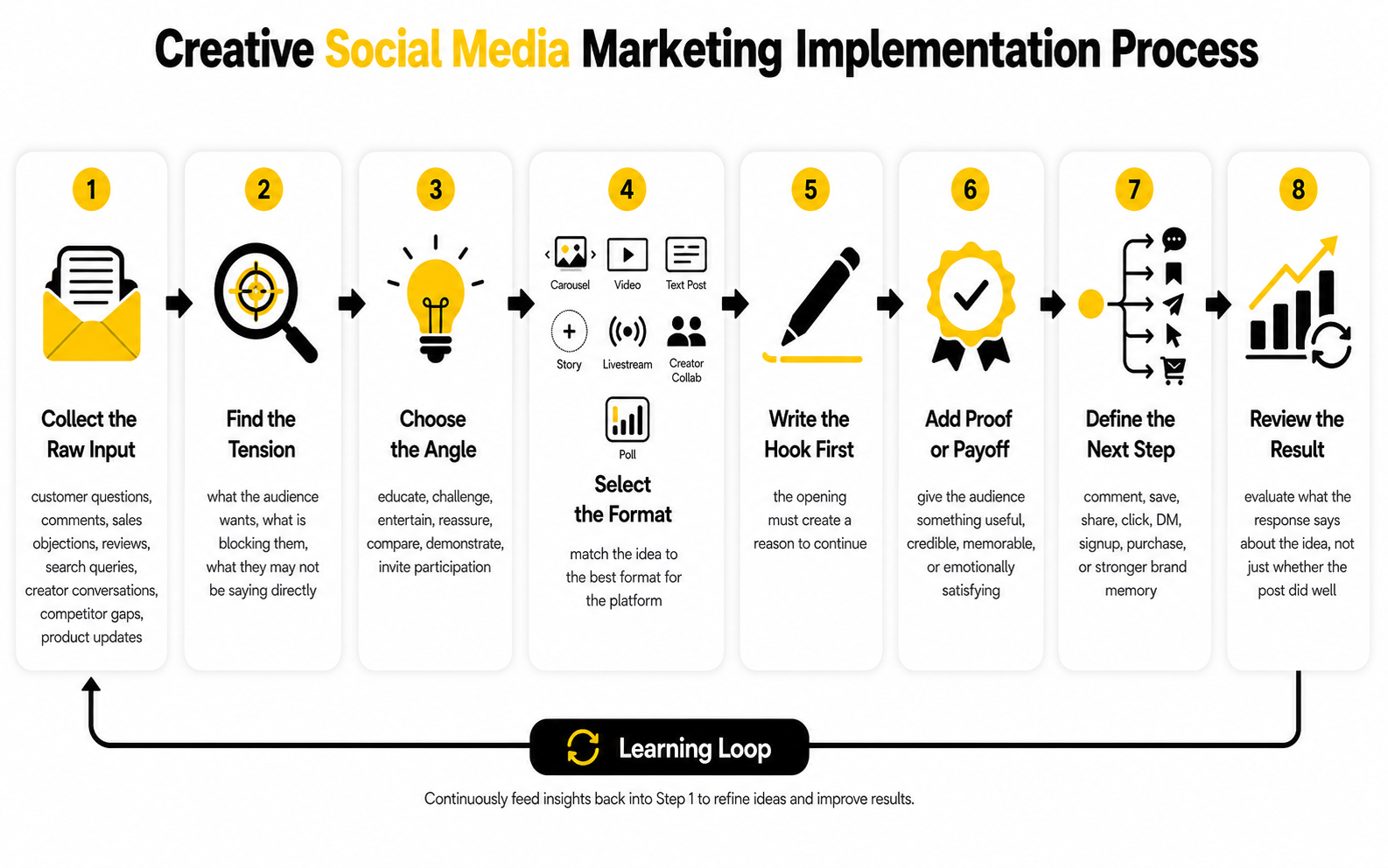
A repeatable process gives the team a path from raw insight to finished post. It does not remove creative judgment. It simply makes judgment easier because every idea has to pass through the same filters: audience tension, angle, format, proof, platform fit, and next action.
This is where the execution process becomes tangible. Instead of asking for “more content,” build each piece through a simple sequence:
Build A Content Pillar System That Does Not Feel Repetitive
Content pillars are useful only when they create focus without making the brand predictable. Too many teams define pillars like “education,” “promotion,” “behind the scenes,” and “testimonials,” then wonder why the content feels flat. Those labels describe content types, but they do not create strong ideas.
A better pillar system is built around audience problems and brand beliefs. For example, a brand might build pillars around misunderstood customer problems, practical implementation advice, proof and comparison, product use cases, community participation, and founder perspective. Each pillar gives the team a strategic lane while still leaving room for creative variation.
This matters because creative social media marketing needs consistency and freshness at the same time. Consistency tells the audience what the brand stands for. Freshness keeps the audience from feeling like they have already seen the same post twenty times.
Create Angles Before You Create Assets
A common mistake is designing the asset before sharpening the angle. The team opens Canva, starts editing a video, or writes a caption before deciding what the post is really trying to say. That usually leads to polished content with a weak center.
The angle should come first because it controls the hook, structure, visual direction, caption, and call to action. A comparison angle needs a different format from a confession angle. A myth-busting angle needs a different rhythm from a step-by-step tutorial.
Good angles are specific enough to create momentum. “How to improve engagement” is too broad. “Why your educational posts get saves but no sales” is stronger because it points to a real marketing problem and creates a natural reason to keep reading.
Use Format As A Creative Decision
Format is not just packaging. It changes how people experience the idea. The same insight can become a carousel, short video, text post, livestream, creator collaboration, poll, email follow-up, or landing page sequence, but each version will create a different kind of response.
Short-form video is useful when the idea needs speed, personality, demonstration, or emotional rhythm. Metricool’s 2025 short-form video study analyzed more than 5 million videos and 582,000 accounts worldwide, which shows how crowded and competitive the format has become in its 2025 short-form video report. That does not mean every brand should blindly produce more videos; it means every video needs a sharper reason to exist.
Carousels are useful when the idea needs structure. Text posts work when the point of view is strong enough to carry attention without heavy visuals. Stories and community posts work when participation matters more than polish. The right format is the one that makes the idea easier to understand, not just easier to publish.
Design Hooks Around Curiosity, Clarity, Or Conflict
The hook is where the audience decides whether the post deserves another second. It does not need to be loud, manipulative, or exaggerated. It needs to create a clear reason to continue.
Most strong hooks use curiosity, clarity, or conflict. Curiosity opens a loop. Clarity promises a specific benefit. Conflict challenges a belief, pattern, or common mistake. These three hook types work because they give the audience a job: find out, learn this, or reconsider that.
Weak hooks usually fail because they are too generic. “Here are five social media tips” gives the audience no reason to care. “Five reasons your best posts still do not bring leads” is more useful because it connects the format to a sharper business tension.
Make The Payoff Worth The Attention
A hook without a payoff damages trust. People may click once, but they will learn to ignore the brand if the content repeatedly overpromises. This is especially risky now because audiences are surrounded by AI-generated posts that sound confident but say very little.
The payoff should match the promise. If the hook promises a framework, give a real framework. If it challenges a belief, explain the tradeoff clearly. If it opens a story, resolve the tension instead of drifting into vague inspiration.
This is where professional creative teams separate themselves from content factories. They do not just create attention; they reward it. That reward can be a useful insight, a practical checklist, a fresh comparison, a better question, or a next step that feels genuinely helpful.
Build Production Around Creative Batches
Creative production becomes easier when the team works in batches. Instead of producing one post from scratch every day, batch the process by stage. Collect insights together, write angles together, produce assets together, and review performance together.
This reduces context switching and protects quality. A writer can create stronger hooks when they are focused only on hooks. A designer can make better visual decisions when the concepts are already clear. An editor can move faster when every video has a defined structure before the footage is cut.
A simple weekly batch might include one insight session, one angle session, one production session, and one review session. That rhythm is enough for many small teams to become more consistent without turning social media into a daily emergency.
Create A Practical Approval Workflow
Approval can quietly destroy creative social media marketing. When every post is reviewed by too many people, the sharpest parts often get softened until nothing interesting is left. The result is technically safe content that nobody remembers.
A good approval workflow separates strategic review from personal preference. Reviewers should check whether the post is accurate, on-brand, legally acceptable, and aligned with the campaign goal. They should not rewrite every sentence just because they would have said it differently.
Set clear review rules before production starts. Decide who approves claims, who approves brand voice, who approves visuals, and who has final say. The fewer unclear opinions a post has to survive, the better chance it has of keeping its original strength.
Use AI As A Creative Assistant, Not The Creative Director
AI can help with research organization, draft variations, hook options, repurposing, summarization, and workflow speed. It can also make content painfully average when teams let it replace judgment. The difference comes down to whether the human team owns the insight and the point of view.
Hootsuite’s 2025 trends report highlights AI as both a tactical tool and a strategic thought partner for social teams in its Social Trends 2025 report. That is useful, but the phrase “thought partner” matters. A partner can help pressure-test ideas, but it should not decide what the brand believes.
Use AI to generate options, then apply human taste. Ask whether the idea sounds like something your audience would actually care about. Ask whether the sentence could only come from your brand, or whether any competitor could post the same thing tomorrow.
Connect Creative Posts To The Next Conversion Step
Not every social post needs to sell directly, but every serious social strategy needs a path from attention to action. That path might be a DM automation, newsletter signup, product page, webinar, booking page, lead magnet, community, or sales conversation. The important thing is that the next step fits the audience’s level of intent.
For campaigns built around comments and DMs, ManyChat can help turn engagement into guided follow-up. For brands that need a funnel after the click, ClickFunnels or Systeme.io can support landing pages, offers, and email sequences. The tool choice depends on the business model, but the principle stays the same: do not waste attention after you earn it.
This is especially important for creative social media marketing because creative content often produces softer intent first. Someone may save a post today, comment next week, join a list next month, and buy later. If the follow-up path is weak, the brand may think the creative failed when the real problem was the missing bridge between engagement and conversion.
Statistics And Data
Measurement is where creative social media marketing becomes real. Not because numbers are more important than ideas, but because numbers show how people respond when the idea meets the feed. If the data is read correctly, it helps you decide what to repeat, what to improve, what to kill, and what to turn into a bigger campaign.
The mistake is treating analytics like a scoreboard only. A post gets views, likes, comments, saves, shares, clicks, or leads, and the team labels it “good” or “bad.” That is too shallow. The better question is: what did this result reveal about the audience, the concept, the format, the offer, or the platform?
Benchmarks help, but they should not become the strategy. Rival IQ’s 2025 benchmark research found that TikTok engagement rates still outperformed Instagram, Facebook, and X for many brands, even while engagement shifted across industries in its 2025 Social Media Industry Benchmark Report. That matters because a “good” engagement rate is not universal. It depends on the platform, industry, audience size, content type, publishing frequency, and whether the post was designed for reach, response, trust, or conversion.
Measure The Job Of Each Post
Every post should have a job before it has a metric. A brand awareness post should not be judged the same way as a lead generation post. A thought leadership post should not be judged the same way as a product demo. A community prompt should not be judged the same way as a landing page click campaign.
This is where teams get misled. A post with high reach and low clicks may still be valuable if its job was visibility or category education. A post with low reach and strong saves may be valuable if it helps the right audience understand a complex topic. A post with average engagement but high conversion rate may be one of the most commercially useful assets in the whole content calendar.
So start by assigning each post to a primary purpose. The purpose can be attention, education, trust, conversation, traffic, lead capture, sales, retention, or research. Once the purpose is clear, the metric becomes easier to interpret.
Build A Simple Analytics System
A useful analytics system does not need to be complicated. It needs to connect content decisions to business learning. If the team only reports numbers, they will keep producing reports. If the team extracts lessons, they will improve the creative.
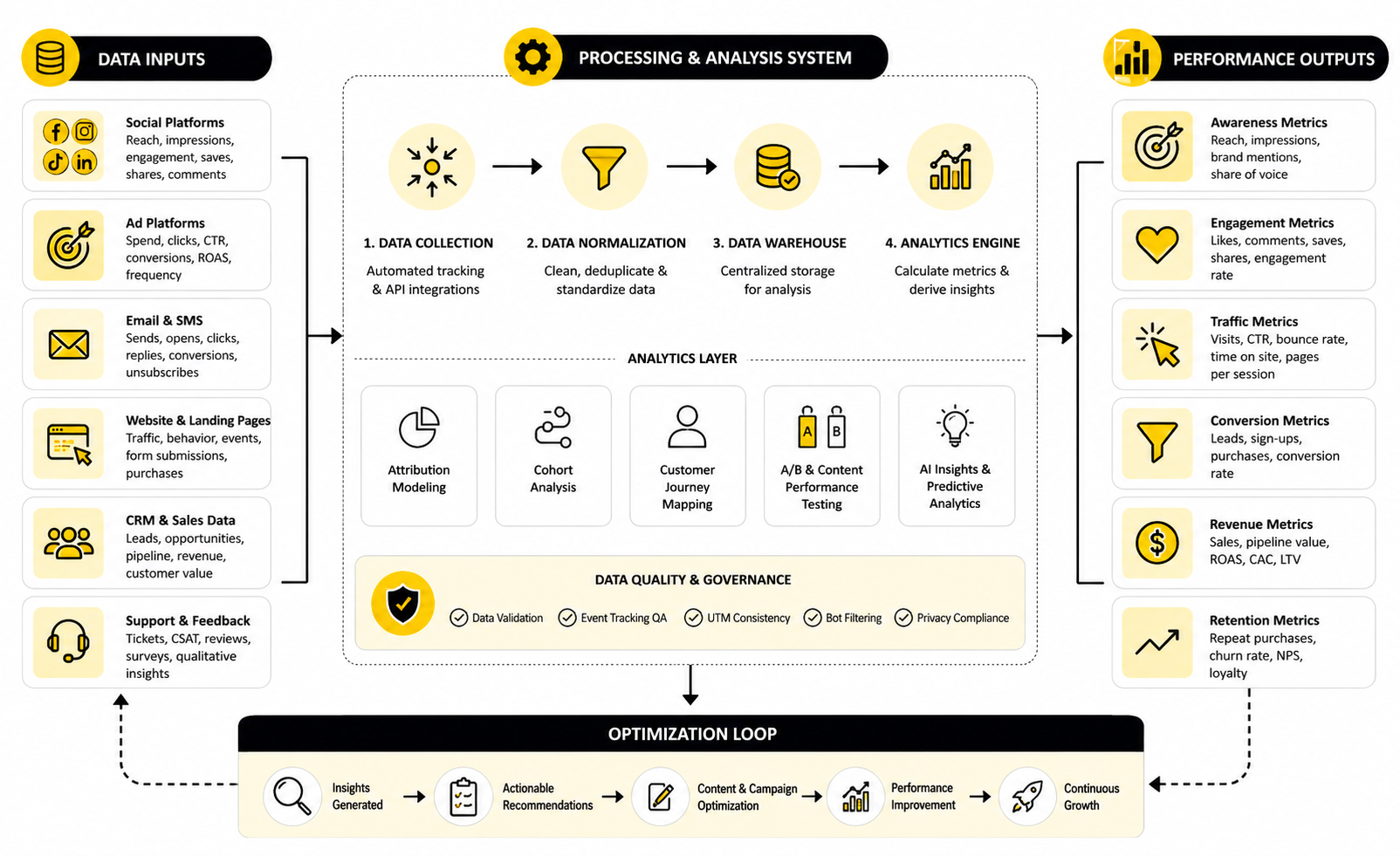
A practical measurement system should track four layers:
The point is not to obsess over every number. The point is to see where the creative system is strong and where it is leaking. If attention is high but engagement is weak, the hook may be stronger than the payoff. If engagement is high but clicks are weak, the content may be useful but the next step may not feel relevant. If clicks are high but conversions are weak, the problem may be the landing page, offer, or follow-up sequence rather than the social post.
Read Engagement By Intent, Not Ego
Engagement is not one thing. A like, comment, save, share, and DM all signal different levels of intent. Treating them as equal makes the data less useful.
Likes are often light approval. Comments can show disagreement, curiosity, identity, objection, or community energy. Saves usually suggest future utility. Shares often mean the content gives people social currency or helps them explain something to someone else. DMs can signal higher intent, especially when the content invites a specific next step.
That is why creative social media marketing should not chase engagement blindly. A controversial post may create comments but hurt trust. A simple checklist may get saves but not sales. A founder opinion may get shares but not conversions. The real value comes from matching the engagement signal to the job of the post.
Use Reach To Diagnose Packaging
Reach tells you how far the content traveled, but it does not automatically tell you whether the idea was good. Sometimes reach is driven by timing, trend fit, paid support, creator amplification, or platform distribution. Other times, reach is limited because the hook, visual opening, or topic framing did not create enough immediate interest.
This is why reach should be used to diagnose packaging first. Did the opening line create curiosity? Did the first frame make the post easy to understand? Did the thumbnail or cover communicate the value quickly? Did the platform have enough signals to know who the content was for?
Short-form video makes this especially obvious. Metricool’s 2025 short-form video report analyzed over 5 million videos and 582,000 accounts worldwide, showing how competitive the format has become in its 2025 short-form video study. In that environment, the creative idea still matters, but the first few seconds often decide whether the idea gets a fair chance.
Use Saves And Shares To Find Strong Ideas
Saves and shares are often more useful than likes when judging creative quality. A save suggests the content has practical value. A share suggests the content has social value. Both are signs that the audience sees the post as more than passing entertainment.
A high-save post often deserves expansion. It can become a carousel series, lead magnet, long-form article, email sequence, webinar topic, or product education asset. A high-share post may reveal a belief, phrase, or emotional truth that should become part of the brand’s messaging.
This is one of the simplest ways to improve content strategy. Do not just ask which post got the most reach. Ask which post people wanted to keep, send, or discuss. Those are often the posts that reveal the strongest creative territory.
Compare Against Yourself Before The Market
Industry benchmarks are useful for context, but your own baseline is usually more actionable. If your average carousel save rate is rising, something in your educational content is improving. If your video retention is dropping, your hooks, pacing, or topic choices may be getting weaker. If profile visits are increasing but conversions are flat, your social content may be creating curiosity that your bio, landing page, or offer fails to capture.
External benchmarks can show whether you are broadly underperforming or overperforming in your category. Sprout Social’s 2025 benchmarks emphasize the value of comparing performance by industry rather than relying on generic averages in its 2025 social media benchmarks. That matters because a normal posting cadence or engagement rate in one industry may be unrealistic in another.
Still, do not let benchmarks become an excuse. If your numbers are below the category average, the answer is not automatically “post more.” It may be sharper audience research, stronger hooks, better creative concepts, clearer proof, more consistent distribution, or a stronger conversion path.
Track Creative Patterns, Not Just Winning Posts
One viral post can be misleading. A repeated pattern is more useful. If several posts built around comparison perform well, comparison may be a strong creative territory for your audience. If behind-the-scenes content consistently drives replies, the audience may want more transparency. If myth-busting posts create shares but not clicks, they may be better for awareness than conversion.
This is why performance reviews should group posts by pattern. Review posts by format, topic, hook type, audience segment, emotional angle, offer, creator, platform, and content pillar. Over time, the team will see which combinations reliably produce specific outcomes.
A simple review might ask:
This keeps measurement creative instead of mechanical. The goal is not to worship the best post. The goal is to understand why it worked.
Do Not Confuse Platform Metrics With Business Results
Platform metrics are useful, but they are not the whole story. A social platform can tell you what happened inside the feed. It usually cannot tell you the full impact on brand search, sales conversations, referrals, email signups, assisted conversions, or long-term trust.
This is especially important for creative social media marketing because creative content often influences demand before it captures demand. Someone may see ten posts before they click. They may search the brand later, mention it in a sales call, forward a post to a colleague, or remember the company when a problem becomes urgent.
That means the measurement model should include both direct and indirect signals. Direct signals include clicks, conversions, DMs, and booked calls. Indirect signals include branded search growth, profile visits, returning visitors, sales call mentions, creator mentions, community growth, and comment quality.
Measure The Conversion Path After The Click
If social content earns attention but the next step is weak, the data can unfairly blame the creative. The post may be doing its job, while the landing page, offer, form, follow-up, or sales process is creating friction. That is why the conversion path needs to be measured as part of the same system.
For example, if a post sends traffic to a landing page and the bounce rate is high, the page may not match the promise of the post. If a DM campaign gets replies but few qualified leads, the automation flow may be too generic. If a webinar signup page gets clicks but low registrations, the headline or value proposition may need work.
This is where tools should support clean tracking. A platform like GoHighLevel can help connect campaigns, CRM activity, automations, and follow-up in one place, while ClickFunnels or Systeme.io can help structure the landing page and funnel after the social click. The key is simple: do not measure social in isolation when the sale happens through a sequence.
Create A Monthly Performance Review Rhythm
Weekly reviews are useful for quick adjustments, but monthly reviews reveal better patterns. A week can be distorted by timing, one unusual post, platform volatility, or a campaign spike. A month gives enough data to spot what is actually happening.
The monthly review should be practical, not bloated. Look at the best posts, worst posts, strongest hooks, weakest formats, highest-intent comments, top traffic drivers, best conversion paths, and repeated audience questions. Then turn those findings into decisions for the next month.
A strong monthly review ends with action. Keep this format. Kill that format. Rewrite this offer. Turn that post into a series. Test this hook again. Build a landing page for that topic. That is how analytics improves creative work instead of becoming another spreadsheet nobody uses.
Know When A Test Is Too Small To Trust
Small tests can be useful, but they can also create false confidence. One post is not enough to prove a concept. One bad video does not mean the topic is dead. One high-performing meme does not mean the brand should suddenly become a meme account.
Treat creative testing as directional until the pattern repeats. A good rule is to test the same underlying idea in different formats, hooks, and contexts before judging it. If the idea works across multiple executions, it is probably strong. If it only works once, the result may have been timing, novelty, or distribution luck.
This is important because social teams often abandon good ideas too quickly and repeat shallow wins too aggressively. The best teams do the opposite. They study the signal, improve the execution, and build creative systems around patterns that keep proving themselves.
Advanced Strategy For Creative Social Media Marketing
At this stage, the work becomes less about posting and more about making smart tradeoffs. Creative social media marketing can support awareness, authority, community, demand generation, retention, hiring, partnerships, and customer education, but one content system cannot maximize all of those at the same time. The sharper the priority, the stronger the creative decisions become.
This is why mature teams do not judge every idea by the same standard. Some ideas are built to travel. Some are built to convert. Some are built to explain the brand’s point of view so the next sales conversation starts warmer than it otherwise would.
The danger is trying to make every post do everything. When one piece of content is expected to educate, entertain, sell, defend the brand, please leadership, follow the trend, and satisfy the algorithm, it usually ends up weak. Strong creative comes from choosing the main job and building around it.
The Tradeoff Between Brand And Performance
Brand content and performance content are often treated like enemies, but that is the wrong debate. The real question is how they work together. Brand content makes people remember, trust, and prefer you; performance content gives people a clear reason to act now.
The problem starts when brands only invest in one side. A purely performance-driven feed can start to feel transactional, repetitive, and desperate. A purely brand-driven feed can look polished but fail to produce leads, sales, or measurable business movement.
The practical answer is balance by intent. Use brand-led content to build memory, category ownership, point of view, and emotional relevance. Use performance-led content to capture existing demand, explain offers, remove objections, and drive action. The best social strategies let those two layers support each other instead of fighting for control.
Protect Distinctiveness As You Scale
Scaling content is dangerous because efficiency can quietly erase distinctiveness. The more templates, AI prompts, approval layers, and repurposing workflows a team adds, the easier it becomes to produce content that looks organized but sounds like everyone else. That is a real risk.
Distinctiveness comes from recognizable decisions. It can show up in the brand’s language, visual rhythm, recurring beliefs, editing style, examples, humor, pace, or the way the brand explains problems. When people can identify the brand before seeing the logo, the creative system is doing something right.
This does not mean every post needs to be wildly original. It means the content should have a consistent fingerprint. If your templates make publishing faster but remove the brand’s edge, the system is helping production while hurting marketing.
Build Creative Governance Without Killing Taste
Governance matters more as the team grows. Without it, different people publish different versions of the brand, claims become inconsistent, and campaigns lose their center. But governance can also become the place where good ideas go to die.
The solution is to create guardrails, not cages. Define what the brand believes, what it will not say, what claims require proof, what topics are sensitive, what tone is acceptable, and what visual standards matter. Then give the creative team enough room to make strong decisions inside those boundaries.
A useful governance document should be practical enough to use during production. It should include approved messaging, proof points, content boundaries, examples of strong hooks, examples of weak hooks, platform-specific notes, and escalation rules. If it reads like a legal document nobody opens, it will not protect the brand in real work.
Treat Creators As Strategic Partners
Creator partnerships can add reach, credibility, and cultural fluency, but only when they are handled properly. A creator is not just a media placement with a face attached. They have their own audience relationship, tone, trust, and creative instincts.
The best brand-creator work starts with alignment. The creator should understand the product, the audience tension, the campaign goal, and the boundaries. But the brand also needs to respect why that creator’s audience listens in the first place.
Over-controlling the script often kills the value of the partnership. Under-briefing the creator can create vague content that does not move the business. The balance is a tight strategic brief with enough creative freedom for the creator to make the message feel native.
Manage The Risks Of AI-Generated Content
AI can speed up creative social media marketing, but it also raises the cost of being generic. When everyone can generate captions, hooks, image concepts, and content calendars quickly, the audience becomes more sensitive to sameness. They may not always know a post was AI-assisted, but they can feel when it has no lived insight.
The risk is not just boring content. AI can introduce inaccurate claims, awkward phrasing, off-brand tone, duplicate ideas, and synthetic visuals that reduce trust. Public skepticism around AI-created marketing has also pushed some brands to make transparency part of their positioning, with Aerie’s 2025 pledge to avoid AI-generated bodies becoming its most-liked Instagram post in over a year in Business Insider’s coverage.
Use AI where it is strong: summarizing research, generating variations, organizing ideas, adapting formats, and finding gaps in a draft. Keep humans in charge of judgment, taste, proof, ethics, and final voice. That line matters more every year.
Know When To Break Platform Best Practices
Best practices are useful starting points, not laws. They tell you what often works, but they do not know your audience, brand, offer, timing, or creative edge. If every brand follows the same best practice list, the feed becomes a wall of identical advice.
There are moments when breaking the pattern creates more attention than following it. A slower video can work if the tension is strong. A long caption can work if the thinking is useful. A polished brand asset can work if the category expects trust and credibility. A rougher post can work if immediacy matters more than finish.
The key is to break rules deliberately, not lazily. If you ignore best practices because the team did not plan properly, that is not creative courage. If you break them because the idea needs a different shape to land, that is strategy.
Scale Repurposing Without Making Duplicates
Repurposing is one of the highest-leverage habits in creative social media marketing, but it has to be done carefully. Repurposing does not mean copying the same post across every platform. It means translating one strong idea into different expressions that fit different contexts.
A webinar can become a LinkedIn post, a short video, an Instagram carousel, an email, a sales enablement asset, and a landing page section. But each version should have a slightly different job. The LinkedIn post may carry the point of view, the short video may carry the hook, the carousel may teach the framework, and the email may drive the next step.
This is how a small team creates more output without lowering quality. Start with a strong source idea, then adapt it with intent. If the repurposed version does not feel native to the platform, it is not finished.
Avoid Over-Automating The Human Parts
Automation is useful for scheduling, follow-up, reporting, routing leads, and keeping campaigns organized. It is not a replacement for taste, timing, community judgment, or human response. Social media still rewards brands that feel awake.
A DM automation can be excellent when someone requests a guide, joins a challenge, asks for a link, or enters a product sequence. But if every interaction feels like a funnel, the brand loses warmth. Tools like ManyChat are most useful when they make relevant follow-up easier, not when they turn the comment section into a vending machine.
The same applies to scheduling and CRM workflows. Buffer can help keep publishing consistent, and GoHighLevel can help connect campaigns to follow-up, but the strategy still needs human judgment. Automation should remove friction, not remove the brand’s pulse.
Plan For Platform Dependency
Social platforms are rented land. Algorithms change, reach shifts, ad costs move, moderation rules evolve, formats rise and fall, and accounts can lose distribution without warning. A smart creative strategy respects the platforms without becoming trapped by them.
The solution is to turn social attention into owned or more durable assets. That can mean email subscribers, SMS subscribers, community members, CRM contacts, booked calls, customers, retargeting audiences, or branded search demand. The exact path depends on the business model, but the principle is universal: do not let your entire relationship with the audience live inside someone else’s feed.
This is where landing pages, email, CRM, and clear offers become part of the social strategy. A post earns attention. The next step captures intent. The follow-up builds the relationship. Without that bridge, even great creative can become temporary noise.
Use Social Listening For Strategic Advantage
Social listening is not just checking mentions. It is a way to spot emerging objections, language shifts, competitor gaps, creator conversations, customer frustrations, and category changes before they show up in formal reports. For creative teams, this is fuel.
Listening can reveal what the audience is tired of hearing. It can show which claims no longer feel believable. It can uncover phrases people use naturally, questions competitors are not answering, and cultural references that make the brand feel current without chasing every trend.
The value is speed. Formal research is useful, but social listening shows live market texture. When that texture is fed back into creative planning, the brand gets sharper because it is responding to what people actually say, not what the team assumes they think.
Build A Testing Portfolio
A serious social strategy needs a testing portfolio, not random experiments. Some tests should be low-risk improvements to proven formats. Some should explore new creative angles. Some should test offers, creators, platforms, or conversion paths.
A simple portfolio might split testing into three groups. Core tests improve what already works. Expansion tests try new formats or audiences. Wildcard tests explore unusual ideas that may not fit the current playbook but could reveal a new opportunity.
This protects the team from two bad extremes. One extreme is playing it too safe until the content becomes invisible. The other is changing direction constantly and never learning anything. A testing portfolio creates room for creativity without turning the strategy into chaos.
Decide What Not To Do
Expert-level strategy is often about subtraction. There are more platforms, formats, trends, tools, creators, and campaign ideas than any team can execute well. Saying yes to everything creates mediocre work everywhere.
Decide which platforms matter most, which formats deserve production time, which audience segments are priorities, and which ideas are not worth chasing. This is not laziness. It is how quality survives.
A focused creative social media marketing system beats a scattered one. The team produces better ideas, learns faster, protects the brand voice, and builds stronger audience memory. That is the real advantage: not doing more for the sake of more, but doing the right work with enough consistency and edge that people actually notice.
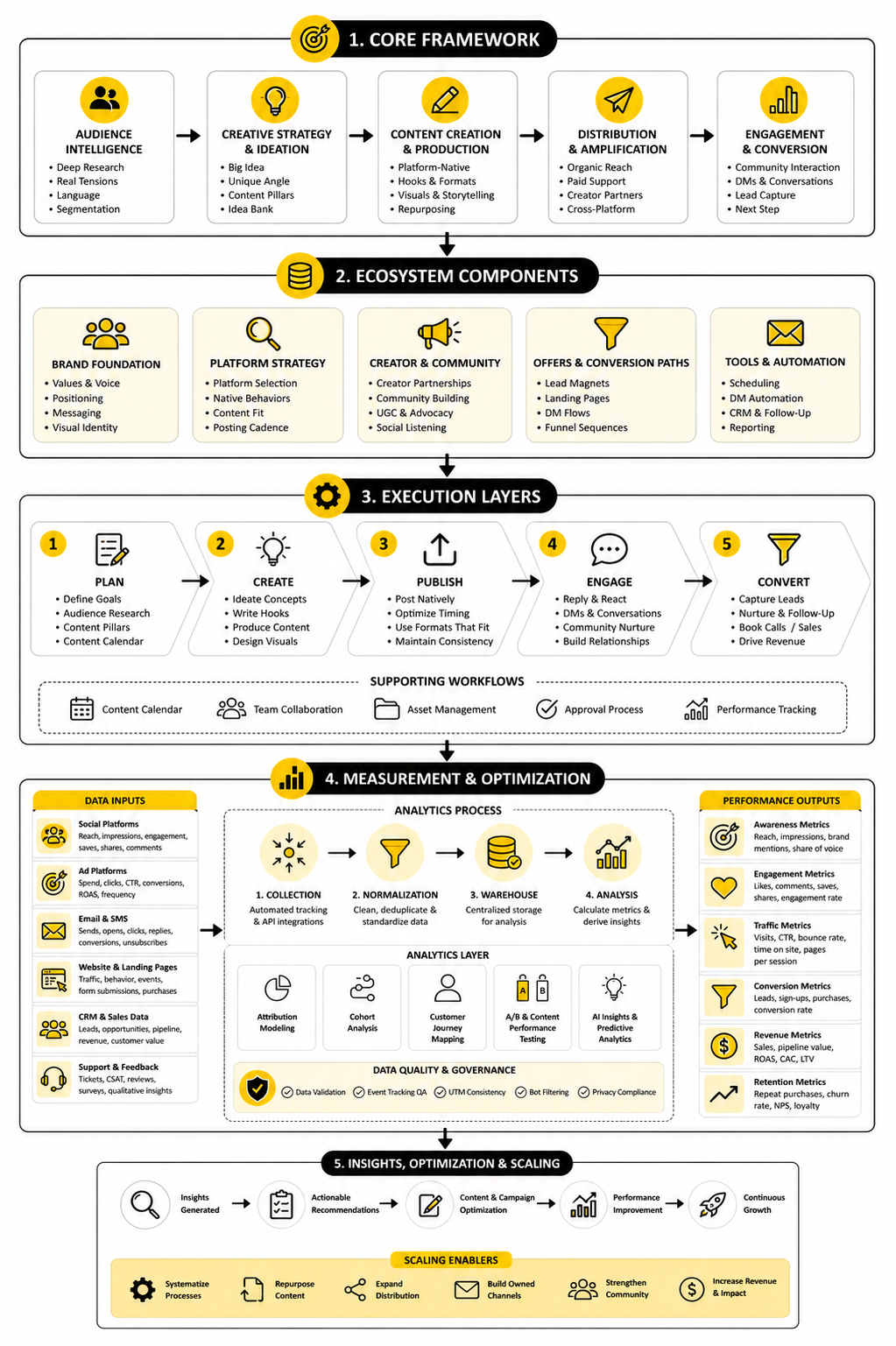
The Complete Creative Social Media Marketing Ecosystem
Creative social media marketing works best when it becomes an ecosystem, not a collection of isolated posts. The audience insight feeds the creative concept. The concept becomes platform-native content. The content creates signals, and those signals improve the next round of ideas.
That ecosystem should also connect social activity to owned channels, sales follow-up, customer feedback, creator partnerships, and product positioning. This is where the work becomes more valuable than a content calendar. The brand starts learning from the market every week and turning that learning into sharper communication.
The final goal is not to win one post. The goal is to build a system where the brand consistently earns attention, understands what the audience cares about, and turns that attention into trust, demand, and revenue. That is the difference between posting creatively and building a real creative social media marketing engine.
How To Keep The System Improving
The best systems stay simple enough to use and strong enough to scale. If the process becomes too complicated, the team stops following it. If the process is too loose, the content becomes reactive again.
A practical improvement rhythm should include weekly creative review, monthly performance review, quarterly strategy review, and ongoing audience listening. Weekly reviews help fix hooks, formats, and production issues. Monthly reviews reveal patterns. Quarterly reviews keep the brand from drifting away from the bigger business strategy.
The most important habit is turning learning into action. If a post reveals a strong objection, write more content around that objection. If a format repeatedly fails, either improve it or stop forcing it. If one audience segment keeps responding with higher intent, build more content and offers around that segment.
Common Mistakes To Avoid
The biggest mistake is confusing activity with progress. A brand can publish every day and still fail to create demand. More output only helps when the ideas, formats, and follow-up system are strong enough to make that output matter.
Another mistake is copying visible trends without understanding the audience reason behind them. A trend may work for a creator because the creator has trust, timing, personality, or cultural fit. The same trend can look awkward when a brand copies it without a real point of view.
The third mistake is measuring too narrowly. Likes and views are useful, but they do not explain everything. Creative social media marketing should also be judged by saves, shares, qualified comments, DMs, clicks, branded search, customer conversations, sales mentions, and the quality of the demand it creates.
What Is Creative Social Media Marketing?
Creative social media marketing is the process of using original ideas, audience insight, platform-native formats, and strategic execution to create social content that people actually care about. It is not just making posts look better. It is about turning a business message into content that earns attention, trust, engagement, and action.
Why Is Creative Social Media Marketing Important?
It matters because social platforms are crowded, and average content is easy to ignore. Brands compete against creators, friends, entertainment, news, AI-generated content, and direct competitors in the same feed. Creativity helps the brand stand out, but strategy makes that attention useful for the business.
How Is Creative Social Media Marketing Different From Regular Social Media Marketing?
Regular social media marketing often focuses on publishing, scheduling, and maintaining a presence. Creative social media marketing focuses on the idea, the audience tension, the platform behavior, and the emotional or practical reason someone should pay attention. The difference is not just better visuals; it is sharper thinking behind every post.
What Makes A Social Media Campaign Creative?
A campaign becomes creative when it uses a fresh angle, strong audience insight, memorable execution, and a clear participation or response mechanism. It should feel specific to the brand and natural to the platform. If another company could post the exact same thing without changing much, the creative idea is probably not strong enough.
How Do You Come Up With Creative Social Media Ideas?
Start with audience tension, not a blank content calendar. Look at customer questions, objections, reviews, comments, sales calls, competitor gaps, search queries, and community discussions. Then turn those insights into angles that educate, challenge, simplify, compare, demonstrate, or invite participation.
Which Platforms Are Best For Creative Social Media Marketing?
The best platform depends on your audience, offer, content strengths, and business model. LinkedIn may work better for B2B authority, TikTok and Instagram may work better for fast visual storytelling, YouTube may support deeper education, and Reddit may reveal honest audience language. Do not choose platforms only because they are popular; choose them because they fit the behavior you want to influence.
How Often Should A Brand Post On Social Media?
Posting frequency should match your capacity to maintain quality. A weaker daily post is not better than three strong posts per week. The right cadence is the one your team can sustain while still producing clear ideas, strong hooks, useful payoffs, and proper follow-up.
What Metrics Matter Most For Creative Social Media Marketing?
The most useful metrics depend on the job of the post. Reach and impressions show attention, saves and shares show value, comments and DMs show interaction, and clicks or conversions show intent. The smartest teams connect these signals instead of treating one metric as the whole truth.
Can AI Help With Creative Social Media Marketing?
AI can help with brainstorming, research summaries, hook variations, repurposing, editing support, and workflow speed. It should not replace the brand’s judgment, taste, audience understanding, or point of view. The best use of AI is to speed up production while humans protect originality, accuracy, and trust.
How Do Small Businesses Do Creative Social Media Marketing Without A Big Team?
Small businesses should focus on fewer platforms, clearer content pillars, and stronger audience insight. A small team can still win by turning customer conversations, founder expertise, product knowledge, and real objections into useful content. The goal is not to look like a giant brand; the goal is to sound relevant, credible, and specific.
How Do You Turn Social Media Engagement Into Leads?
Engagement turns into leads when there is a clear next step. That might be a DM flow, lead magnet, booking page, newsletter, product page, webinar, trial, or consultation offer. The next step should match the audience’s intent, because asking for too much too early can waste the attention you just earned.
What Is The Biggest Risk In Creative Social Media Marketing?
The biggest risk is becoming either too generic or too chaotic. Generic content feels safe but gets ignored. Chaotic content may get attention for a moment but fails to build memory, trust, or business results. The best approach is disciplined creativity: clear strategy, sharp ideas, consistent execution, and regular learning.
How Long Does Creative Social Media Marketing Take To Work?
Some posts can create quick visibility, but a serious system usually compounds over time. The brand needs enough repetition for the audience to recognize its point of view and enough testing to learn what actually works. Treat it as an ongoing growth system, not a one-week campaign.
What Tools Help With Creative Social Media Marketing?
The right tools depend on the workflow. Scheduling tools like Buffer can help with consistency, while ManyChat can support comment and DM-based campaigns. Funnel and follow-up platforms like GoHighLevel, ClickFunnels, and Systeme.io can help turn social attention into a more structured conversion path.
Build a stronger local presence with BAAM AI
Turn your website, Google profile, social channels, and AI visibility into one growth engine
Most businesses do not need more random marketing activity. They need a consistent presence system that helps the right people find them, trust them, and take action. BAAM AI brings strategy, local SEO, website updates, Google Maps visibility, social content, AI-search readiness, media production, and reporting into one practical monthly engine.
If you want your marketing to keep working after the campaign ends, start with a free BAAM AI presence audit. See how your business shows up today and where the fastest visibility wins are at BAAM AI.