
BAAM AI Blog
Copy AI & GPT‑3: How AI Supercharges Content Creation
Artificial intelligence has radically changed the way text content is created. In particular, large language models like GPT‑3 - a 175 billion parameter generative model developed by OpenAI - can produce coherent...

Affiliate disclosure: this article may include compensated links. Recommendations should still be evaluated against your use case, budget, and current provider terms.
Should you choose Copy.ai?
Copy.ai is worth considering when the use case, budget, and implementation effort match what you actually need to do next.
teams that want a practical tool decision without reading another generic feature list
Check Copy.aiWhy This Matters for Writers and Marketers
Artificial intelligence has radically changed the way text content is created. In particular, large language models like GPT‑3 - a 175 billion parameter generative model developed by OpenAI - can produce coherent, human‑like language from minimal prompts, and this has opened up new possibilities for automation in communication and marketing.
One practical application of this shift is Copy AI, a commercial platform built on GPT‑3 that helps teams generate marketing copy - from email subject lines to ad text - in seconds rather than hours. By automating repetitive writing tasks, Copy AI frees writers and marketers to focus on strategy and creative direction.
This isn’t hype: across industries such as ecommerce, content marketing, and customer support, businesses are adopting GPT‑3‑powered tools to scale output, test variations at speed, and reduce dependency on expensive creative resources.
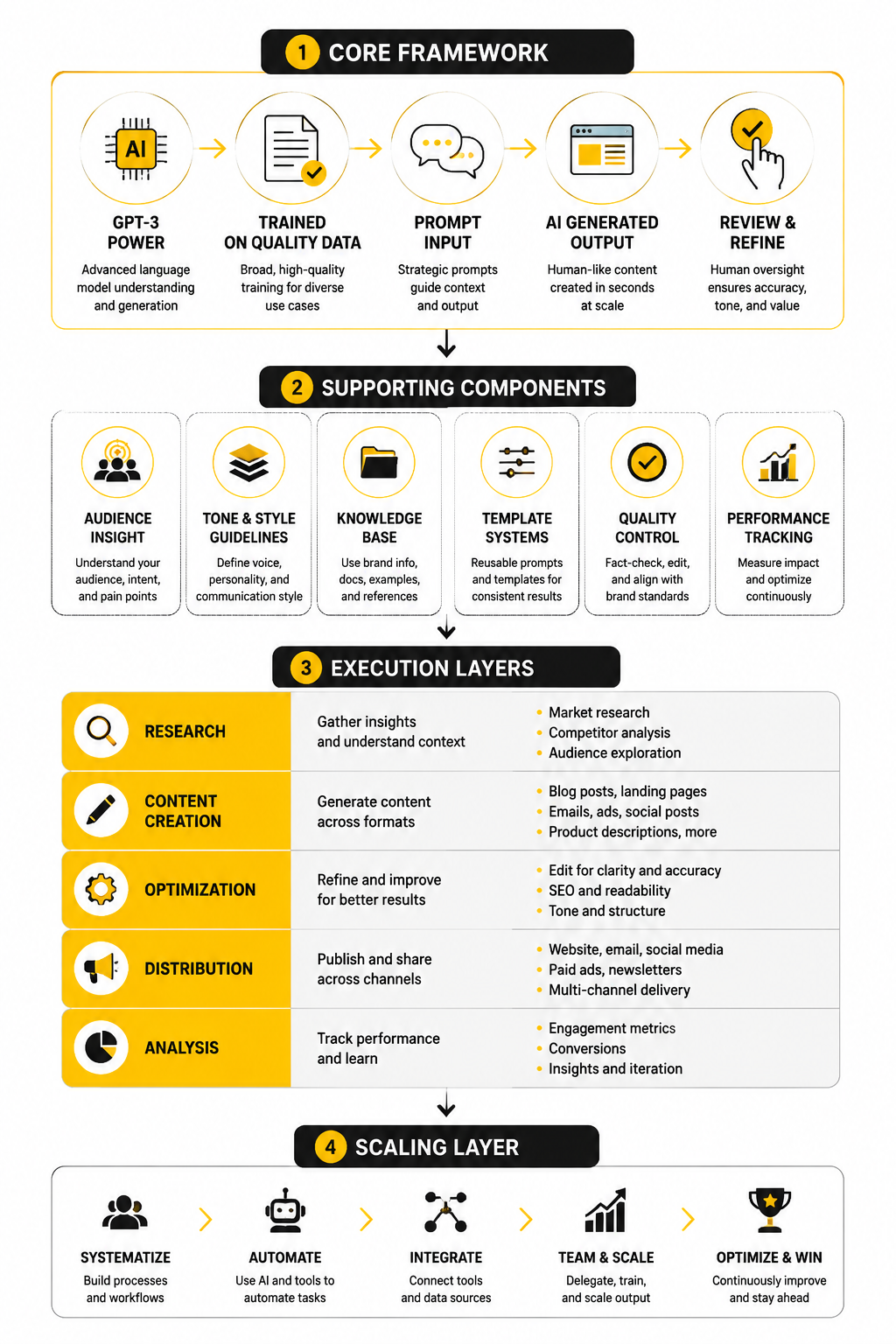
Framework Overview: How Copy AI + GPT‑3 Works
The underlying technology that makes Copy AI effective is GPT‑3’s autoregressive large language model. Trained on massive datasets, GPT‑3 predicts likely next text tokens based on prompt context, enabling it to generate fluent, relevant text in response to user input.
Copy AI sits on top of that model with a user‑friendly interface and pre‑built templates designed for specific copywriting tasks - such as product descriptions, social posts, and email copy. Rather than requiring technical expertise in machine learning, users provide a brief prompt (often just a sentence or two), and Copy AI returns multiple drafts of text that can be edited and refined.
At a high level, the workflow typically looks like this:
This combination of human input and machine output is what makes the system practical for everyday marketing teams.
Core Components
(Part 2 will continue with detailed explanations of prompts, templates, and quality control workflows.)
How the Core Components Actually Work
To understand how Copy AI + GPT‑3 systems produce useful text, you have to look under the hood at the building blocks that make up the whole workflow. While GPT‑3 itself is a foundational large language model that predicts text based on context, tools like Copy AI wrap that predictive power in human‑friendly scaffolding - templates, workflows, and quality controls that turn raw generation into reliable output.
1. Prompt‑Driven Templates
At the heart of any Copy AI‑driven writing process are templates. These are predefined prompt structures tuned for specific types of content - for example, blog introductions, email subject lines, sales copy, or social media posts. You don’t write a prompt from scratch; you fill in a few fields such as product name, tone, audience, and goal, and the platform threads those into a prompt that pushes GPT‑3 to produce variations in seconds.
Templates do three critical things:
This structured input dramatically improves output quality and relevance compared to ad‑hoc prompts typed in a blank chat window.
2. Workflow Chains
Beyond one‑off templates, advanced users leverage workflows to link multiple AI steps into a repeatable process. Think of a workflow as a sequence: first research the topic, then generate an outline, then draft the copy, then optimize for SEO. Each step feeds its output to the next, and the whole sequence runs with minimal manual intervention.
Workflows turn manual multi‑stage content projects into automated sequences that reflect your internal best practices. For example, a workflow aimed at launching a product might:
This allows teams to scale content creation while keeping quality consistent.
3. Brand Voice & Custom Context
A major limitation of generic AI output is that it can feel “generic.” To overcome this, many tools now let you define a brand voice or provide custom context that the AI references during generation. This could be sample content from your past campaigns, brand guidelines, or even product documentation. GPT‑3 then uses this extra context to shape the output so it aligns with your voice and messaging.
Providing custom context is a form of Retrieval‑Augmented Generation (RAG) - combining your own data with the LLM’s learned patterns to produce output that’s both fluent and specific.
4. Human‑In‑The‑Loop Review
No matter how advanced the generation engine, professional content workflows still rely on human oversight. While GPT‑3 can draft compelling text, it’s not infallible - especially where nuanced messaging, legal requirements, or brand positioning matter. Editors review, refine, and sometimes rewrite output to ensure it meets strategic goals.
Skilled teams typically use AI output as draft material: a starting point that significantly reduces writing time, rather than a finished product ready for direct publication.
5. Model Selection and Optimization
Although Copy AI began as a GPT‑3 front end, modern platforms often offer access to multiple underlying models (including newer generations), which you can pick based on task complexity. Simpler tasks might be handled on smaller models for cost‑efficiency, while high‑stakes writing might use larger, more capable engines.
This flexibility lets teams balance quality, speed, and cost depending on the use case - a key component of professional AI‑assisted content workflows.
Collectively, these components make tools like Copy AI effective in real marketing environments because they offer structure around generative models, turning raw generative power into predictable, repeatable output suitable for business use.
Professional Implementation: How to Use Copy AI + GPT‑3 Effectively
When it comes to turning the theory of Copy AI + GPT‑3 into real results, the key is a repeatable execution process that aligns with your goals and team workflows. Whether you’re writing blog posts, email campaigns, or social content, a structured implementation ensures quality and efficiency without losing creative control.
Below is a practical, step‑by‑step process that teams can follow to integrate AI‑driven copy generation into their content production pipeline.
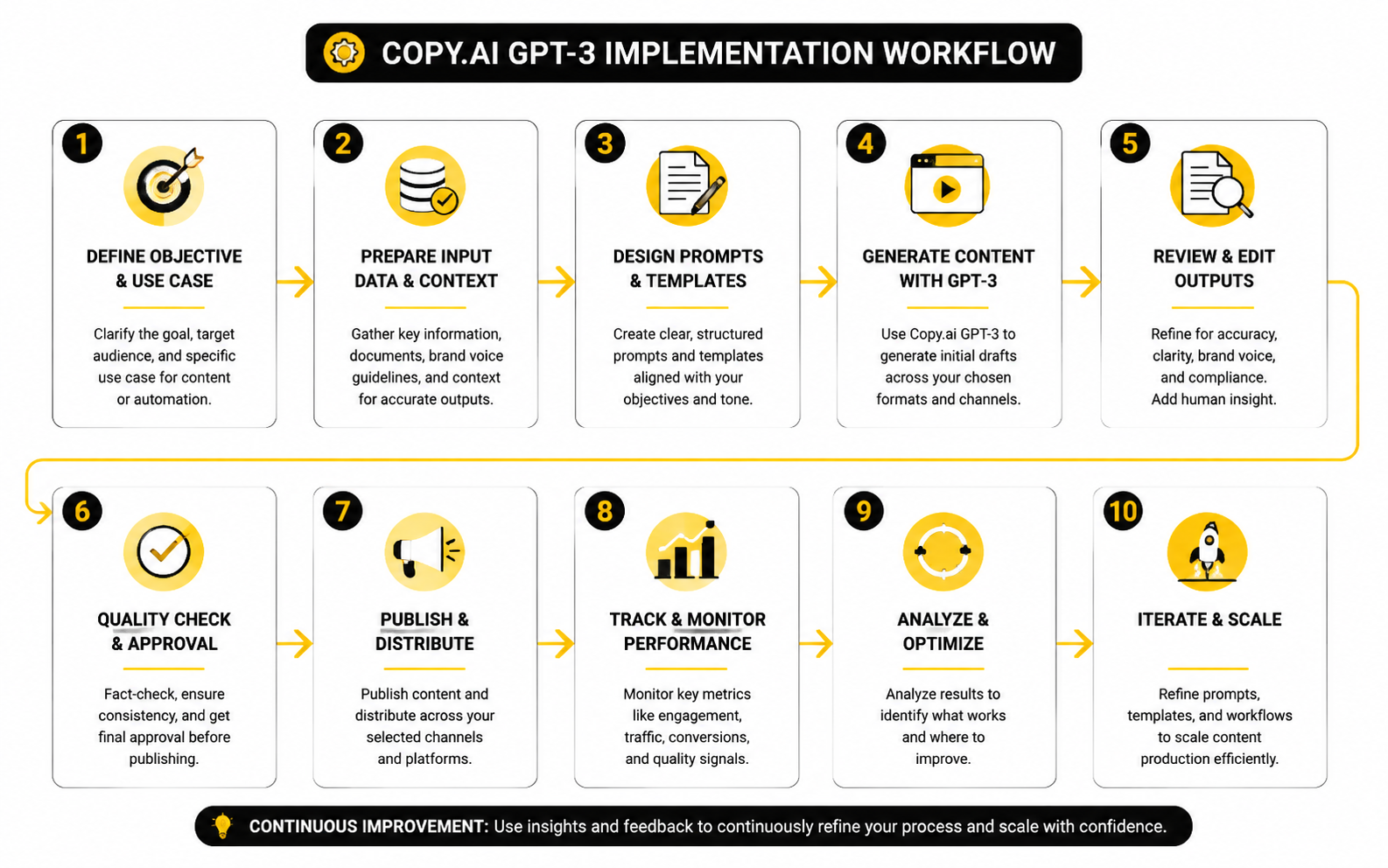
1. Define Clear Content Goals
Start by establishing what success looks like for each piece of content. Are you optimizing for clicks, conversions, engagement, or SEO visibility? Clear goals help shape the prompts you use with GPT‑3 and determine what output you select from Copy AI drafts. Setting direction up front reduces unnecessary revision and keeps the generated copy aligned with measurable outcomes.
For example, a performance‑focused campaign might prioritize concise calls to action and conversion language, while a brand awareness piece could lean on storytelling or thought leadership tones.
2. Craft Effective Prompts and Templates
The heart of implementation is writing effective prompts—the instructions you give GPT‑3 through Copy AI. Good prompts combine:
Using templates speeds this step. Pre‑approved templates for specific content types (e.g., newsletter subject lines or product descriptions) ensure consistency and reduce time spent on prompt engineering. When templates are well‑built, AI output becomes predictable and easier to edit.
3. Run Iterations and Compare Variants
One of the strengths of Copy AI is generating multiple versions of copy in a single run. Don’t settle for the first output. Review multiple variants, compare how different tones or layouts read, and select the strongest elements from each. High‑performing AI‑generated content often comes from mixing and matching lines across outputs rather than using a single AI draft verbatim.
This iteration mindset resembles classic A/B testing, giving teams insights into language that resonates best with their audience.
4. Human Edit and Refine for Quality
Machine‑generated text should never be published without human review. Editors add value by:
Even the best GPT‑3 outputs can produce subtle errors or awkward phrasing, so this refinement step is crucial to maintain professionalism and trust with your audience.
5. Integrate SEO and Performance Checks
For web‑facing content, align AI‑generated copy with SEO criteria. Tools like keyword analyzers, readability checkers, and SERP preview tools help validate that the text will perform in search. If your writing is part of a larger campaign, add metrics tracking (e.g., UTM tags, conversion goals) so you can measure real‑world impact and improve over time.
This combination of AI‑assisted draft creation and analytics‑driven optimization turns content production into a closed‑loop system that learns and improves with each cycle.
6. Document and Scale What Works
Finally, track which prompts, templates, and processes yield the best results over time, and formalize them into workflows. Documenting successful patterns lets teams scale content creation without reinventing how something is done each time. Over weeks and months, this builds a library of reliable prompts and templates that reflect your unique style, audience, and business objectives.
This approach transforms Copy AI and GPT‑3 from novelty tools into strategic assets that consistently support your content engine.
Data, Measurement & What It Actually Means
As teams adopt copy ai gpt 3 workflows, the real question isn’t “can the AI write something?” - it’s “how well does that content perform against measurable goals?” Data helps you separate output that sounds okay from content that drives business results, and it also reveals the trade‑offs you need to manage between speed, quality, and impact.
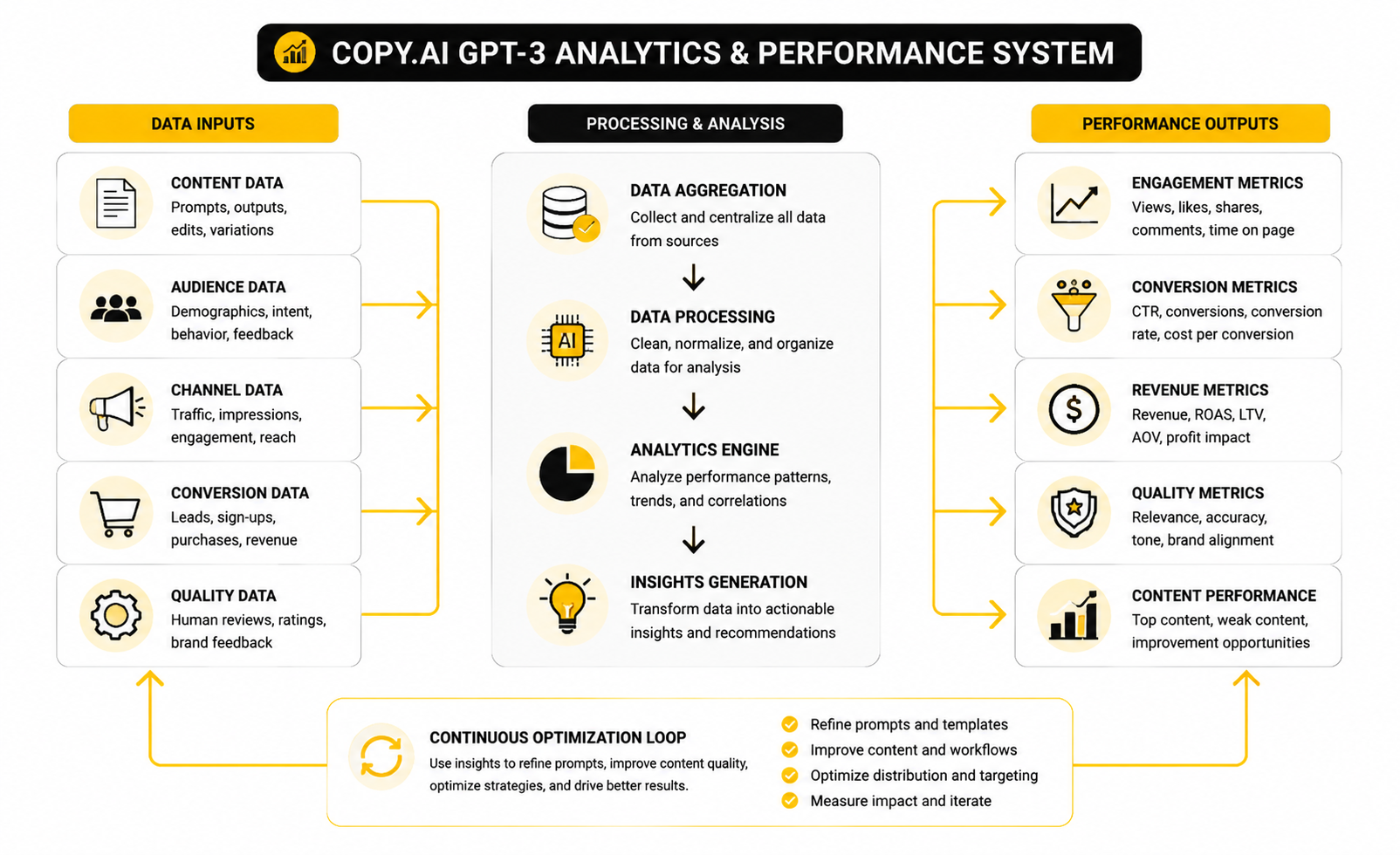
Efficiency Metrics: Time, Cost, and Output Volume
One of the clearest performance signals for AI‑assisted content is efficiency gains during production. Benchmarks across tools show that dedicated AI copy platforms can generate drafts for short‑form content much faster than manual writing - often in 2–3 minutes per draft for a social post or product description - with editing time still significantly lower than a human‑only workflow. For example, Contextual tool reviews show Copy AI completes comparable generation workloads faster than some competitors, though its outputs may require more editing than others.
Why this matters: Faster generation and reduced editing time mean teams can increase volume without proportionally increasing cost. But efficiency gains should be weighed against downstream performance: speed alone won’t drive revenue if the content fails to engage or convert.
Engagement & Organic Performance Data
Engagement metrics are core to understanding whether copy ai gpt 3 output resonates with audiences. In broader studies of AI‑assisted social posts and web content, AI drafts - especially when refined by humans - can deliver modest lifts in engagement signals. For instance, average engagement rates on LinkedIn and Instagram posts that combine human strategy with AI drafting show benefits of around +3% on engagement compared with purely human or purely AI posts.
Organic search performance tells a similar story. Analysis of 20,000 web pages found AI‑generated text ranked nearly as often as human content in top SERP positions when blended with human editing and SEO optimization. Crucially, 73% of marketers report that hybrid workflows - AI plus human review - outperform either approach alone, suggesting the real value is in how you use GPT‑3 drafts rather than whether you use them at all.
Interpretation: Engagement and ranking data underlines that copy ai gpt 3 won’t automatically outperform traditional content. It can accelerate output and help you scale, but performance depends on editorial oversight, prompt quality, and SEO best practices.
Quality & Risk Signals
Not all measurable signals for AI content are positive, and data highlights risks that should shape your implementation strategy. Independent benchmarks of common AI writing tools reveal a significant portion of outputs contain inaccuracies or unverified statements. For a range of platforms including GPT‑3‑driven tools, a substantial share of drafts contain at least one unverified claim or “hallucination,” meaning editorial review isn’t optional - it’s integral.
Similarly, plagiarism detection studies on GPT‑3.5 outputs showed that a high percentage of text contained duplicated or paraphrased material, underscoring the importance of originality checks when publishing AI‑generated copy.
Why this matters: Metrics like hallucination rate and content originality aren’t vanity stats - they directly affect brand credibility, legal risk, and search performance. Tools that help you measure and mitigate these risks are essential for scaling AI‑assisted content.
ROI & Business Impact Benchmarks
Beyond individual content performance, ROI measurement connects copy ai gpt 3 to business goals like lead generation, sales, or cost reduction. Market research shows that AI content systems can reduce production costs substantially - sometimes by a wide margin compared with traditional writer expenses - and some teams report content output increases of multiple times with the same or fewer resources.
However, a critical benchmark remains adoption versus accountability: recent industry surveys found only a minority of marketing teams track AI‑specific KPIs, even though the majority use AI daily. Without measurement frameworks in place, teams risk misallocating budget to output that looks productive but fails to move key metrics.
Actionable takeaway: Tie your AI content strategy to a measurement plan that includes both efficiency and outcome metrics - from creation cost and time to engagement, SEO impact, conversion rates, and revenue attribution. Without aligning these signals to business drivers, you’re flying blind.
What the Data Means for Your Workflow
Data doesn’t give you simple answers, but it does show clear patterns:
Understanding these signals enables you to optimize how you leverage copy ai gpt 3 - not just whether you use it. Measurement isn’t an afterthought; it’s the foundation of sustainable, high‑impact content automation.
Advanced Considerations and Strategic Trade‑Offs
By now you’ve seen how copy ai gpt 3 functions, how to implement it in real workflows, and what the data says about performance. The next level of maturity is thinking critically about trade‑offs, scaling risks, and where expert judgment adds the most value. Without careful strategy, teams can adopt AI tools in ways that feel efficient but actually erode quality or misalign with long‑term goals.
Balancing Speed With Strategic Depth
One of the biggest strategic trade‑offs in copy ai gpt 3 workflows is between speed and strategic depth. AI excels at quick generation - headlines, short blurbs, and variations - but isn’t inherently aware of your broader business goals, product nuances, or brand narrative arcs. For example, content designed to build thought leadership requires strategic reasoning, long‑term audience understanding, and deeper storytelling than short‑form social posts.
Treat AI as a force multiplier for tasks where speed adds real value, not as a replacement for strategic thinking. Skilled editors and strategists still need to set direction, review assumptions, and ensure content aligns with brand narratives that can’t be reduced to a prompt.
Scaling Without Dilution of Quality
When a team scales content output using copy ai gpt 3, there’s a real risk of diluting quality if processes are not adapted. Producing more content shouldn’t mean lowering editorial standards. As volume increases, so does the burden of quality assurance, which means teams must invest in scalable review workflows, standardized style guides, and tooling that flags common issues like factual errors or tone inconsistencies.
For many organizations, this translates into an editorial tiered workflow where AI output is first reviewed for structural quality, then by subject matter experts, and finally for brand voice compliance. This staged review process adds overhead, but it protects the consistency and credibility of your content as you scale.
Ethical Risk and Brand Trust
Generative systems like GPT‑3 are trained on wide swaths of publicly available text and can sometimes produce content that inadvertently reflects biases or misrepresents sensitive topics. These “hallucinations” - outputs that are fluent but factually incorrect - aren’t just stylistic errors; they can harm brand trust and even expose an organization to legal or reputational risks when published unchecked.
Strategic deployment of copy ai gpt 3 requires clear guardrails: content verification steps, bias mitigation checks, and human review points that catch risky language before it goes live. Editorial guidelines should explicitly address how AI‑generated drafts are treated, ensuring that no piece goes live without appropriate vetting.
Cost‑Benefit Optimization
It’s also important to consider cost optimization beyond just production speed. While AI tools reduce the time spent generating first drafts, they introduce new costs: subscription fees, editing overhead, and potential investment in training or tooling. Compare these costs against the value gained - in terms of hours saved, increases in engagement, and revenue impact - to make sure that your AI adoption is an investment, not an expense.
Some teams find that investing in prompt engineering skills - teaching writers how to get better output from copy ai gpt 3 - yields more long‑term value than simply buying more generation credits. Others leverage custom model fine‑tuning or retrieval‑augmented generation for domain‑specific tasks. These advanced capabilities are more resource‑intensive but can pay off where generic outputs fall short.
Long‑Term Skill Development
Finally, relying too heavily on copy ai gpt 3 without developing internal AI literacy can create skill gaps. Writers who lean on AI for basic drafting may not sharpen core writing or strategic thinking skills, leading to a workforce that is efficient but shallow in expertise. Integrating training programs on how to critically assess AI drafts, refine prompts, and integrate AI insights with human judgment is an investment that grows team capability and future readiness.
In strategic terms, copy ai gpt 3 should be seen as a collaborative partner - one that accelerates productivity while still depending on human intelligence for direction, ethics, nuance, and decision‑making. When you manage these advanced considerations thoughtfully, you build more sustainable and impactful use of generative AI across your content ecosystem.
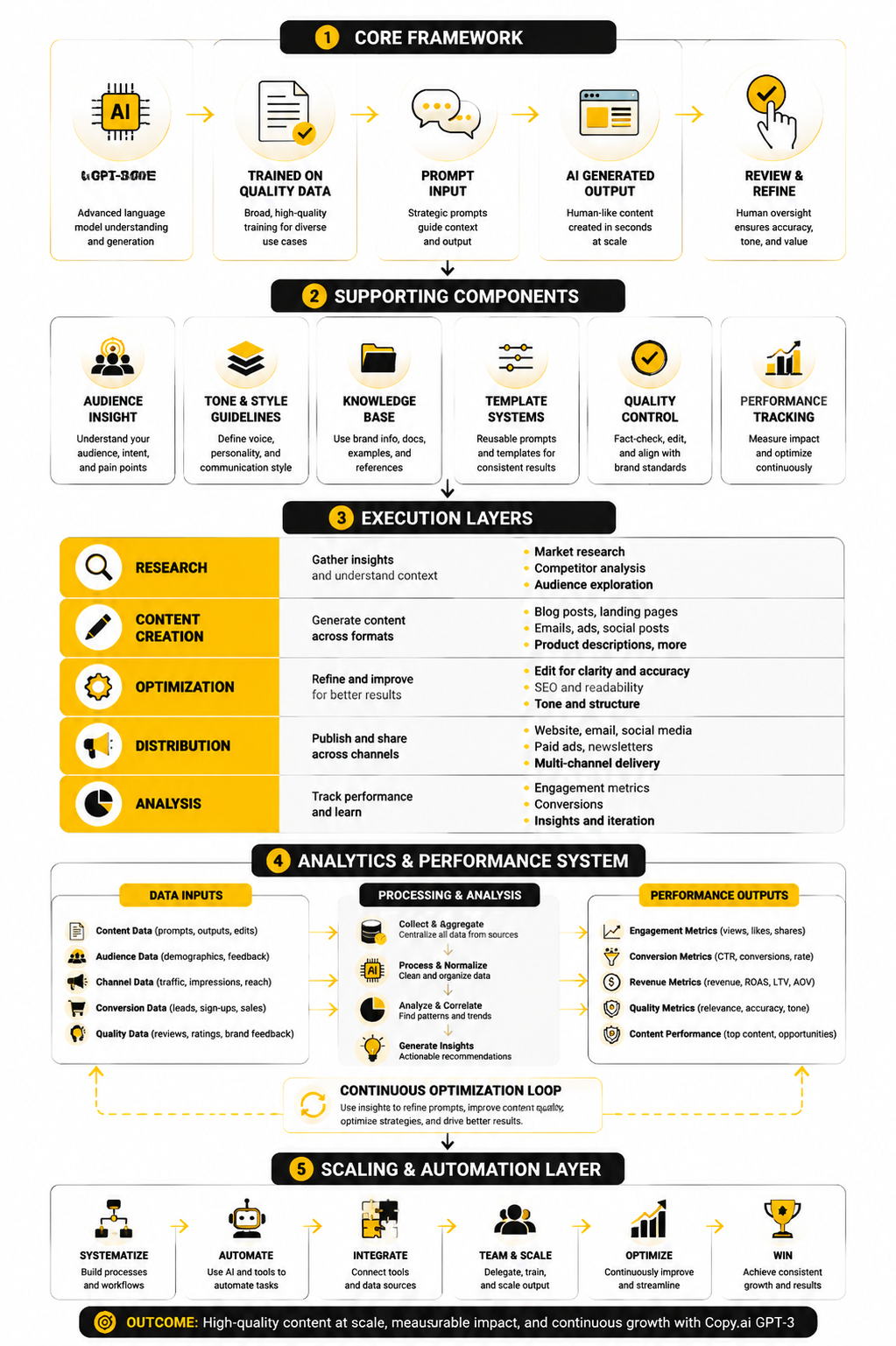
What is copy ai gpt 3 and how does it work?
copy ai gpt 3 refers to using Copy AI - a generative writing tool - that leverages the GPT‑3 large language model to produce text based on user prompts. GPT‑3 predicts what text should follow a given prompt, and Copy AI wraps that capability in templates and workflows so marketers and writers can generate drafts quickly without coding or deep technical expertise.
Is content generated by copy ai gpt 3 original?
AI‑generated text is synthesized by the model based on learned patterns from its training data. While many outputs are unique, originality isn’t guaranteed, and similarity checks (e.g., plagiarism detection tools) should be used when publishing to ensure the writing meets originality standards for SEO and legal compliance.
Can copy ai gpt 3 replace human writers?
AI tools excel at speeding up ideation and drafting, but they don’t replace strategic thinking, emotional nuance, or deep subject knowledge. The most effective workflows combine AI generation with human editing and direction to ensure quality, accuracy, and brand alignment.
How do I ensure AI content aligns with my brand voice?
To tailor AI output to a specific voice, provide contextual examples or brand guidelines in your prompts and edit the drafts after generation. Some platforms allow you to store brand preferences or past high‑performing content to guide future outputs.
What are common risks when using copy ai gpt 3?
Risks include factual errors, biased or insensitive language, and output that feels generic or off‑brand. Rigorous human review, fact‑checking, and clear editorial guidelines help mitigate these issues before publication.
How does GPT‑3 differ from newer models?
GPT‑3 is one generation of OpenAI’s large language models. Newer models like GPT‑4 and beyond generally offer improved reasoning, context retention, and reduced error rates. The core principles of prompt‑driven generation remain similar, but capabilities improve with model iterations.
Do I need technical skills to use copy ai gpt 3?
No - Copy AI and similar interfaces are designed for non‑technical users. You don’t need to understand the underlying machine learning to use the tool effectively; strong prompts and editorial judgment are much more important than coding ability.
How should I measure the performance of AI‑assisted content?
Measure both process metrics (like time saved and output volume) and outcome metrics (like engagement rates, SEO rankings, leads generated). Tracking performance over time helps you optimize prompts and workflows for better results.
Is there a cost trade‑off when using AI writing tools?
Yes. Subscription fees for AI platforms and the time invested in editing must be factored against the value gained from faster drafts and increased output. ROI should be judged holistically, not just by speed.
Can copy ai gpt 3 help with SEO?
AI can help draft SEO‑friendly content outlines, meta descriptions, and keyword‑rich text, but it doesn’t automatically ensure high search rankings. You still need to integrate keyword research, internal linking, and quality standards that satisfy both users and search algorithms.
Build a stronger local presence with BAAM AI
Turn your website, Google profile, social channels, and AI visibility into one growth engine
Most businesses do not need more random marketing activity. They need a consistent presence system that helps the right people find them, trust them, and take action. BAAM AI brings strategy, local SEO, website updates, Google Maps visibility, social content, AI-search readiness, media production, and reporting into one practical monthly engine.
If you want your marketing to keep working after the campaign ends, start with a free BAAM AI presence audit. See how your business shows up today and where the fastest visibility wins are at BAAM AI.