
BAAM AI Blog
Companies With Best Social Media Presence
In today’s digital economy, a company’s social media presence isn’t just a marketing channel - it’s where audiences build relationships, communities form, and brand loyalty grows. When done well, social media can...

In today’s digital economy, a company’s social media presence isn’t just a marketing channel - it’s where audiences build relationships, communities form, and brand loyalty grows. When done well, social media can improve a brand from obscurity into cultural relevance, drive measurable sales growth, and make companies household names.
But not every brand does this effectively. Some companies lead because they blend strategy, creativity, and deep audience insight - turning posts into viral moments and followers into advocates.
here we’ll explore why social media presence matters, break down an effective framework companies use, and showcase real brands that have excelled online. You’ll see how great social media isn’t accidental - it’s strategic, data-informed, and audience-centric.
Each section builds on the last so you can understand not just who’s winning, but how they’re doing it and what comes next for brands in the evolving social landscape.
Why Social Media Presence Matters for Brands
Every major brand today views social platforms - from Instagram to TikTok to YouTube - as critical to their bottom line. Platforms with billions of active users give companies direct access to audiences in real time, enabling engagement that traditional ads can’t match. Social media shapes consumer perception, amplifies cultural moments, and often serves as the first touchpoint in the customer journey.
Brands with great social presence don’t just broadcast messages - they spark two-way conversations, build communities, and align with values that matter to their audiences. That engagement can translate into stronger loyalty, higher lifetime value, and even category leadership as customers feel heard and represented.
Framework for Successful Social Media Presence
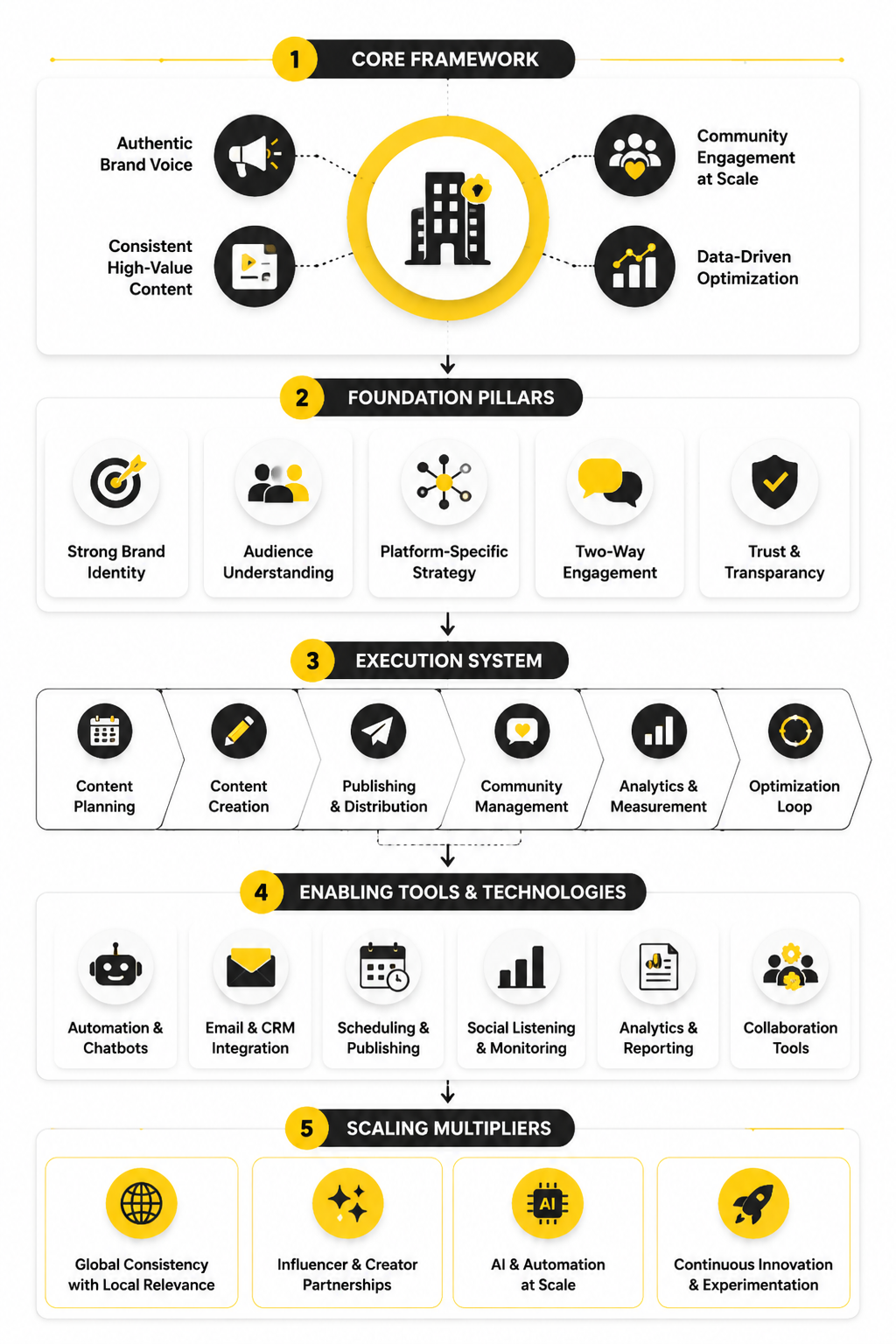
At the heart of every standout social media strategy is a clear framework that guides decisions and content creation. Top companies follow a consistent structure rooted in:
This structured approach ensures that social content isn’t created in isolation but tied to measurable business outcomes and audience expectations.
Core Components of Top‑Tier Social Media Strategies
Brands that lead social media incorporate several key elements that set them apart:
Together, these components form a playbook that turns everyday posts into meaningful interactions that build brand affinity over time.
Examples of Companies With Exceptional Social Media Presence
Many companies have set the standard for what great social media presence looks like. These examples illuminate different strategic approaches:
These companies illustrate how a well‑executed social strategy can differentiate a brand - whether through rich tutorials, viral trends, influencer partnerships, or community‑centric content.
How Brands Sustain Social Media Success
Sustainable success on social platforms doesn’t come from one viral post - it requires:
Leaders invest in monitoring tools and dedicated social teams so they can adapt quickly, maintain relevance, and capitalize on cultural moments as they arise.
Future Trends in Brand Social Media
Looking ahead, trends shaping social presence include the rise of long‑form video content on platforms like YouTube as brands seek deeper engagement, the growing role of authentic interactive communities, and the use of AI to scale creative content production. As audiences demand richer experiences, brands that innovate and prioritize genuine connection will continue to stand out.
In a landscape where social platforms evolve constantly, the companies with the best social media presence are those that treat these channels not as promotional megaphones, but as dynamic communities to listen, engage, and grow with.
How Brands Sustain Social Media Success
Sustaining a strong social media presence goes far beyond a one‑off viral hit or a momentary spike in followers. The companies with the best social media presence treat platforms as long‑term investments, tying everyday content and campaigns to broader business goals. A strategy that looks good today but lacks consistency won’t produce engagement that matters months or years down the line. Real sustainability emerges when brands commit to ongoing audience understanding, purposeful content, and measurement that influences decisions across teams.
One key to ongoing success is moving beyond superficial metrics - likes and follower counts - to deeper measures of engagement and community activity. Modern brands monitor how audiences interact with their content, whether users share brand posts organically, and how social interactions correlate with real business outcomes like sales and loyalty. This kind of data‑informed refinement helps brands adjust quickly, prioritize what’s working, and pivot from tactics that aren’t resonating.
Another factor is treating platforms not as broadcast channels but as community spaces. Brands leading in social presence build what some researchers call a community flywheel, where user content fuels brand awareness, and engagement begets more engagement. When campaigns inspire customers to share stories, tag friends, and create user‑generated media, brands tap into authentic momentum that traditional advertising can’t replicate.
Finally, the most resilient brands integrate social insights into wider marketing and business strategy. Rather than keeping social media teams siloed, successful companies align social efforts with customer service, product development, and overall brand messaging. Teams share feedback gathered on social platforms so product iterations, customer care, and marketing messages reflect what real people are saying - not just what analytics dashboards report.
Future Trends in Brand Social Media
Looking ahead, the companies with the best social media presence are those already experimenting with the formats and expectations of tomorrow’s audiences. One notable trend is the re‑emergence of long‑form video as a core part of brand storytelling, with platforms like YouTube allowing deeper engagement that extends well beyond brief TikTok clips. Long‑form content offers brands the chance to create narratives that audiences return to again and again, rather than consuming and discarding short clips.
At the same time, the lines between social platforms and commerce will continue to blur. Audiences increasingly expect smooth paths from discovery to purchase without leaving their favorite apps. Brands that tap into in‑platform commerce features - from shoppable posts to native marketplace experiences - will turn engagement into measurable revenue more effectively.
Another emerging pattern is the increasing value placed on authentic interaction over polished promotion. Audiences crave real voices and two‑way conversations, not corporate monologues. This means brands embracing authentic personas, responding in real time, and participating in cultural conversations where it feels natural rather than forced.
Ultimately, the future of social media for brands will revolve around community, creativity, and connection. Companies that listen deeply, engage consistently, and innovate boldly will maintain relevance in a space where audiences decide what thrives and what fades.
Bringing a Social Media Strategy to Life
Understanding why the best companies with social media presence succeed is one thing, but implementing that consistently is another. Turning strategy into action requires a clear process that teams can follow week after week, campaign after campaign. Successful execution isn’t chaotic - it’s built on a repeatable workflow that guides planning, creation, distribution, and measurement.
At the heart of implementation is clarity of roles and rhythm of execution. High‑performing brands create a content calendar that aligns with broader business peaks (product launches, seasonal demand, key industry events), assign responsibility for each channel, and set checkpoints for review. When every team member knows what they own and what success looks like, the wheel of content keeps turning smoothly even as trends shift.
Another common trait among companies with excellent social presence is integration of creativity and analytics. Teams don’t just produce content - they assess performance, learn from what resonates, and refine their approach in close to real time. This constant calibration turns every post into an opportunity for insight, not just output.
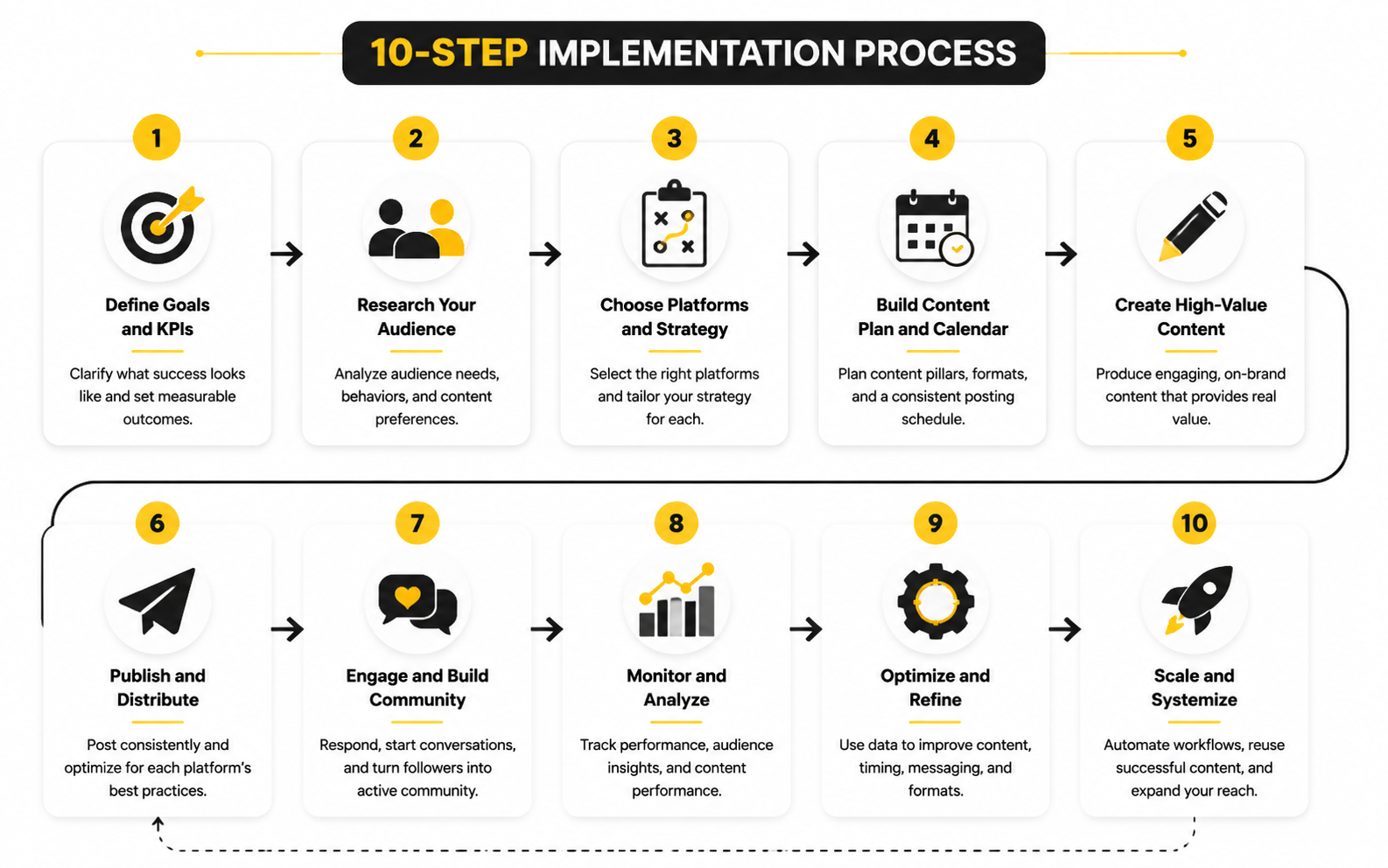
Step‑by‑Step Execution Process
Below is a practical implementation workflow many successful brands use to keep their social presence strong and consistent:
Tools and Team Structures That Help
Execution at scale often depends on having the right tools, such as scheduling platforms that keep posts organized and analytics dashboards that surface real patterns quickly. Collaboration tools also matter; they ensure creative, social, and product teams are aligned on priorities and messaging.
Equally important is defining roles within a social media team - from strategists who plan content to community managers who nurture conversations. When teams are structured and supported with clear KPIs, execution becomes less about guessing and more about continuously improving.
This kind of systematic implementation turns social presence into a disciplined growth engine, where each piece of content moves the brand closer to its audience, and each cycle of feedback sharpens future efforts. That’s the difference between posting regularly and posting with purpose and measurable impact.
Statistics and Data Behind Social Media Performance
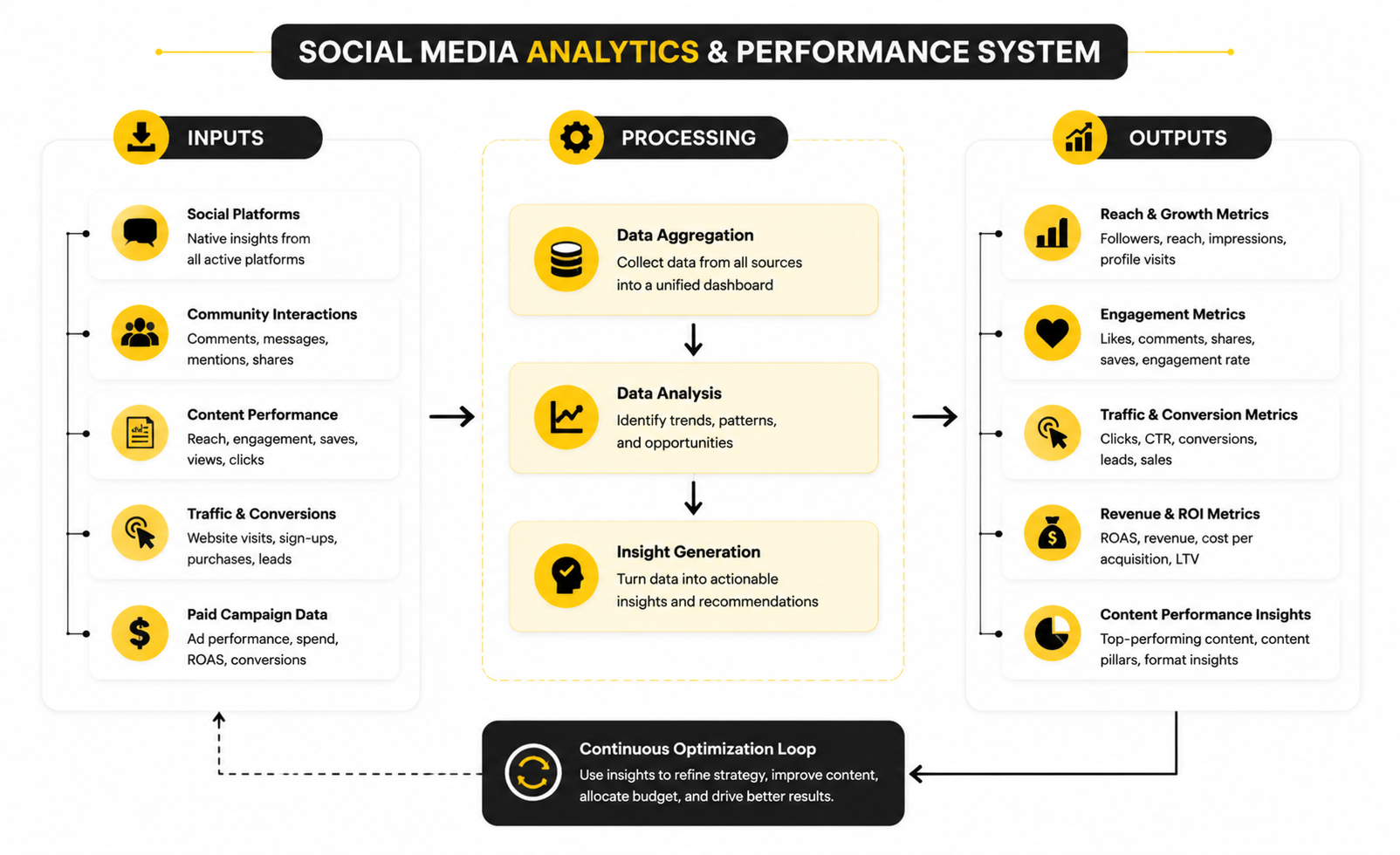
To truly understand why companies with best social media presence stand out, you have to move past vanity numbers like follower count and look at the data signals that indicate real connection, relevance, and business value. Smart measurement tells you not just what happened - but what to do next.
Social media analytics break down into different categories of metrics that align with specific goals, whether you’re building brand awareness, driving engagement, or generating conversions. The key is picking metrics that tie directly to your brand’s objectives and interpreting them in context.
What Metrics Actually Tell You
Awareness and Reach
These metrics show whether your content was seen, not just produced:
These numbers matter because a wider reach increases the likelihood that people recognize and recall your brand - a foundational step before deeper engagement or conversion can happen.
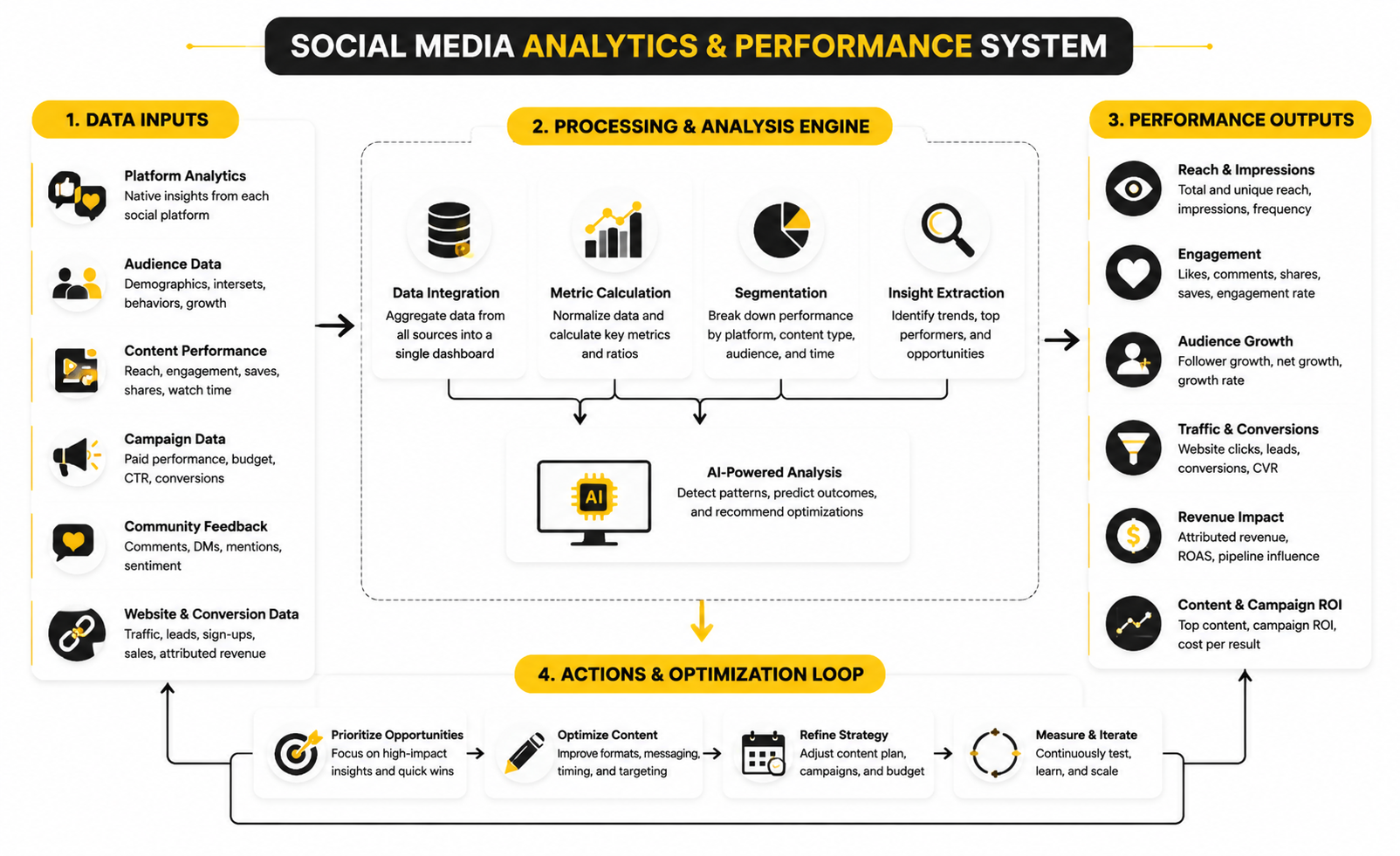
Engagement Metrics That Predict Connection
Engagement is where strategy meets audience attention - and the numbers here are far more instructive than raw likes alone:
Higher engagement rates generally indicate deeper interest and loyalty - factors that correlate much more closely with purchase intent than sheer follower counts do.
Benchmarks That Guide Decision‑Making
Benchmarks give context to your own performance. For example:
These benchmarks are useful not because you must hit a specific number, but because they help you set realistic targets based on your niche and audience size.
KPIs That Tie Metrics to Business Goals
Metrics become strategic when they evolve into key performance indicators (KPIs) - metrics tied to a business outcome. Examples include:
Choosing the right KPIs requires aligning them with what your business actually needs - whether that’s increasing brand awareness, nurturing leads, or improving customer experiences.
Interpreting Data to Drive Action
Data only matters if it leads to better decisions. For example:
The real advantage comes not from collecting metrics but from using them - understanding which numbers signal success, which signal warning signs, and adjusting accordingly.
When companies truly leverage data - tracking the right metrics, benchmarking against relevant standards, and connecting results to business outcomes - their social presence becomes more predictable, more strategic, and ultimately more impactful.
Strategic Challenges and Advanced Considerations
When companies with best social media presence scale their efforts, they inevitably face strategic trade‑offs and risks that aren’t obvious at the start. What works for early growth doesn’t always sustain long‑term engagement; what drives viral hits sometimes clashes with broader brand coherence. Navigating these nuances is where experience and thoughtful planning make all the difference.
Balancing Creativity With Brand Discipline
One advanced challenge is maintaining creative freshness without undermining brand identity. Early in social strategy, companies often experiment widely - jumping on trends, trying bold formats, and testing distinct voices. As your presence grows, however, so does public visibility, meaning off‑brand or misaligned content can have reputational consequences.
Smart brands create creative guardrails - not barriers - that allow expressive content while preserving core messaging and values. These guardrails include documented tone guides, approval workflows for high‑visibility content, and clear escalation paths for riskier experiments. That balance lets teams stay nimble without drifting away from what makes the brand recognizable and trustworthy.
Scaling Community Management
As engagement metrics rise, so does the workload of managing comments, DMs, and user interactions. Companies with best social media presence invest in community infrastructure - not just tools, but people and processes. Automated replies can handle common inquiries, but personalization matters when conversations deepen.
At scale, teams often segment community roles by platform and sentiment: moderators who handle basics, escalation points for sales or customer service, and creative responders who improve positive interactions into broader storytelling. Without this layered approach, scaling engagement can turn into chaos, pulling resources away from content strategy and performance analysis.
Aligning Social Performance With Broader Business Goals
Another high‑level consideration is linking social media outcomes to business impact. It’s one thing to grow engagement and quite another to show how that engagement drives revenue, retention, or brand preference. Bridging this gap requires cross‑functional alignment and shared measurement frameworks.
Forward‑looking companies build dashboards that tie social metrics to customer acquisition costs, lifetime value, or conversion rates. Integrating social data with CRM and sales platforms turns engagement from a metric of visibility into a signal of business health. This shift often reveals where social efforts truly add value, and where they should be recalibrated.
Navigating Platform Risk and Policy Changes
Social platforms evolve constantly - with algorithm updates, new monetization features, or shifting content policies. These changes can affect reach, engagement patterns, and even what type of content is permissible. Companies with strong social presence monitor these trends closely, adapting strategies before performance deteriorates.
Some brands even maintain experiment pipelines, where they test new formats and features in controlled pilots before rolling them out broadly. This approach minimizes the risk of sudden platform shifts disrupting ongoing campaigns and helps teams stay ahead rather than playing catch‑up.
Investing in Long‑Term Capabilities
Finally, as social efforts mature, the smartest brands invest in team capability and learning systems. Training in data literacy, creative storytelling, community empathy, and platform specialization ensures that teams don’t just execute workflows - they interpret, innovate, and anticipate audience needs.
Scaling doesn’t mean replicating early tactical playbooks; it means elevating how decisions are made, expanding analytical sophistication, and building resilience against volatility in audience behavior or platform dynamics.
By confronting these advanced strategic considerations, brands can ensure their social presence isn’t just large - it’s meaningful, sustainable, and tightly connected to long‑term organizational success.
What does “social media presence” really mean for brands?
A strong social media presence means a brand is visible, engaging, and meaningful in the places where its audience spends time online. It’s not just about posting - it’s about resonating, fostering dialogue, and building habitual engagement over time.
Why focus on engagement rather than follower count?
Follower count is a vanity metric - it shows potential visibility. Engagement metrics like comments, shares, and saves reveal whether people actually care about the content, which is a far stronger signal of relevance and business impact.
How do companies with best social media presence measure ROI?
They tie social actions to business outcomes using KPIs like conversion rates from social ads, click‑through performance, customer acquisition cost from social campaigns, and uplift in brand sentiment or repeat purchase behavior.
Can small businesses build social presence like big brands?
Yes. Small businesses often win by knowing their audience deeply, posting consistently, prioritizing genuine interactions, and leveraging trends early rather than trying to mimic large corporate campaigns.
How often should a brand post on social platforms?
There’s no one number, but consistency matters more than frequency. Brands with best social media presence maintain a steady cadence that aligns with audience expectations without overwhelming users.
Which platforms should a brand prioritize?
Choose platforms based on where your target audience is most active and where your content format performs best. For visual storytelling, Instagram and TikTok can be strong; for professional content, LinkedIn may deliver more value.
Is influencer collaboration necessary?
It’s not mandatory, but working with creators can amplify reach and lend cultural credibility. The best partnerships align audience, values, and storytelling rather than just reach figures.
How important is video content?
Video continues to drive high engagement, especially short‑form formats. Top brands invest in video because it accommodates rich storytelling and adapts to evolving platform formats.
How should brands handle negative comments or criticism online?
Professional, transparent responses that acknowledge concerns and offer solutions help turn challenges into trust‑building opportunities. Avoid ignoring feedback; engagement - even with critics - signals respect for the community.
What’s the biggest mistake brands make on social media?
The biggest mistake is treating social media as a megaphone for broadcast messages rather than as a dialogue platform. Listening and responding matter as much as content creation itself.
Build a stronger local presence with BAAM AI
Turn your website, Google profile, social channels, and AI visibility into one growth engine
Most businesses do not need more random marketing activity. They need a consistent presence system that helps the right people find them, trust them, and take action. BAAM AI brings strategy, local SEO, website updates, Google Maps visibility, social content, AI-search readiness, media production, and reporting into one practical monthly engine.
If you want your marketing to keep working after the campaign ends, start with a free BAAM AI presence audit. See how your business shows up today and where the fastest visibility wins are at BAAM AI.