
BAAM AI Blog
Companies Using Social Media Marketing: How Today’s Brands Win with Social
Many of today’s leading brands don’t just have social media accounts - they use them as core engines for audience growth, customer engagement, and revenue. From global CPG giants to niche digital-first start‑ups...
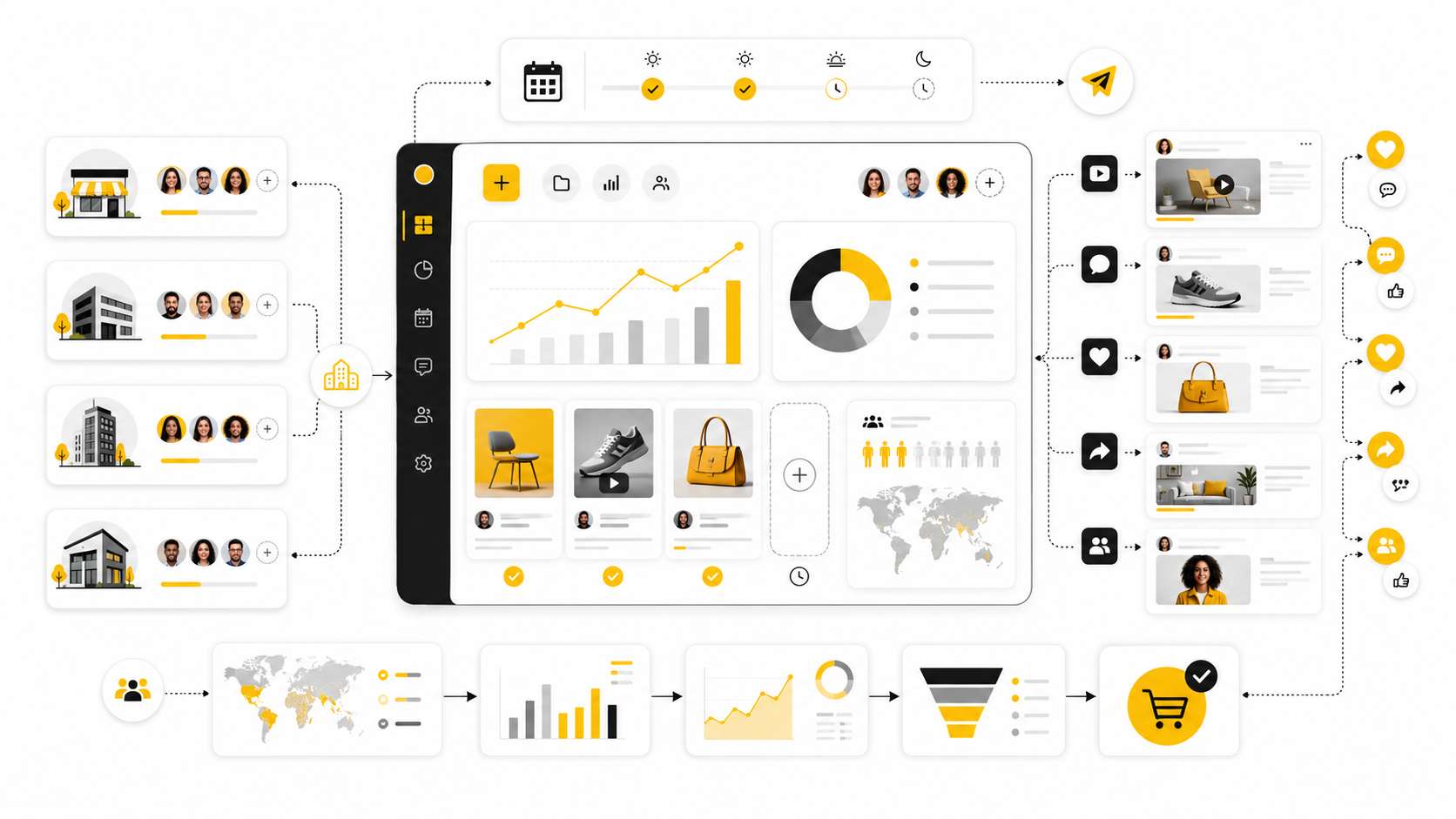
Many of today’s leading brands don’t just have social media accounts - they use them as core engines for audience growth, customer engagement, and revenue. From global CPG giants to niche digital-first start‑ups, companies that master social media are shaping customer expectations and redefining marketing performance.
Social media marketing isn’t an add‑on anymore - it’s central to how brands communicate, sell, and build loyalty. A strong social presence drives brand recall, supports product launches, improves customer care, and fuels community engagement in ways traditional media simply can’t match.
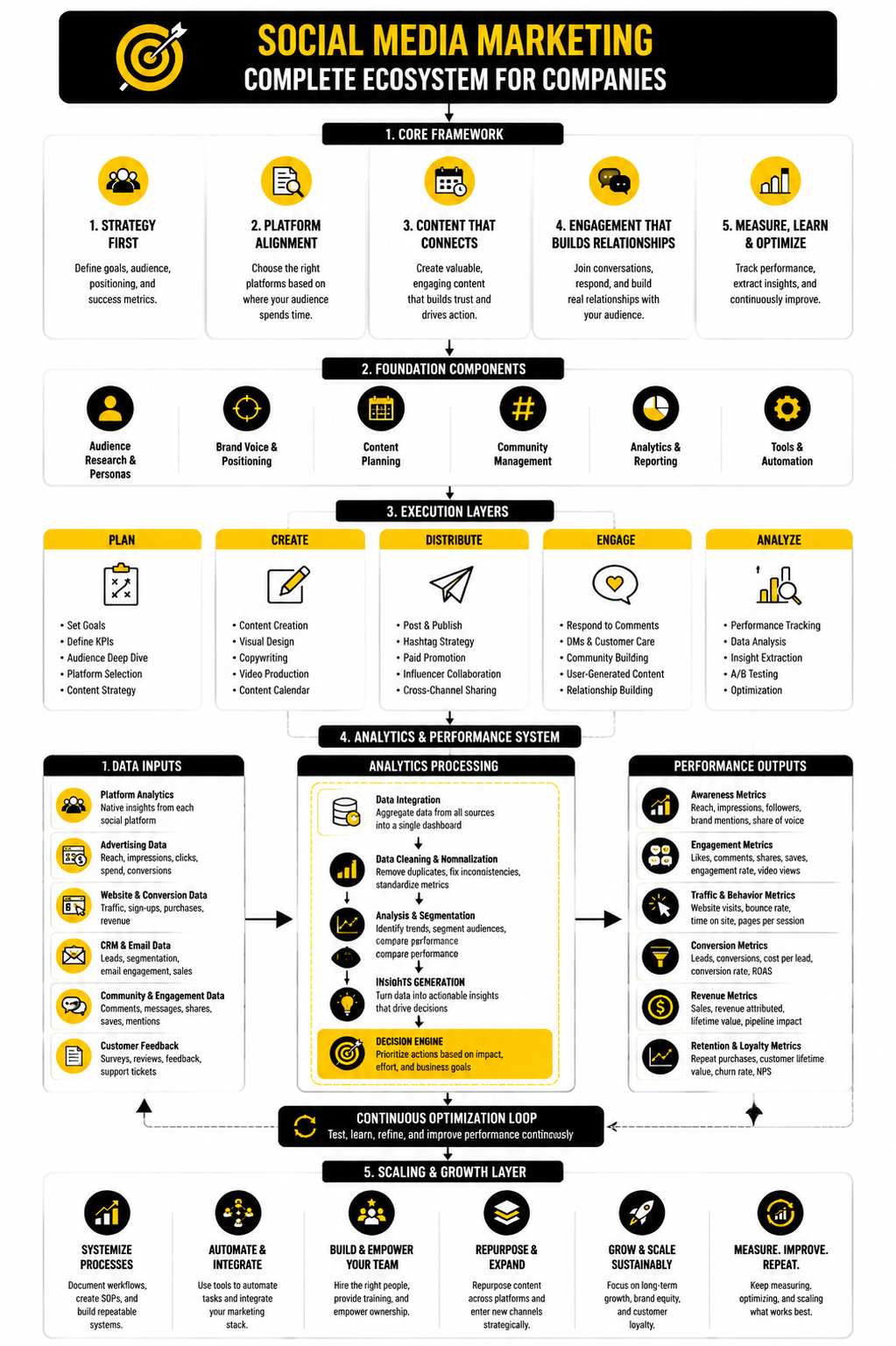
While strategies differ from TikTok to LinkedIn, the best companies use a structured approach that aligns content, platform, audience, and measurement into a unified program designed for long‑term growth.
Why Social Media Marketing Matters for Companies Today
Social channels are where audiences spend time, gather opinions, and make purchase decisions. Platforms like TikTok, Instagram, YouTube, and LinkedIn are not just publishing stages - they’re ecosystems of behavior and influence. For brands, this means social media can amplify messages, build community, and drive real business outcomes when done right.
Recent data show that social interactions increasingly shape buying behavior - with more consumers planning purchases directly through social channels in the near future.
Companies that invest strategically in social media stand to benefit from better customer insights, higher brand visibility, and more direct lines of communication with their audiences than through traditional advertising alone.
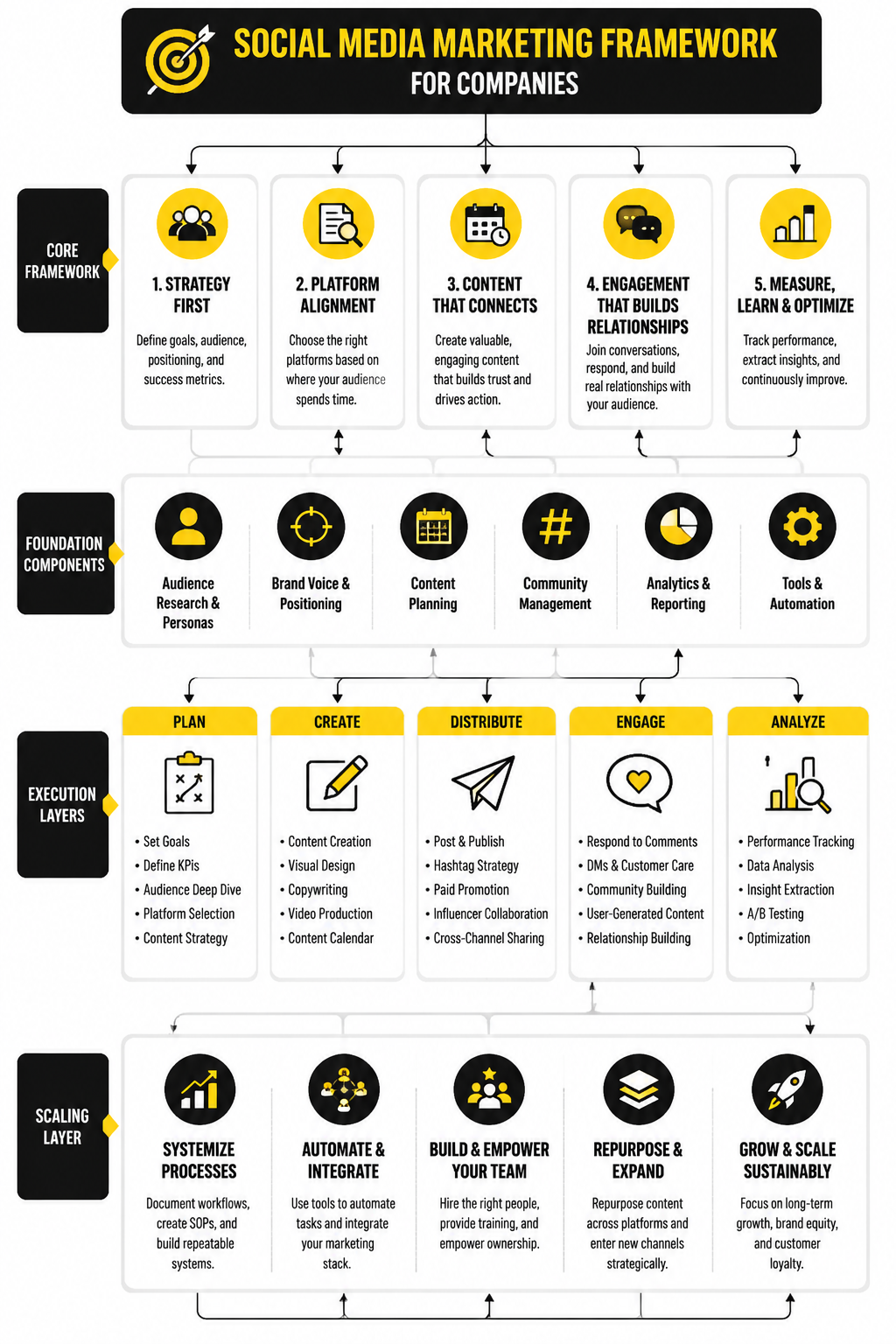
Social Media Marketing Framework for Business Growth
A reliable social media strategy isn’t ad‑hoc posting - it’s a framework that organizes effort around clear goals and measurable outcomes. This starts with understanding your audience and choosing platforms where they spend time, then layering in content themes, engagement goals, and performance metrics.
A strong framework typically includes:
This structure helps brands move beyond vanity metrics like likes and followers toward meaningful outcomes like leads, conversions, or retention.
Core Elements That Make Social Media Work
To be effective, social media marketing for companies must combine several core elements consistently:
These elements are visible in the social media governance of high‑performing companies across sectors.
Company Examples Across Industries
Many brands use social media in distinctive ways to achieve measurable results:
These examples highlight how different sectors tailor strategies to fit their audiences while still following core media marketing principles.
Professional Tactics for Implementation
To execute social media campaigns professionally, companies should:
Adopting business‑grade tools and workflows ensures that social efforts are measurable, repeatable, and aligned with broader business goals.
How to Measure and Scale Performance
Measurement transforms social media from a creative channel into a business driver. Companies should track metrics that tie directly to growth objectives, such as:
Strong measurement allows marketing teams to iterate rapidly - scaling what works and refining what doesn’t to improve results quarter after quarter.
Social media is no longer optional for companies that want to grow. By structuring strategy, executing professionally, and measuring impact, brands can turn social platforms into powerful engines for long‑term success.
Deepening Measurement: How Companies Track Social Media Performance
Measuring the impact of social media marketing goes beyond counting likes and shares. Smart companies tie their social efforts back to business outcomes, and they do it with discipline. Tracking social media performance helps leaders understand whether campaigns are driving real value or just surface‑level engagement that feels good but doesn’t affect revenue or customer behavior. High‑performing teams use a layered measurement approach that moves from basic platform metrics to strategic business outcomes.
First, understand that measuring social media is fundamentally a performance measurement system - not just a reporting exercise. Firms struggle most with identifying and defining the right KPIs, collecting reliable data, and building measurement systems that tie social activity back to business goals. This isn’t trivial: traditional measurement methods often fall short because social interactions are dynamic, multi‑touch, and sometimes invisible to analytics tools.
Choosing Metrics That Connect to Real Impact
Companies must pick KPIs that align with strategic objectives like customer acquisition, brand loyalty, or sales growth - not just vanity metrics:
Seasoned teams emphasize that metrics like engagement or follower count should be interpreted only within the context of larger goals - for example, whether new followers convert to newsletter subscribers or buyers.
Building a Measurement Framework
A measurement framework organizes data into meaningful categories. Expert guides often recommend three layers of measurement:
By structuring measurement this way, teams avoid the trap of reporting metrics that look nice but don’t show value. It also supports honest conversations with stakeholders who want to see the business value of social efforts, not just pretty analytics dashboards.
Tools and Attribution Techniques
Modern analytics tools and integrations make this work easier. Many companies link social analytics with CRM systems and website analytics using UTM parameters or pixels to track visitors from social platforms all the way through to conversions. This setup enables closed‑loop reporting: you can see not just that someone engaged with a post, but that they later became a lead or customer.
Advanced teams may also use social listening tools to capture brand sentiment and indirect influence - for example, when people discuss your product on platforms or in private channels that aren’t fully tracked by standard analytics. Awareness of these broader effects helps organizations capture more of the true value social media contributes.
Benchmarks and Continuous Improvement
To understand whether performance is good, companies compare their metrics to benchmarks. Industry standards provide context; for example, the Sprout Social Index™ shows that a strong social presence influences purchase research and trend awareness among consumers, fueling broader marketing objectives.
Once benchmarks are in place, teams iterate - they test content formats, posting times, messaging, and promotions, then refine strategies based on what drives the highest ROI. This cycle of measure, learn, optimize is what separates ad‑hoc posting from a strategic social media program that reliably supports business growth.
Measurement isn’t a one‑off task; it’s a continuous process that evolves as platforms, audiences, and business priorities change. The better companies get at tracking what matters, the more confidently they can justify investment in social media marketing and scale successful initiatives.
Putting Social Media Marketing into Action: A Practical Implementation Guide
Great strategy and measurement set the direction - but real success comes from disciplined execution. For companies using social media marketing, implementation means turning plans into consistent operations that produce outcomes. This section breaks down how organizations move from theory to action with purposeful, repeatable processes that make social campaigns work in the real world.
Implementation isn’t improvisation. It’s a system: you prepare, schedule, publish, engage, track, and refine. Each step builds momentum and contributes measurable value over time.
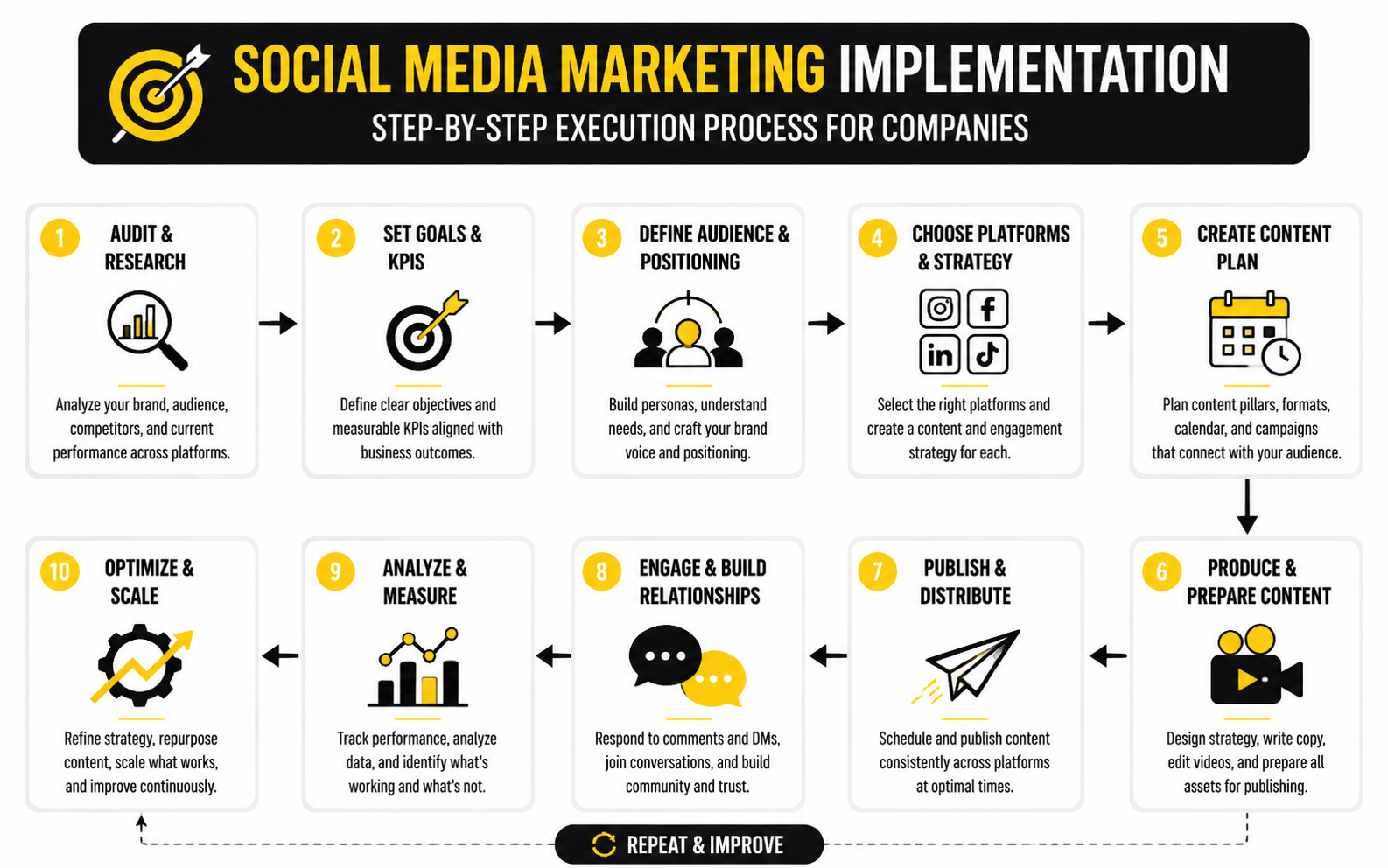
Establishing the Implementation Process
At its core, the implementation phase focuses on doing what the strategy laid out. Start with clear workflows, defined responsibilities, and a content calendar that turns ideas into deliverables. Here’s a practical process companies follow:
A content calendar is the bridge between strategy and execution. It ensures you post consistently and tie your campaigns to specific dates, promotions, and events. Building this calendar forces you to think ahead about content themes, format diversity, and audience rhythms.
High‑performing companies produce content optimized for each platform - short videos for TikTok, professional thought pieces on LinkedIn, and lifestyle visuals on Instagram, for example. This tailoring respects how audiences behave on each channel and increases engagement.
Use scheduling tools and social media suites to publish regularly - even when your team isn’t online. This consistency builds audience expectations and frees up time for engagement and analysis later.
Posting is only half the effort. Responding to comments, acknowledging shares, and joining relevant conversations humanizes your brand and deepens relationships with followers.
Track analytics on reach, engagement, and conversions - then pivot when tactics aren’t driving results. Ongoing refinement is part of implementation, not an optional add‑on.
Turn Implementation into a Repeatable Workflow
The most effective social media teams don’t improvise - they follow documented workflows that ensure quality and scalability. This typically means:
Example of a Structured Implementation
A reliable way to understand implementation in practice is to look at how structured companies deploy workflows. For example, enterprise social teams often start with a weekly planning meeting where they assign content pieces, follow a calendar schedule, and dedicate time daily to community engagement. Over time, this rhythm becomes habitual and scales with audience growth.
When you commit to this level of process - where every post, response, and adjustment is deliberate - social media stops being an afterthought and becomes an engine for brand growth.
Implementation should feel operational, not chaotic. That’s how companies going beyond sporadic posting transform their social media efforts into dependable marketing channels.
Statistics and Data That Shape Social Media Marketing Success
Understanding how companies using social media marketing actually perform requires more than a look at raw numbers - it involves interpreting what those numbers mean for strategy, resource allocation, and decision‑making. When you anchor measurement in benchmarks, audience behavior data, and platform trends, you go beyond chasing likes and followers and instead shape actions that drive growth. The following data highlights key patterns and explains why they matter for performance.
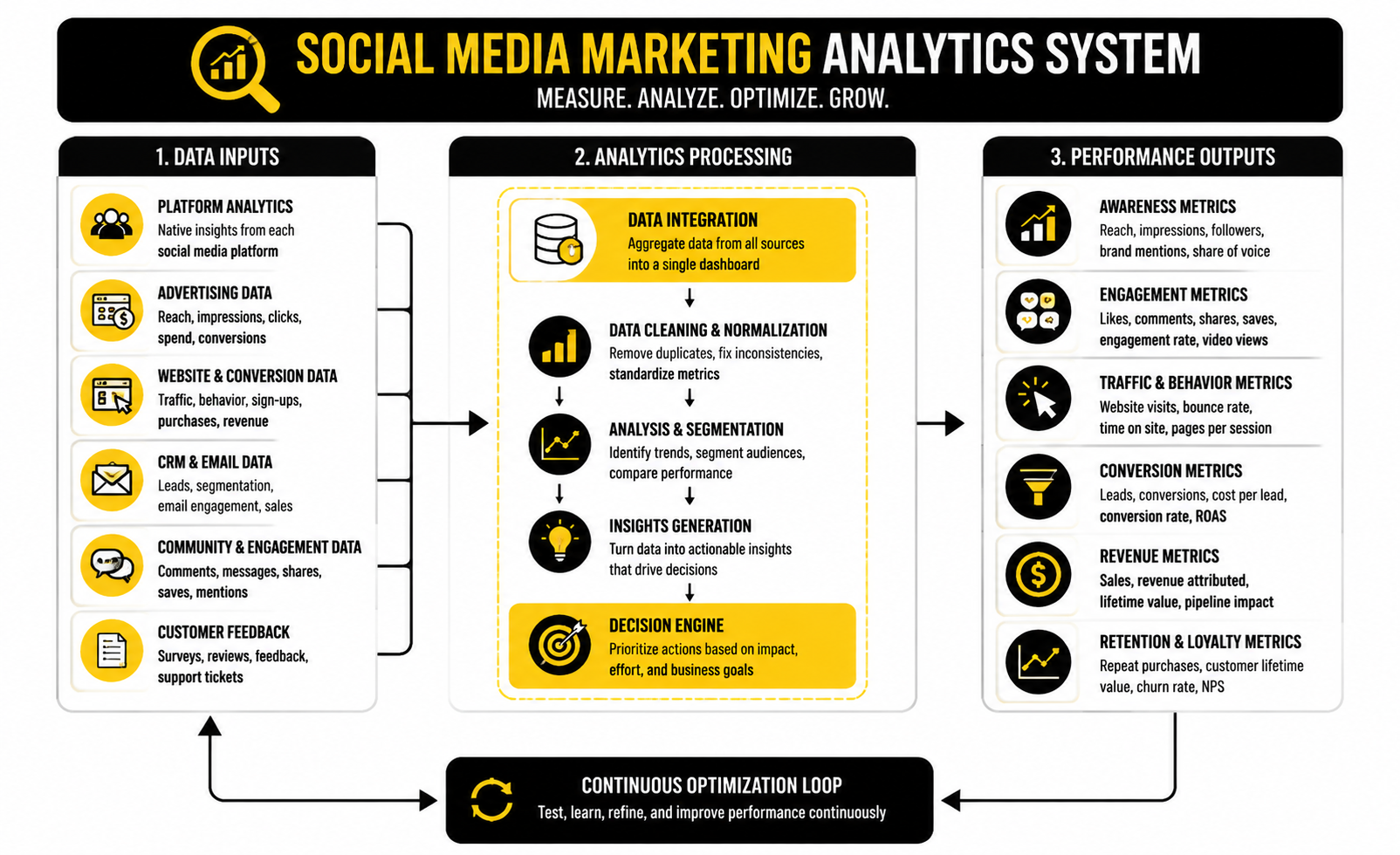
The Scale of Social Media Opportunity
There’s enormous audience potential in social platforms, and that scale matters because it determines how far and wide your content can travel. In 2026 there are around 5.66 billion active social media users worldwide, representing more than two‑thirds of the global population. This reach has grown steadily over recent years, reflecting both new users and deeper engagement. The average person uses nearly seven different networks each month, spending roughly 2–2.5 hours a day on social platforms. These figures show why social marketing remains an integral part of customer discovery and brand reach strategies across industries.
Seeing that scale helps companies answer: How many potential customers could we reach if we tailored our content and targeting properly? If your strategy doesn’t align with where audiences actually spend time, even big budgets won’t produce meaningful outcomes.
Engagement Benchmarks and What They Signal
Not all platforms behave the same, and benchmark data helps you decide where effort produces the best results. For instance, median engagement rates vary significantly across networks: TikTok often leads with higher engagement (around 4 % or more for many brands), while platforms like LinkedIn and Instagram show lower but still meaningful engagement depending on content type and audience. Benchmarks from multiple recent analyses indicate that TikTok’s engagement rates are often more than double those on Instagram, while channels like Twitter/X and Facebook average lower user interaction on brand posts.
Why does this matter? Because numbers like engagement rate aren’t just percentages to brag about - they indicate where content resonates most with audiences. Higher engagement often leads to better algorithmic distribution, more organic reach, and stronger community affinity, all of which influence conversion potential. Companies should use these benchmarks to calibrate expectations and prioritize where they invest creative and media resources.
Follower Growth Patterns and Audience Discovery
Follower counts are still useful, but the context around growth tells a more precise story about momentum. Some of the strongest performance data shows that median brand follower counts on platforms like TikTok increased by over 200 % year‑over‑year for many brands - a signal that certain strategies continue to break through even as organic reach fluctuates.
Moreover, a recent shift in distribution has shown that non‑followers now drive a majority of views for many brands as discovery mechanisms evolve. On platforms like TikTok and Instagram, algorithmic feeds now surface content to people who don’t already follow the brand - offering both challenge and opportunity. This shift underscores the importance of creative quality over sheer follower numbers, because compelling content is rewarded with visibility beyond your existing audience.
Interpretation: What the Numbers Drive
Raw statistics are only useful when they lead to decisions that improve outcomes. Here’s how to think about key performance signals in practice:
These interpretations are practical because they tie numbers back to actionable changes - for instance, adjusting content types, reallocating budget toward higher‑ROI platforms, or shifting creative formats based on engagement benchmarks.
Benchmarking Against Your Industry
Benchmarks also give context: if brands similar to yours average a 2 % engagement rate on a given platform, but you’re at 0.5 %, it’s not a condemnation - it’s a plan. Knowing where you stand relative to peers helps you target improvements in predictable ways, whether that means experimenting with short‑form video, optimizing posting schedules, or refining audience targeting.
Numbers become much more powerful when teams use them to inform strategy rather than justify vanity. Actionable insights, grounded in reliable data, allow companies using social media marketing to shift from guesswork to performance‑oriented execution.
By framing measurement around what matters - audience behavior, engagement signals, and discovery mechanics - companies can ensure their social efforts are driving real business value, not just superficial metrics.
Advanced Considerations for Scaling Social Media Marketing
Once companies using social media marketing have the basics in place - strategy, execution workflows, and measurement - the next challenge is scaling thoughtfully. Growth at scale isn’t just about posting more; it involves balancing creativity with operational discipline, managing risk, and investing in people and technology efficiently. These advanced considerations influence whether a social media program stays effective as it grows larger and more complex.
Balancing Creative Freedom and Brand Consistency
As social teams grow or work with external creators, ensuring brand consistency becomes both more important and more difficult. Creative experimentation drives discovery and engagement, but without clear brand guidelines, execution can become inconsistent across platforms or campaigns. To balance this:
This trade‑off is especially important for global brands serving multiple markets, where local cultural nuances and brand standards must be aligned without slowing down creative iteration.
Mitigating Platform Dependency Risks
A common strategic risk for companies using social media marketing is over‑dependence on a single platform for traffic or engagement. Changes to algorithms or policies can dramatically impact reach overnight. For example, reach on major platforms like Facebook and Instagram has fluctuated as algorithms prioritize certain content types over others, forcing brands to adapt quickly. (sproutsocial.com)
The solution isn’t to abandon core platforms but to diversify:
Diversification reduces vulnerability and strengthens long‑term sustainability.
Investment in Talent and Tools
Scaling social media marketing often hits a capacity wall when teams rely too heavily on manual processes. Investing in the right tools and talent can build efficiency and strategic depth. For example, social management suites that combine scheduling, monitoring, and analytics allow teams to exchange data seamlessly and reduce repetitive work. Similarly, hiring or training specialists in content production, analytics, or community management ensures high‑quality execution at scale.
A practical step is auditing current capabilities and identifying gaps that tools or hiring could fill. Some companies outsource tactical work to agencies while keeping strategic direction in‑house, a model that balances cost with expertise.
Navigating Regulatory and Privacy Challenges
As data privacy protocols evolve, companies using social media marketing face increased scrutiny around data collection, targeting, and consent. Regulations like the EU’s GDPR and evolving privacy frameworks in other regions require careful handling of user data - especially when integrating social analytics with CRM systems.
This creates both strategic and operational implications:
An advanced strategy embraces privacy as a competitive advantage, using first‑party data responsibly to drive personalization without compromising compliance.
Leveraging AI and Automation Wisely
Automation and AI are increasingly part of the social media marketing toolkit, but they require thoughtful application. Using artificial intelligence can speed up tasks like social listening, content tagging, scheduling, and even creative development - but reliance without oversight can lead to generic or off‑brand outputs.
Best practices include:
This hybrid approach allows companies to scale without sacrificing quality or brand integrity.
Planning for Long‑Term Social Media Evolution
The social media landscape shifts quickly. Staying ahead means building future‑ready strategies that factor in potential changes - new platforms, privacy norms, or content formats. Leading companies embed experimentation into their culture, allocating small budget and time for testing new ideas and formats even when core programs are performing well.
This mindset turns uncertainty into advantage: teams that learn fast and adapt smartly are the ones that capitalize on emerging opportunities rather than being disrupted by them.
Scaling social media marketing is less about size and more about maturity. When companies invest in advanced governance, risk management, and strategic flexibility, they don’t just grow - they sustain impact as platforms and audiences evolve.
1. What exactly does social media marketing mean for companies?
Social media marketing refers to how companies use platforms like Instagram, TikTok, LinkedIn, Facebook, and YouTube to build visibility, engage with audiences, generate leads, and support sales through both organic content and paid ads. It’s not just posting - it’s planned content, community management, and performance tracking all working together.
2. How long does it take before a company sees results from social media marketing?
There’s no instant answer - results depend on platform choice, content quality, audience size, and objectives. Some engagement improvements may show in a few weeks, but meaningful outcomes like leads or conversions often take consistent strategy across several months.
3. Should companies focus on organic posts, paid ads, or both?
Both matter. Organic builds community and trust over time, while paid ads accelerate reach and help test messages quickly. A balanced plan allocates resources to quality organic content first and then uses paid promotions where they move key performance indicators.
4. How do companies measure the success of their social campaigns?
Success is measured by connecting social activity to outcomes tied to business goals - like website clicks, leads, sales, or customer inquiries - rather than just likes and followers. Tools and analytics help marketers track these indicators and refine strategy over time.
5. What metrics actually matter the most for performance?
Engagement (likes, comments, shares), follower growth, referral traffic to landing pages, conversion actions, and sentiment over time are key. These metrics show both how audiences respond and whether campaigns are influencing bottom‑line outcomes.
6. Can social media marketing work for B2B companies, not just B2C?
Absolutely - companies selling to other businesses succeed by publishing thought leadership on LinkedIn, hosting industry discussions, and sharing insights that help buyers in professional contexts. The strategy and platforms may differ, but the fundamentals are similar.
7. What are common mistakes companies make with social marketing?
Common pitfalls include chasing vanity metrics (like follower count), posting inconsistently, targeting too many platforms at once without focus, and failing to link social activity to business outcomes. Sustainable results come from focus and measurement, not just quantity.
8. Do companies need special tools to manage social media marketing?
Most companies benefit from using social scheduling, analytics, and listening tools that centralize workflows and provide performance insights. These tools support planning, publishing, measurement, and community engagement at scale.
9. How do companies choose which platforms to invest in?
They start by identifying where their target audience spends time and which formats (short video, long content, professional posts) match their brand goals. Focusing on one or two priority platforms often yields better results than spreading effort too thin.
10. Is social media marketing effective for small companies too?
Yes. Small and medium businesses can leverage social channels to build awareness and connect with local or niche audiences. Consistent strategy, engaging content, and responsiveness often deliver outsized value for smaller brands.
11. How should companies address negative feedback online?
Effective social media teams view negative comments as an opportunity to demonstrate responsiveness and customer care. Prompt, polite engagement can turn critics into advocates and show wider audiences that the company listens and responds.
12. Can a company outsource its social media marketing?
Yes - many organizations hire agencies or freelancers to handle strategy, content creation, and analytics. Outsourcing can bring expertise and capacity, but it’s important to align on goals, brand voice, and reporting expectations from the start.
Build a stronger local presence with BAAM AI
Turn your website, Google profile, social channels, and AI visibility into one growth engine
Most businesses do not need more random marketing activity. They need a consistent presence system that helps the right people find them, trust them, and take action. BAAM AI brings strategy, local SEO, website updates, Google Maps visibility, social content, AI-search readiness, media production, and reporting into one practical monthly engine.
If you want your marketing to keep working after the campaign ends, start with a free BAAM AI presence audit. See how your business shows up today and where the fastest visibility wins are at BAAM AI.