
BAAM AI Blog
Build Your Social Media Strategy Before You Post Anything Else
Social media mastery starts before you write a caption, open Canva, or film a Reel. The real work begins with a simple question: what should social media actually do for your business? If you skip that question, you...
Build Your Social Media Strategy Before You Post Anything Else
Social media mastery starts before you write a caption, open Canva, or film a Reel. The real work begins with a simple question: what should social media actually do for your business? If you skip that question, you end up chasing views, copying competitors, and posting just to feel productive.
A strong strategy gives every post a job. Some posts should attract new people. Some should build trust. Some should start conversations. Some should move people toward a landing page, email list, booking form, demo, checkout, or sales call.
That matters because social media is no longer just a place where people waste time. Global social media user identities have reached 5.66 billion, equal to 68.7% of the world’s population, and people aged 16+ now spend around 13 hours and 45 minutes per week on social platforms, based on the latest Digital 2026 global data. That is a massive attention pool, but attention by itself does not pay you. You need a system that turns that attention into trust, demand, and measurable business results.
Start With One Primary Business Goal
The fastest way to make social content weak is to ask it to do everything at once. A post designed to educate will usually look different from a post designed to sell. A campaign built for awareness will need different metrics than a campaign built for booked calls.
Pick one primary goal for the next 60 to 90 days. Not forever. Just long enough to stop scattering your effort across too many objectives.
Your goal might be:
Once the goal is clear, your content decisions become easier. You know what to say no to. You know what metrics matter. You know whether a viral post helped the business or just gave you a temporary dopamine hit.
Define Who You Are Trying To Reach
Most brands say they know their audience, but their content says otherwise. It sounds vague, generic, and safe. That usually happens because the audience profile is too broad.
“Business owners” is not specific enough. “Busy local service business owners who rely on referrals but want more predictable inbound leads” is much better. You can instantly hear the difference in the content you would create for those two audiences.
To sharpen your audience profile, answer these questions:
That last point is important. Social media mastery is not about sounding clever. It is about making people feel understood fast. When your content uses the same language your audience already uses, it creates instant relevance.
Choose Your Content Pillars Carefully
Content pillars are not random categories you like talking about. They are repeatable themes that connect your expertise to your audience’s buying journey. Good pillars make your content easier to plan, easier to recognize, and easier to scale.
For most businesses, three to five pillars are enough. More than that usually creates clutter.
A practical pillar mix could look like this:
The mistake is making every pillar purely educational. Education builds trust, but it can also train your audience to consume endlessly without acting. You need content that creates movement, not just content that gets saved.
Match Content To The Customer Journey
Not everyone who sees your post is ready to buy. Some people do not know they have the problem yet. Some know the problem but do not trust your approach. Some are comparing options. Some are ready but need one clear reason to act now.
Your content should speak to all of those stages.
At the awareness stage, focus on problems, myths, mistakes, and shifts in the market. At the consideration stage, explain frameworks, compare approaches, and show what makes your method different. At the decision stage, use proof, offers, demos, testimonials, deadlines, and direct calls to action.
This is where many creators and brands get stuck. They post endless top-of-funnel content because it gets engagement, then wonder why nobody buys. Engagement is useful, but if your audience never sees why your offer matters, you are building an audience for entertainment instead of revenue.
Build A Simple Weekly Publishing Rhythm
You do not need a complicated calendar to win. You need a rhythm you can actually maintain. Consistency matters, but consistency should not mean posting low-quality filler just to satisfy an algorithm.
A practical weekly structure might include:
That gives you balance. You are not selling all the time, but you are also not hiding the fact that you have something valuable to offer. If you use a scheduling tool like Buffer, you can batch the core content in advance and leave room for timely posts when trends, customer questions, or industry news pop up.
The key is not to outsource your thinking to the calendar. A calendar organizes the strategy. It does not replace it.
Pick The Right Platforms Instead Of Trying To Be Everywhere
One of the biggest traps in social media mastery is platform guilt. You feel like you should be on LinkedIn, Instagram, TikTok, YouTube, X, Pinterest, Facebook, Threads, and every new platform that gets hyped for three weeks. That is how teams burn out and create mediocre content everywhere.
The better question is simple: where does your audience already spend attention in a buying or trust-building context? Not just where they exist. Where they actually pay attention to the type of message you need to deliver.
A B2B consultant may get more from LinkedIn and YouTube than from TikTok. A beauty brand may need Instagram, TikTok, and creator partnerships. A local service business may still get strong results from Facebook groups, Google Business Profile content, Instagram, and short-form video. A software company may need LinkedIn for authority, YouTube for education, and X for founder-led distribution.
There is no universal best platform. There is only the best platform for your audience, offer, content strengths, and business model.
Understand The Role Of Each Platform
Each platform has its own behavior pattern. People do not use LinkedIn the same way they use TikTok. They do not use YouTube the same way they use Instagram Stories. If you ignore that, your content feels imported instead of native.
LinkedIn is strong for professional authority, B2B demand generation, founder-led content, hiring, partnerships, and expert positioning. Instagram is strong for visual trust, lifestyle proof, community touchpoints, creator collaborations, and product discovery. TikTok is strong for culture, short-form storytelling, entertainment-led education, and fast creative testing. YouTube is strong for search-driven education, long-form authority, tutorials, reviews, and evergreen trust building.
Facebook still matters in many markets, especially for groups, local communities, events, and older demographics. Pinterest can work well for visual discovery, planning behavior, and niches where people save ideas before buying. X can still be useful for media, tech, commentary, founder opinions, and real-time conversation, but it demands a clear voice and frequent participation.
The point is not to memorize platform stereotypes. The point is to match the platform to the job. If your offer needs deep explanation, do not rely only on disappearing short-form content. If your offer needs visual desire, do not hide behind text-only posts. If your offer needs conversation, do not treat social media like a billboard.
Use Social Search To Your Advantage
People now use social platforms as search engines. They search for product reviews, local recommendations, tutorials, comparisons, inspiration, and honest opinions directly inside TikTok, Instagram, YouTube, Reddit, and other social environments. HubSpot’s 2025 social trends research highlights that consumers increasingly rely on social platforms for recommendations, product research, and direct purchases.
That changes how you should create content. You are not only posting for the feed. You are also creating assets that can be found later by people with intent.
Use clear phrases your audience would actually search for. Put the problem, category, or outcome in the hook, caption, spoken words, title, and on-screen text where it fits naturally. Do not stuff keywords into awkward sentences. Just make sure the content is understandable to both humans and platform search systems.
For example, “3 mistakes killing your LinkedIn lead generation” is clearer than “Nobody talks about this.” A strong curiosity hook can work, but if every post hides the topic, you make discovery harder. Social media mastery means knowing when to be clever and when to be clear.
Do Not Confuse Platform Trends With Strategy
Trends can help you get reach, but they are not a strategy. A trending sound, meme format, or editing style can give your content a temporary boost. It cannot compensate for weak positioning, unclear messaging, or a poor offer.
TikTok’s own 2025 trend report describes a shift away from brands simply telling consumers what they need and toward brands working with creators and communities to build relevance together through what TikTok calls Brand Chem. That is a useful signal. The brands that win are not just reacting to trends. They are learning how their audience participates in culture and then joining in a way that still fits the brand.
That last part matters. If a trend makes your brand look desperate, skip it. If a trend lets you explain your message in a more relatable way, use it. The goal is not to look like everyone else. The goal is to become easier to understand, easier to trust, and easier to remember.
Start Narrow, Then Expand
If you are early in your journey, pick one primary platform and one supporting platform. That is usually enough. Master the message, format, cadence, and feedback loop before expanding.
A founder might start with LinkedIn as the primary platform and repurpose the best posts into short-form video. An ecommerce brand might start with TikTok and Instagram, then use winning creative inside paid ads and landing pages. A coach or consultant might use YouTube for long-form trust and LinkedIn for daily distribution.
Expansion should happen when you have proof. If a content angle works repeatedly on one platform, adapt it elsewhere. Do not copy and paste blindly. Repurpose the idea, not just the asset.
This is also where tools can help, but only after the strategy is clear. A tool like Flick Social can support hashtag research, scheduling, and Instagram planning. A tool like ManyChat can help turn comments and DMs into automated conversation flows. But tools should strengthen your system, not become the system.
Know What To Measure On Each Platform
Not every metric means the same thing. Saves can signal usefulness. Shares can signal relevance or identity. Comments can signal conversation, disagreement, or strong emotional response. Clicks can signal intent. Watch time can signal content quality, but only when paired with the right audience.
The beginner mistake is judging every post by likes. Likes are easy to understand, but they are often the least useful business metric. A post with fewer likes can create more leads if it reaches the right people with the right message.
Track metrics by objective:
This is where social media starts becoming a business asset instead of a content treadmill. You stop asking, “Did this post perform?” and start asking, “What did this post move?” That shift is small, but it changes everything.
Turn Strategy Into A Repeatable Content Process
A strategy is only useful when it becomes a process. You can have the clearest positioning in the world, but if content creation depends on random bursts of motivation, the system will break. Social media mastery comes from turning your ideas, offers, and audience insights into a workflow you can repeat every week without reinventing everything from scratch.
The goal is not to become a content machine that publishes empty posts. The goal is to build a simple operating rhythm where research, creation, approval, publishing, engagement, and measurement all have a place. Once that rhythm exists, your content gets easier to produce and easier to improve.
This is where most brands get a big advantage. They stop treating social media like a daily emergency and start treating it like a business function.
Build From One Core Idea At A Time
The easiest way to create better content faster is to stop starting from a blank page every day. Pick one core idea, then turn it into several platform-native assets. That core idea might come from a customer question, sales objection, case study, industry shift, product feature, internal insight, or strong opinion.
For example, one idea about “why more followers do not always mean more revenue” could become a LinkedIn post, a short video, an Instagram carousel, a newsletter section, a YouTube Short, and a sales enablement snippet. The idea stays the same, but the packaging changes. That is not lazy repurposing. That is smart distribution.
This is especially important because social teams are under real pressure to do more with less. Sprout Social’s 2025 Index is based on surveys of more than 4,000 consumers and 1,200 marketers, and it frames social as a channel where teams are expected to prove business impact, not just publish content for visibility through the 2025 Sprout Social Index. A repeatable process helps you create enough output without letting speed destroy quality.
Use A Weekly Content Sprint
A weekly sprint keeps content moving without turning your calendar into chaos. You choose the ideas, create the assets, publish, engage, and review what happened. Then you use those lessons to make the next sprint stronger.
A simple weekly sprint can look like this:
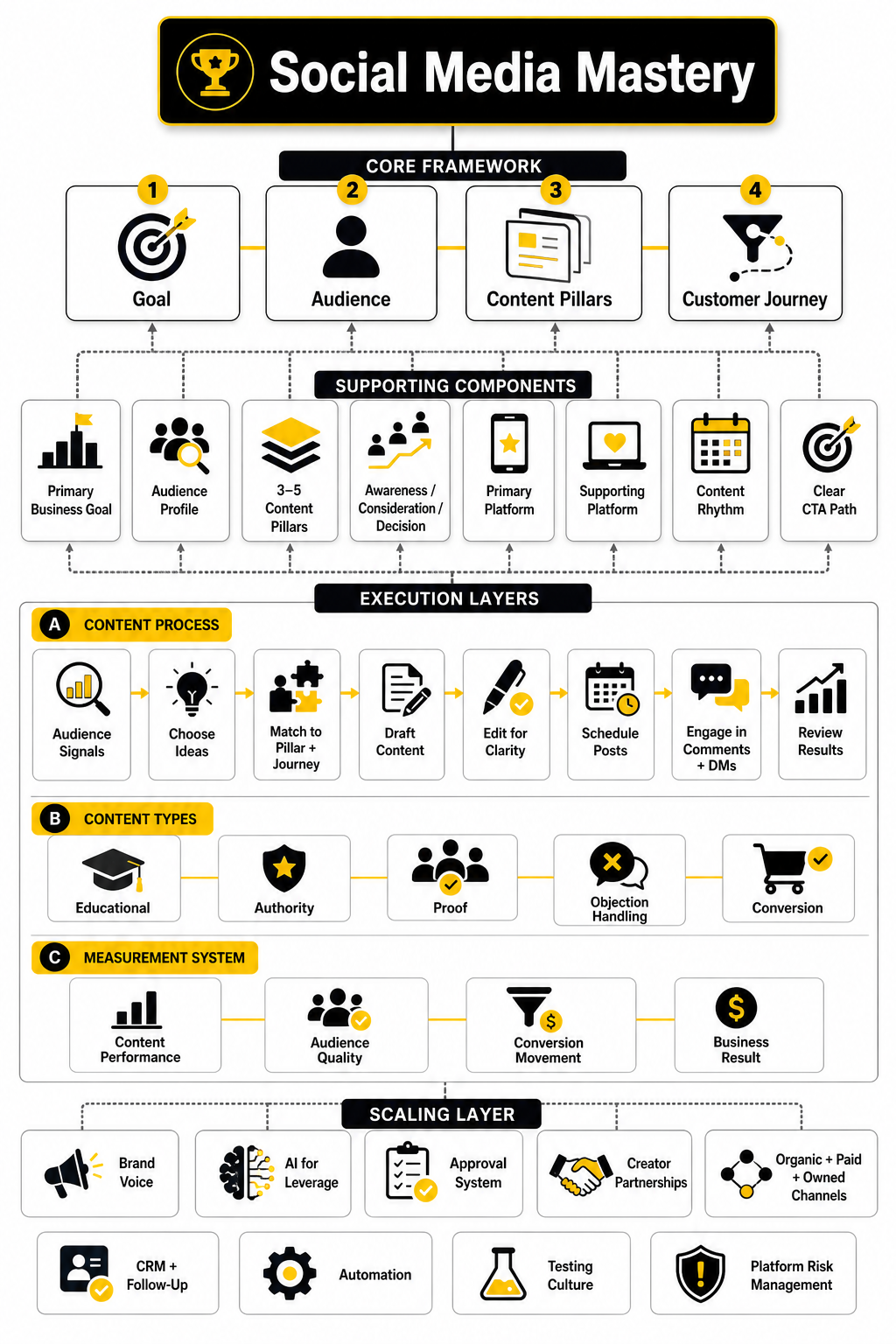
This process makes execution tangible. You are not just saying, “We need to post more.” You are deciding where ideas come from, how they become assets, when they go live, and how performance feeds back into the next round.
Create Before You Schedule
Scheduling tools are useful, but they should come after the thinking. If you rush straight into a calendar, you can end up arranging weak content neatly instead of improving the content itself. A clean schedule does not fix a weak message.
Before anything goes into the calendar, check the post against four questions. Is the audience specific? Is the point clear? Is there a reason to care now? Is the next step obvious? If the answer is no, keep editing.
Once the content is strong, scheduling becomes a productivity layer. A tool like Buffer can help you organize publishing across platforms, but the real leverage still comes from the message. Tools can distribute your thinking. They cannot replace it.
Build A Content Quality Checklist
A checklist protects you from rushed decisions. It also makes quality easier to delegate when more people get involved. Instead of giving vague feedback like “make it better,” you can review content against clear standards.
Use a checklist like this before publishing:
This is not about making every post perfect. Perfection slows teams down and usually removes personality. The point is to avoid preventable mistakes that weaken reach, trust, or conversion.
Batch The Hard Parts, Not The Human Parts
Batching can save hours, but only when you batch the right work. Research, scripting, editing, designing, scheduling, and reporting are good candidates for batching. Real-time engagement, replies, community conversations, and timely opinions should still feel present.
The problem with over-batching is that your brand can start to feel absent. People comment, ask questions, or challenge your point, and nobody responds for days. That is a missed opportunity because the comment section is often where trust gets built.
Social media is increasingly tied to customer experience. HubSpot’s 2025 social media marketing research notes that around 25% of Gen Z, Millennial, and Gen X social users contacted brands through DMs for customer service in both 2023 and 2024, while many marketers continued investing in that behavior through the HubSpot 2025 social media report. That means the process cannot stop at publishing. Replies, DMs, and follow-up matter.
Turn Engagement Into A System
Most brands underuse engagement. They post, wait, check likes, and move on. That leaves money and insight on the table.
Engagement should have a process too. After a post goes live, spend time responding to thoughtful comments, asking follow-up questions, saving strong audience language, and noting objections that appear repeatedly. Those replies can become future posts, sales page copy, email topics, product improvements, or onboarding material.
For high-intent engagement, automation can help when it is used carefully. If someone comments a keyword because they want a checklist, guide, coupon, webinar, or demo link, a tool like ManyChat can route that person into a DM flow. Just do not make the mistake of automating everything. Automation should remove friction, not make your brand feel fake.
Create Content That Is Easy To Consume And Hard To Ignore
Execution is not only about posting consistently. It is also about making every piece easier to understand. In crowded feeds, clarity is a competitive advantage.
That means your content needs a strong angle, a clean structure, and a reason for the audience to keep going. A good idea can still fail if the opening is vague, the format is messy, or the takeaway is buried. Social media mastery requires discipline at the creative level, not just discipline in the calendar.
People are moving fast. Your content has to earn attention quickly and then reward that attention with something useful, interesting, or emotionally relevant.
Write Hooks That Reveal The Value
A hook should not trick people. It should show them why the post matters. Clickbait may win the first second, but clarity wins trust over time.
A useful hook can do one of several jobs. It can name a painful mistake, challenge a common belief, make a specific promise, share a surprising observation, or open a loop that the content actually closes. The important part is that the hook connects to the real substance of the post.
Weak hooks sound like this:
Stronger hooks sound like this:
The second group works better because it tells the right person why they should care. It is specific without being stiff.
Make The Format Fit The Idea
Not every idea belongs in every format. Some ideas need a short punchy post. Some need a carousel. Some need a talking-head video. Some need a long-form YouTube breakdown. Some need a live session, webinar, or email sequence instead of a feed post.
If the idea is visual, show it. If the idea is complex, break it down. If the idea depends on emotion or personality, video may carry it better than text. If the idea is a checklist, carousel, thread, or short guide may work well.
Short-form video still matters, but it should not become the only format you understand. Emplifi’s 2025 benchmarks found that Instagram Reels still delivered strong reach engagement compared with TikTok averages in its dataset, with Reels at 2.2% reach engagement in 2024 versus TikTok’s 1.7% average reach engagement rate in the 2025 Social Media Benchmarks Report. That does not mean every brand should only post Reels. It means format decisions should be based on evidence, audience behavior, and creative fit.
Use Proof Without Making Every Post A Case Study
Proof is not only screenshots and testimonials. Proof can be a specific number, a customer insight, a before-and-after lesson, a process breakdown, a product demo, a public review, a founder observation, or a clear explanation of why something works. The point is to reduce doubt.
A big mistake is making claims without support. “We help brands grow fast” is weak. “Here is the content review checklist we use before publishing campaigns” is stronger because it shows how you think. “Here are three objections that came up repeatedly before customers bought” is stronger because it is grounded in real market feedback.
For conversion-focused content, proof matters even more. If you are sending people to a funnel, product page, calendar, or lead magnet, make the transition feel natural. Tools like ClickFunnels, Systeme.io, or GoHighLevel can help build the destination, but your social content still has to create the reason to click.
Make Calls To Action Feel Like A Service
Many people avoid calls to action because they do not want to sound salesy. That is understandable, but it is also a problem. If your content helps someone and the next step would genuinely help them more, hiding that next step is not noble. It is unclear.
A good call to action should match the intent of the post. A deep educational post might invite people to save it or join your email list. A problem-aware post might invite people to comment with a question. A proof post might invite people to book a call. A product post might send people to a demo, trial, or checkout.
The best CTAs feel like a continuation, not an interruption. “If you want the checklist, comment ‘workflow’” works when the post just explained the problem the checklist solves. “Book a call” works when the post has built enough trust and relevance. “Buy now” works when the audience is already close to the decision.
Keep A Swipe File Of What Actually Works
A swipe file is not a folder of posts to copy. It is a research library. You collect hooks, angles, structures, offers, objections, visuals, comment patterns, and content formats that reveal what your market responds to.
Organize your swipe file by reason, not just by platform. Save examples of strong hooks, strong proof, strong storytelling, strong objections, strong offers, strong visuals, and strong comments. Then study why they work.
This is where a lot of creative improvement happens. You start noticing patterns. You learn what your audience ignores, what they argue with, what they share, and what makes them ask for more. Over time, your content becomes less random because your decisions come from evidence instead of guesswork.
Statistics and Data
Measurement is where social media mastery becomes real. Until you measure the right things, you are mostly guessing. You might feel busy, your posts might look active, and your follower count might be moving, but none of that tells you whether social media is actually creating business momentum.
The mistake is not looking at data. Most people look at too much data and still miss the point. The job is to connect numbers to decisions, so every metric answers a practical question: should we repeat this, improve this, stop this, or scale this?
That means your analytics should not be a weekly screenshot dump. They should be a decision system.
Start With The Metrics That Match The Goal
The numbers you track should come from the goal you picked earlier. If the goal is awareness, reach and impressions matter. If the goal is trust, saves, shares, comments, watch time, and repeat engagement matter more. If the goal is revenue, clicks, leads, booked calls, trials, sales, and pipeline matter most.
This sounds obvious, but it is where many brands go wrong. They judge a conversion post by likes, then assume it failed. Or they judge a broad awareness post by direct sales, then assume it was useless.
Use metrics in context:
No single metric tells the whole story. A post with huge reach and weak clicks may still be useful at the top of the funnel. A post with low reach but strong lead quality may be more valuable than a viral post that attracts the wrong people.
Separate Performance Signals From Vanity Signals
Vanity metrics are not always useless. Followers, likes, and views can signal momentum. The problem starts when you treat them as proof of business impact without checking what happened next.
A video can get thousands of views because it is funny, controversial, or trend-driven. That does not automatically mean it attracted the right audience. A post can get fewer likes but generate five serious sales conversations, and that may be the better business asset.
Social leaders are under pressure to make that connection clearer. The 2025 Sprout Social Index reports that 65% of leaders want direct connections between social media campaigns and business goals, while only 30% of marketers say they can measure social media ROI in the 2025 social media ROI research. That gap matters because it explains why social media teams often feel undervalued. They are creating impact, but the reporting does not always make the impact visible.
So do not just report “engagement went up.” Explain what kind of engagement increased, from whom, on which content, and what the next action should be. That is the difference between data decoration and useful analysis.
Build A Simple Analytics System
Your analytics system does not need to be complicated. It needs to be consistent. Every week, review what happened at the content level. Every month, review what happened at the strategy level. Every quarter, review whether the channel is still moving the business goal.
A clean system can track four layers:
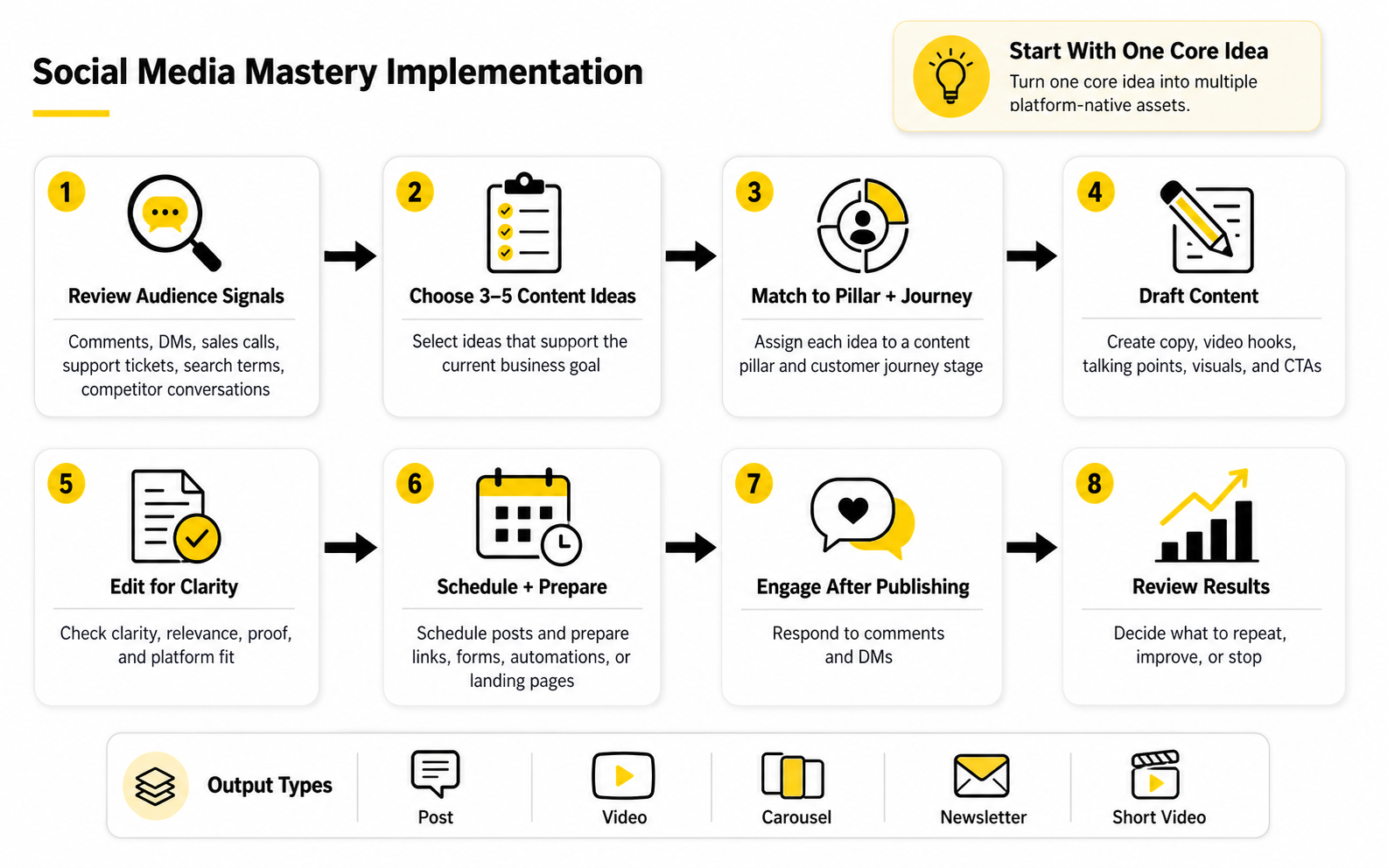
This structure keeps you from overreacting to one post. You are looking for patterns, not random spikes. One strong post gives you a clue. Three strong posts around the same angle give you a signal. Repeated signals tell you what to build around.
Know Which Benchmarks Matter And Which Ones Do Not
Benchmarks can be useful, but only when you use them carefully. Industry averages help you see whether your performance is unusually weak, normal, or strong. They do not tell you what your audience cares about, what your offer needs, or what content you should create next.
For example, Rival IQ’s 2025 benchmark analysis found that TikTok engagement rates remained higher than Instagram, Facebook, and X across its brand dataset in the 2025 Social Media Industry Benchmark Report. That is useful context, but it does not mean every brand should move all effort to TikTok. If your buyers are not there in a decision-making mindset, the benchmark can mislead you.
Emplifi’s 2025 benchmarks also show why platform averages should be interpreted carefully. Its report found Instagram Reels at 2.2% reach engagement in 2024 compared with TikTok’s 1.7% average reach engagement rate in its dataset, which challenges the lazy assumption that TikTok always wins for every brand and every format through the 2025 Social Media Benchmarks Report. The action is not “post Reels forever.” The action is to test formats against your own audience and compare results by goal.
Benchmarks are a mirror, not a map. Use them to spot possible issues, then let your own data guide the next move.
Read Engagement Quality, Not Just Engagement Volume
Engagement volume tells you how much reaction you got. Engagement quality tells you whether the reaction was useful. For social media mastery, quality matters more.
A hundred comments from people arguing about something unrelated may inflate the numbers but weaken the brand. Ten comments from ideal customers asking detailed questions can be much more valuable. The same goes for shares. A post shared by people in your buying audience is more meaningful than a post shared widely by people who will never buy.
When reviewing engagement, look for patterns like:
This is why social analytics should include qualitative review. Numbers tell you what happened. Comments, replies, and DMs help explain why it happened.
Measure The Path After The Click
A click is not the finish line. It is the handoff from social media to the next part of your system. If the landing page is weak, the form is too long, the offer is unclear, or the follow-up is slow, social media may get blamed for a conversion problem it did not create.
Track what happens after the click. Look at page visits, form completions, booked calls, email confirmations, checkout starts, purchases, and follow-up replies. If many people click but few convert, the issue may be the destination. If few people click but those who do convert well, the content may need a stronger call to action or clearer offer framing.
This is where funnel and CRM tools can make measurement more practical. A platform like GoHighLevel can help connect social leads to pipelines, follow-up, and appointment booking. A funnel builder like ClickFunnels or Systeme.io can help you create clearer conversion paths once social traffic is ready to move.
The important part is attribution discipline. Do not expect perfect tracking from every platform and every buyer journey. Instead, combine source data, UTM links, CRM notes, form questions, booking data, and customer conversations to get a practical view of what is working.
Use Data To Improve Creative Decisions
Data should make your content sharper, not safer. If you only chase what worked last week, you will eventually become predictable. If you ignore the data completely, you will keep repeating content your audience has already rejected.
The better approach is to use data as creative feedback. Look at the hooks that held attention. Look at the formats that drove saves. Look at the angles that created comments. Look at the CTAs that produced clicks. Then create stronger versions without becoming a copy of yourself.
Ask these questions during your review:
That last question is important. Sometimes the best move is not to create more. It is to take a proven organic post and turn it into a stronger carousel, email, short video, ad, landing page section, or sales asset.
Report Social Media In Business Language
A strong report should not make executives or clients decode platform jargon. They do not need a wall of metrics. They need to understand what social media did, what was learned, and what will happen next.
A useful monthly report can be simple:
This makes social media easier to defend and easier to fund. You are not saying, “We posted 47 times and got 18,000 impressions.” You are saying, “These three themes created the strongest qualified engagement, this offer generated the most clicks, this objection appeared repeatedly, and next month we should build content around it.”
That is how reporting becomes strategy. The numbers stop being a scoreboard and start becoming instructions.
Scale Without Losing The Human Edge
Once the basics are working, the next challenge is scale. More posts, more platforms, more campaigns, more creators, more data, more automation, and usually more people touching the brand. This is where social media mastery gets harder, because growth adds complexity.
The dangerous version of scale is simple: publish more, automate more, approve faster, and hope the brand still feels human. That usually creates bland content, slower decisions, inconsistent voice, and a feed that looks busy but says very little. The more carefully version of scale protects the things that made the strategy work in the first place.
You want systems, but not a soulless system. You want speed, but not reckless speed. You want leverage, but not at the cost of trust.
Protect The Brand Voice As The Team Grows
When one person creates most of the content, the voice usually feels consistent. When five people, two freelancers, an agency, and three AI tools get involved, the voice can disappear fast. That is why brand voice needs to become documented before the team expands too far.
A useful voice guide does not need to be huge. It should explain what the brand sounds like, what it never says, which opinions it holds strongly, which phrases feel natural, and what kind of humor, edge, or emotion is acceptable. It should also include real examples of approved posts, weak posts, strong hooks, strong CTAs, and unacceptable claims.
This matters because audiences notice when a brand suddenly sounds like a committee. Consistency does not mean every post has the same structure. It means people can recognize the thinking, values, and tone behind the content even when the format changes.
Use AI For Leverage, Not Replacement
AI can speed up research, summarization, brainstorming, repurposing, transcription, editing, reporting, and idea organization. Used well, it helps you move faster. Used badly, it floods your channels with generic content that sounds like every other brand trying to win the algorithm.
The tradeoff is simple. AI is useful for support work, but the point of view still has to come from you. Your audience does not need more average posts. They need sharper thinking, clearer explanations, better proof, and more useful context.
That distinction is becoming more important as AI content becomes normal. Hootsuite’s 2026 social trends research frames AI as table stakes while emphasizing that authenticity is becoming the real differentiator in the latest Social Media Trends report. The practical takeaway is not “avoid AI.” The takeaway is to use AI behind the scenes while keeping human judgment, experience, and accountability at the front.
Create A Clear Approval System
Approval can either protect quality or kill momentum. If every post needs five people to review it, content becomes slow, cautious, and stale. If nobody reviews anything, the brand risks errors, legal issues, broken promises, and off-message publishing.
The solution is to create approval levels. Low-risk educational posts can move quickly. Product claims, pricing, legal topics, regulated industries, customer stories, partnerships, and crisis responses should get more careful review. Not everything needs the same level of control.
A practical approval system can define:
This keeps the team from treating every post like a legal crisis while still protecting the brand where it matters. Speed is good, but careless speed is expensive.
Know When To Bring In Creators
Creators can help brands reach trust, culture, and community faster than brand-owned content alone. But creator partnerships only work when the fit is real. If you choose creators only because they have a large audience, you may buy attention without buying credibility.
The best creator partnerships usually come from audience alignment, content quality, trust, and relevance. A smaller creator with a loyal niche audience can outperform a larger creator whose followers do not care about your category. That is especially true when your offer needs explanation, education, or trust before someone buys.
Creator investment is also becoming more strategic. Recent coverage of creator spending notes that U.S. advertisers are projected to spend $43.9 billion on creator-driven content in 2026, while brands still struggle with measurement, scalable partnerships, and treating creators like strategic partners instead of one-off ad placements in creator economy reporting. The lesson is clear: do not treat creators as rented reach. Treat them as trusted distribution partners with their own audience relationship.
Build Long-Term Creator Relationships
One-off creator campaigns can work, especially for launches or testing. But long-term partnerships usually create stronger content because the creator understands the product, audience, objections, and brand voice better over time. The audience also sees repetition, which makes the partnership feel less random.
A strong creator system should include clear briefs, creative freedom, usage rights, disclosure requirements, performance expectations, and feedback loops. Do not over-script creators until they sound like your sales page. The reason you work with them is because they know how to communicate with their audience.
The best partnerships often create assets beyond the original post. A strong creator video can become paid creative, website proof, email content, onboarding material, sales collateral, or a retargeting asset. That is how creator content becomes a system instead of a one-time expense.
Balance Organic, Paid, And Owned Channels
Organic social is powerful, but it is not fully under your control. Algorithms change. Reach shifts. Accounts get restricted. Platform culture moves. A strategy that depends entirely on organic reach is fragile.
Paid social can help you amplify proven content, retarget engaged audiences, test offers, and drive more predictable traffic. But paid traffic becomes expensive when the organic message is weak. If a post cannot earn any meaningful attention organically, putting money behind it may just scale the problem.
Owned channels protect you from that risk. Email lists, SMS lists, communities, CRM data, webinars, podcasts, websites, and customer databases give you more control over the relationship. A tool like Brevo or Moosend can help turn social attention into an email audience you can reach without depending on the next platform update.
Treat Social As A Front Door To The Business
Advanced social strategy does not stop at the feed. It connects to sales, support, hiring, partnerships, product feedback, customer success, and retention. Social media is often the first place people judge whether a brand is active, credible, useful, and worth trusting.
That means the handoff matters. If someone clicks from a post to a confusing page, the social team did its job but the system still failed. If someone asks a serious question in DMs and gets ignored, the brand loses trust. If someone books a call and receives no follow-up, the content created demand that operations wasted.
This is where tools can support the backend. GoHighLevel can help manage pipelines, automations, and follow-up after a social lead raises their hand. Cal.com can make booking easier when the next step is a consultation or demo. Fillout can help capture cleaner intake data so the sales or onboarding process starts with context.
Do Not Let Automation Damage Trust
Automation is useful when it removes friction. It is dangerous when it removes judgment. People can feel the difference between a helpful automated flow and a lazy robotic response.
Use automation for predictable actions: sending a promised resource, confirming a booking, routing a lead, tagging a CRM contact, answering simple questions, or reminding someone about a webinar. Keep humans involved for nuanced questions, complaints, objections, sensitive topics, and high-value sales conversations.
A customer-facing AI assistant can help when it is trained carefully and positioned honestly. A tool like Chatbase can support FAQ-style interactions or lead qualification, but it should not pretend to be a person if it is not. Transparency is part of trust.
Manage Platform Risk Before It Hurts You
Platform risk is real. You can spend years building reach on one channel and still be exposed to algorithm changes, policy enforcement, moderation errors, rising ad costs, shifting audience behavior, or platform decline. That does not mean you should avoid social media. It means you should not build the entire business on rented attention.
A safer approach is to diversify gradually. Build depth on your primary platform first, then create smart bridges to owned channels and secondary platforms. Repurpose proven ideas into search-friendly assets like YouTube videos, blog posts, lead magnets, email sequences, and product education.
This is not paranoia. It is basic business hygiene. Social media mastery includes knowing when to use the platforms aggressively and when to move the relationship somewhere more durable.
Handle Negative Feedback With Discipline
The bigger your reach gets, the more criticism you will attract. Some criticism is useful. Some is noise. Some is bad-faith engagement. Some reveals a real issue you need to fix.
Do not respond to every negative comment emotionally. Create a response framework before you need it. Decide when to answer publicly, when to move the conversation to DM, when to apologize, when to correct misinformation, when to ignore, and when to escalate internally.
The worst move is defensive chaos. The second worst move is silence when the concern is legitimate. A calm, clear response can build more trust than pretending nothing happened.
Build A Testing Culture
Advanced teams do not rely on one perfect strategy. They test angles, formats, offers, hooks, creators, landing pages, posting times, CTAs, and follow-up sequences. Then they keep what works and cut what does not.
The key is to test one meaningful variable at a time when possible. If you change the topic, format, hook, CTA, and audience all at once, you will not know what caused the result. Clean testing creates cleaner learning.
A simple testing backlog might include:
This is how scaling becomes more carefully. You are not just increasing output. You are increasing learning speed.
Know The Strategic Tradeoff You Are Making
Every social media decision has a tradeoff. More volume can mean less depth. More automation can mean less warmth. More platform expansion can mean weaker execution. More trend participation can mean less brand distinction. More direct selling can mean lower engagement but stronger revenue signals.
None of those tradeoffs are automatically bad. The problem is making them accidentally. Expert-level social media mastery means choosing the tradeoff on purpose.
If you need revenue this quarter, you may publish more conversion content and accept lower average engagement. If you need brand awareness, you may invest in broader reach and accept slower attribution. If you need authority, you may publish deeper content that grows slower but attracts better buyers. Strategy is not about doing everything. It is about choosing what matters most right now and accepting the cost of that choice.
Bring The Full System Together
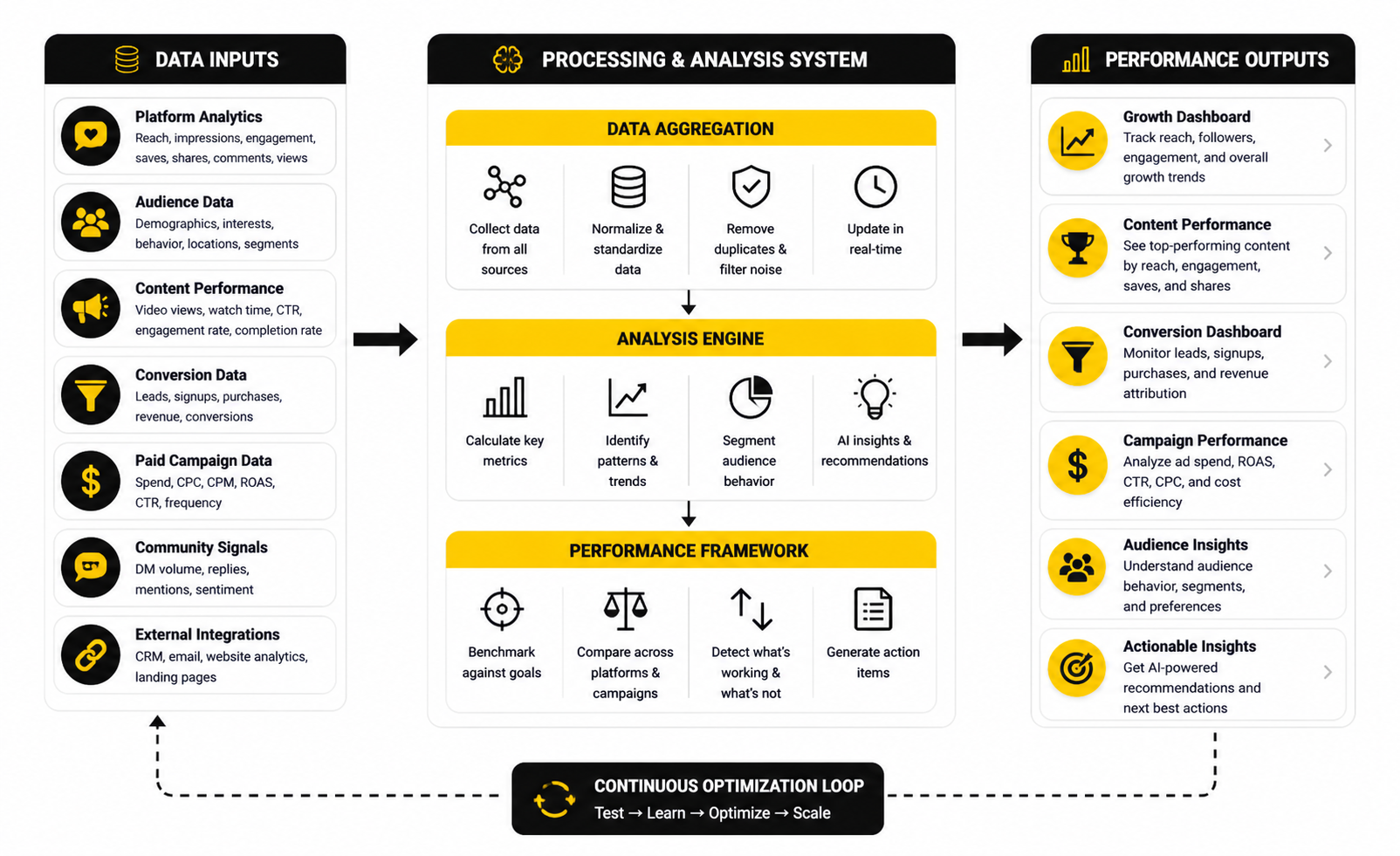
At this stage, social media mastery is not about one more tactic. It is about connecting the full system so every part supports the next. Strategy gives you direction, content creates attention, engagement builds trust, analytics reveal what is working, and your backend turns that attention into a real business outcome.
That is the difference between having a social media presence and having a social media engine. A presence looks active. An engine moves people from discovery to trust to action with fewer leaks.
The final layer is integration. Your platforms, content calendar, DMs, lead magnets, landing pages, email follow-up, CRM, booking system, and sales process should not feel like separate pieces. They should feel like one clean path for the right person to follow.
Build Around The Full Customer Path
A person rarely sees one post and buys immediately. They may watch a video, visit your profile, read comments, click a link, join your email list, come back through a retargeting post, ask a question in DMs, and then finally book a call or make a purchase. If you only measure the first or last step, you miss the real journey.
This is why your social content should connect naturally to owned channels and conversion assets. A helpful post can lead to a checklist. A checklist can lead to an email sequence. An email sequence can lead to a consultation, product page, webinar, or offer.
The path does not need to be complicated. It needs to be clear, useful, and easy to follow. If someone wants more help, they should never have to hunt for the next step.
Keep The System Simple Enough To Maintain
Complexity feels impressive until it breaks. Too many platforms, tools, dashboards, approval steps, offers, and campaigns can slow everything down. The best social systems are usually simpler than they look from the outside.
Start with the few assets that matter most. You need a clear profile, strong recurring content themes, a reliable publishing rhythm, a way to capture leads, a follow-up process, and a basic reporting habit. Once those pieces work, then you can add more layers.
A tool stack can help, but only when each tool has a clear job. Buffer can help organize publishing. ManyChat can help manage comment-to-DM flows. GoHighLevel can help connect leads, pipelines, follow-up, and booking when the business needs a more complete backend.
Make Improvement A Monthly Habit
You do not need to rebuild your strategy every week. That creates chaos. You need a steady review cycle that helps you improve without constantly changing direction.
At the end of each month, look for patterns. Which topics brought in the right audience? Which posts created real conversations? Which CTAs moved people forward? Which formats took too much time for too little return?
Then make small, deliberate changes. Improve one content pillar. Tighten one offer. Fix one landing page. Test one new format. Social media mastery compounds when the system gets a little sharper every month.
What Is Social Media Mastery?
Social media mastery is the ability to use social platforms strategically instead of randomly. It means you understand your audience, create content with a purpose, measure the right signals, and connect attention to business results. It is not about posting constantly or chasing every trend.
How Long Does It Take To Master Social Media?
It depends on your starting point, offer, audience, and execution speed. Most people can build a solid foundation in 90 days if they focus on one or two platforms, publish consistently, review performance, and improve their message. Real mastery takes longer because it requires pattern recognition, creative judgment, and experience across different campaigns.
Which Platform Is Best For Social Media Mastery?
There is no single best platform for every business. LinkedIn may be strongest for B2B authority, Instagram may be better for visual trust, TikTok may work well for culture-driven discovery, and YouTube may be stronger for search-based education. The best platform is the one where your audience pays attention in the right context for your offer.
How Often Should I Post On Social Media?
Post often enough to stay visible, learn from feedback, and build trust without lowering quality. For many businesses, three to five strong posts per week on a primary platform is a better starting point than daily filler. The right cadence is the one you can maintain while still creating useful, relevant content.
What Metrics Matter Most For Social Media?
The most important metrics depend on your goal. Reach, impressions, and profile visits matter for awareness, while saves, shares, comments, watch time, and DMs matter for trust. Clicks, leads, booked calls, trials, sales, and pipeline matter when social media needs to support revenue.
Is Follower Count Still Important?
Follower count can matter, but it is not the main measure of success. A large audience with weak trust and poor fit may produce less revenue than a smaller audience full of qualified buyers. Focus on audience quality, engagement quality, and business movement before obsessing over the number at the top of the profile.
How Do I Create Better Social Media Content?
Start with your audience’s real problems, questions, objections, and goals. Then turn those insights into clear posts that teach, challenge, prove, compare, or guide people toward a useful next step. Better content usually comes from sharper thinking, not louder posting.
Should I Use AI For Social Media Content?
Yes, but use it carefully. AI can help with research, outlines, repurposing, editing, transcription, and reporting, but your point of view should still come from real expertise. If AI removes your voice, experience, and judgment, the content may become faster to produce but easier to ignore.
How Do I Turn Social Media Followers Into Leads?
Give people a clear reason to take the next step. That might be a checklist, guide, webinar, consultation, product demo, discount, email series, or booking page. The key is to make the transition feel natural, so the next step solves a problem the content already made visible.
What Is The Biggest Mistake Brands Make On Social Media?
The biggest mistake is creating content without a business purpose. Brands post because they feel pressure to stay active, but they do not know what each post is supposed to move. That leads to scattered topics, weak CTAs, confusing analytics, and a feed that looks busy without building momentum.
How Do I Know If My Social Media Strategy Is Working?
Your strategy is working when the right people are paying attention and taking meaningful action. That action may include saving posts, sharing content, asking questions, joining your list, booking calls, starting trials, buying, or coming back repeatedly. Do not judge the strategy by one viral post or one slow week; look for patterns over time.
Should I Focus On Organic Social Or Paid Ads?
Start with organic content to test messaging, angles, offers, and audience response. Once you know which content creates the right signals, paid ads can help amplify what already works. Paid traffic is strongest when it scales a proven message instead of trying to rescue a weak one.
How Can Small Teams Compete With Bigger Brands?
Small teams can win by being clearer, faster, more specific, and more human. Big brands often move slowly and publish safe content that sounds approved by too many people. A smaller team can build trust by showing real expertise, responding quickly, and speaking directly to a niche audience.
What Should I Do If My Content Stops Performing?
Do not panic after a few weak posts. Review your hooks, topics, formats, CTAs, timing, audience fit, and platform changes before making big decisions. If performance keeps dropping, refresh your content angles, study audience feedback, test new formats, and return to the problems your audience cares about most.
What Does Social Media Mastery Look Like In Practice?
It looks calm, consistent, and intentional. You know who you are speaking to, what you are trying to move, which content themes support the business, and how performance will be reviewed. Instead of guessing every day, you follow a process that keeps improving.
Build a stronger local presence with BAAM AI
Turn your website, Google profile, social channels, and AI visibility into one growth engine
Most businesses do not need more random marketing activity. They need a consistent presence system that helps the right people find them, trust them, and take action. BAAM AI brings strategy, local SEO, website updates, Google Maps visibility, social content, AI-search readiness, media production, and reporting into one practical monthly engine.
If you want your marketing to keep working after the campaign ends, start with a free BAAM AI presence audit. See how your business shows up today and where the fastest visibility wins are at BAAM AI.