
BAAM AI Blog
Brand Awareness Through Social Media: A Practical Framework For Building Recognition, Trust, And Demand
Brand awareness through social media is not just about getting more impressions. Impressions are easy to buy and even easier to waste. The real goal is to make the right people recognize your brand, understand what...
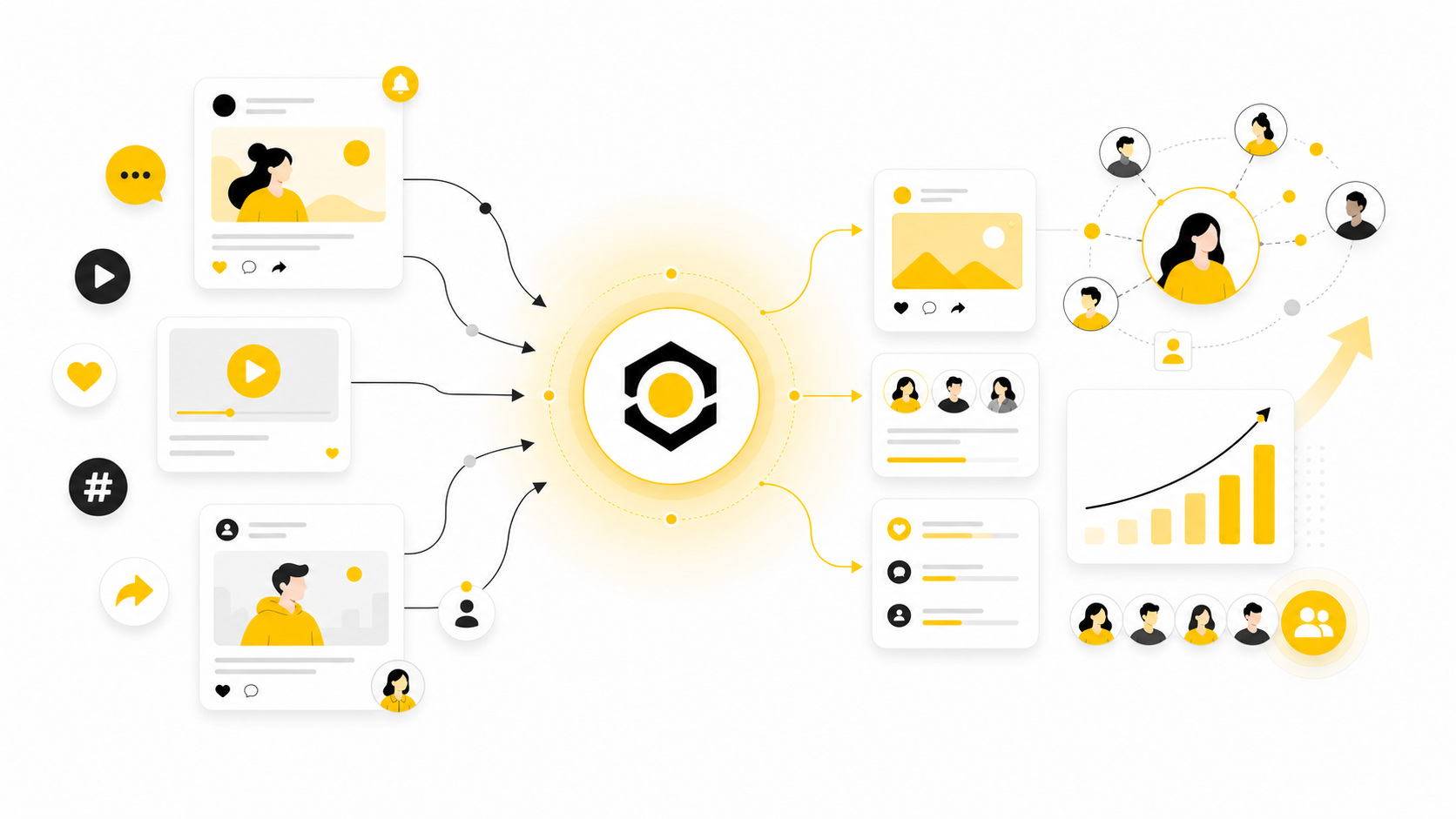
Brand awareness through social media is not just about getting more impressions. Impressions are easy to buy and even easier to waste. The real goal is to make the right people recognize your brand, understand what you stand for, remember you when the problem becomes urgent, and feel enough trust to take the next step.
That matters because social media has become one of the main places where people discover, evaluate, and mentally file brands. The Digital 2025 Global Overview Report puts global social media user identities at more than 5 billion, while the typical internet user spends over two hours per day on social platforms. That does not mean every brand should post everywhere, but it does mean your buyers are repeatedly forming opinions in public, fast-moving feeds.
The mistake most businesses make is treating social media like a content calendar instead of a memory-building system. They post tips, announcements, memes, offers, launches, behind-the-scenes clips, and random “value posts” without a clear job for each piece of content. Then they wonder why reach goes up but the market still cannot explain what the brand does.
Strong brand awareness is different. It gives your audience a simple mental shortcut: “That brand helps people like me solve this kind of problem.” Once that association is clear, every social post has a role. Some posts create recognition, some build credibility, some deepen relevance, and some move people into a more measurable relationship through email, community, chat, demo requests, or sales conversations.
Why Brand Awareness Through Social Media Matters Now
Brand awareness used to be easier to separate from performance marketing. A company could run broad campaigns on television, print, radio, or outdoor media, then use direct response channels to capture demand later. Social media compressed those jobs into the same environment, which means people can discover a brand, judge its credibility, compare it with alternatives, and click into a funnel within minutes.
That compression is powerful, but it also creates a trap. Many teams expect every social post to generate immediate leads, even when the audience has not built enough familiarity or trust yet. The result is usually impatient content: too many offers, too much urgency, and not enough consistent meaning.
Brand awareness through social media works best when you accept that people rarely move from stranger to buyer in one clean jump. They notice you once, then again, then in a slightly different context, then through someone else’s comment, then through a useful post they save, then through a creator or peer who makes the brand feel safer. The 2025 Sprout Social Index also reinforces this shift, showing that social is now central to how consumers relate to brands, not just how brands distribute content.
This is why the awareness layer deserves serious strategy. If people do not remember your category, message, promise, or point of difference, your conversion assets have to work much harder. Good landing pages, automation, retargeting, and sales calls matter, but they perform better when the market already has a warm mental file for the brand.
The Brand Awareness Framework
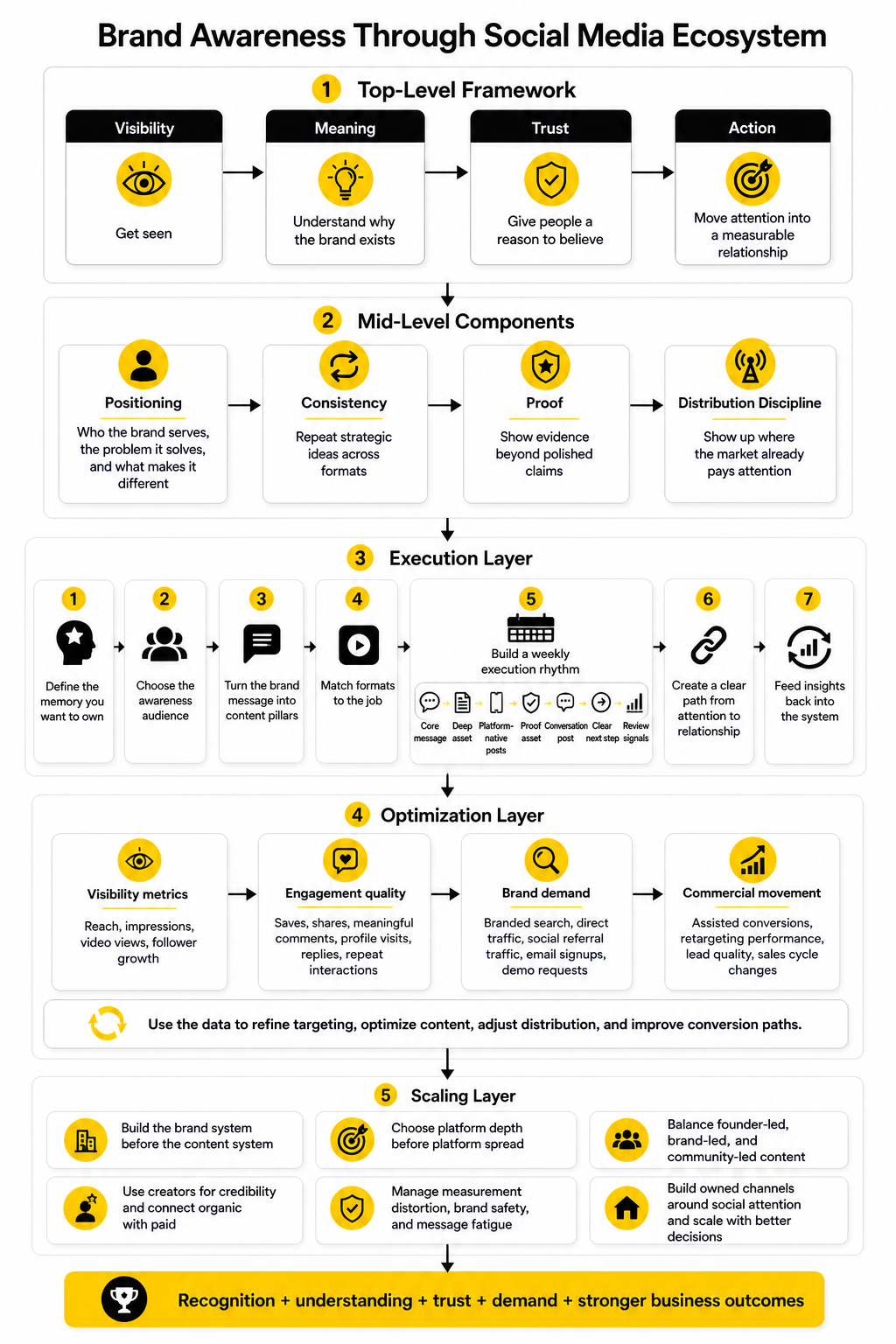
The simplest way to think about brand awareness through social media is as a four-layer system: visibility, meaning, trust, and action. Visibility gets you seen. Meaning helps people understand why you exist. Trust gives them a reason to believe you. Action creates a bridge from passive attention to an owned or measurable relationship.
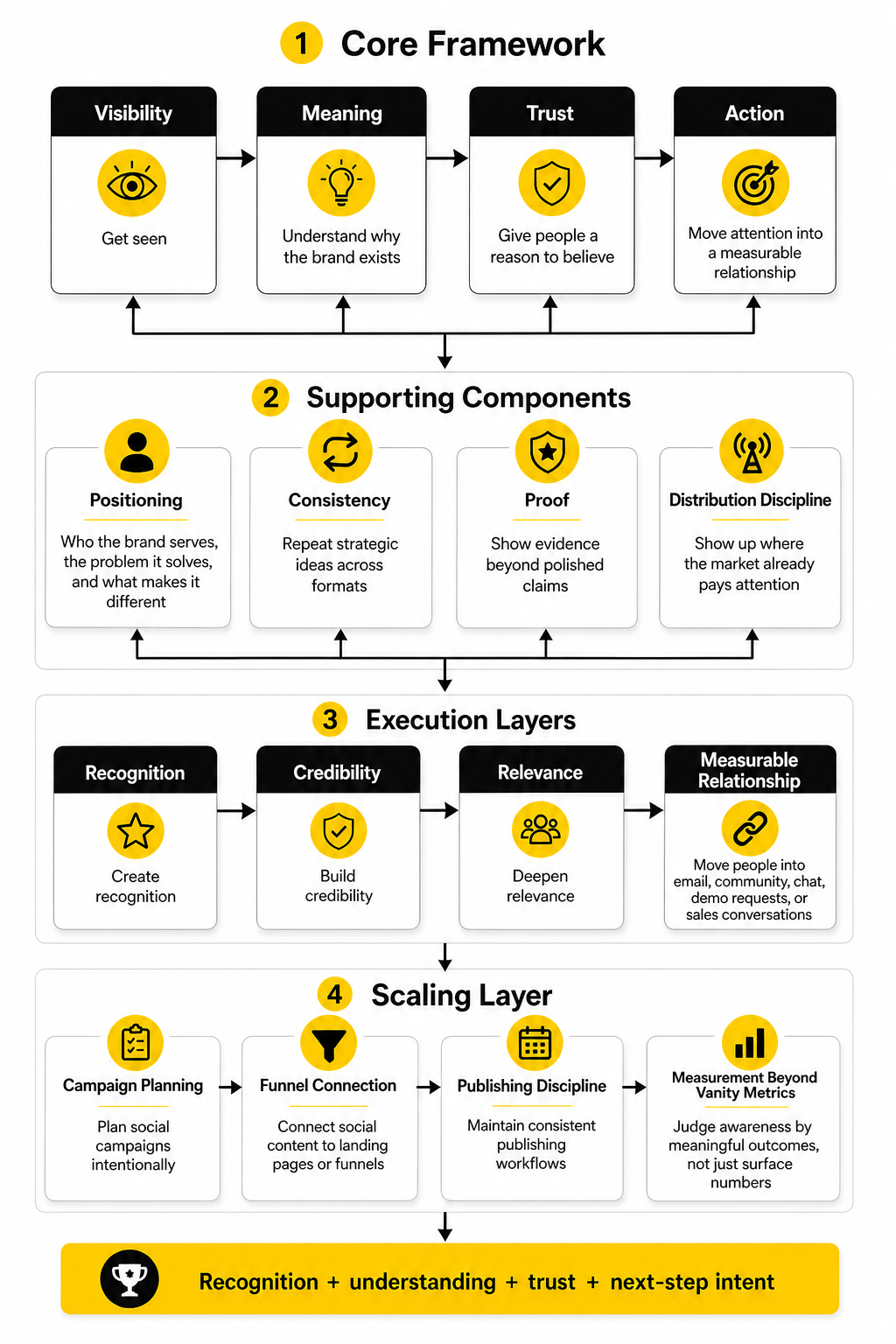
This framework keeps social media from becoming random. A funny post may create visibility, but if it has no connection to what the brand wants to be known for, it will not build useful awareness. A strong educational post may create trust, but if it never connects to a next step, the audience may appreciate the brand without moving closer to a buying decision.
The best social strategies balance all four layers. For example, a brand might use short-form video for reach, founder-led posts for meaning, customer proof for trust, and a simple automation path through ManyChat for people who comment, ask questions, or want a resource. That is not just posting. That is turning attention into a structured brand experience.
Core Components Of A Memorable Social Presence
A memorable social presence starts with positioning. Before choosing platforms or formats, the brand needs to know what it wants to be remembered for. This usually means answering three practical questions: who the brand serves, what problem it helps them solve, and what makes its approach different enough to notice.
The second component is consistency. Consistency does not mean saying the same sentence every day. It means repeating the same strategic ideas in enough formats that the audience starts to recognize the pattern without feeling like they are seeing a copy-and-paste campaign.
The third component is proof. Modern audiences do not trust polished brand claims just because they are well designed. Research from the 2025 Edelman Trust Barometer Special Report on Brand Trust points to the growing importance of personal relevance, optimism, support, and emotional connection in how people evaluate brands.
The fourth component is distribution discipline. A brand does not need to be everywhere, but it does need to show up where its market already pays attention. That might mean LinkedIn for B2B authority, TikTok for discovery, YouTube for deeper education, Instagram for visual familiarity, or Facebook groups and communities for trust-building conversations.
How The Rest Of this guide Will Build The System
The next part will go deeper into why brand awareness matters, especially when social feeds are crowded, paid acquisition costs are volatile, and buyers take longer to trust unfamiliar companies. This matters because awareness is often dismissed as “soft,” even though it shapes how efficiently every later stage of marketing performs. We will connect the awareness layer to trust, demand creation, and long-term revenue without pretending every impression has the same value.
After that, the article will break down the full framework in practical terms. The focus will be on how visibility, meaning, trust, and action work together across real social media workflows. That section will also explain why a brand can have high reach and still weak awareness if people cannot remember what the brand actually stands for.
Then we will move into the core components of a strong social presence. This will cover message pillars, content formats, platform fit, proof assets, audience participation, and conversion paths. The goal is to make the system usable, not theoretical.
The later parts will focus on professional implementation and measurement. That includes how to plan campaigns, how to connect social content to landing pages or funnels, how to use tools like Buffer for publishing discipline, and how to avoid judging awareness only by vanity metrics. The final part will close with common mistakes, practical fixes, and the FAQ.
Awareness Reduces Friction Before The First Click
The first job of brand awareness through social media is to make the next interaction easier. When someone has already seen your brand explain a problem clearly, respond to comments like a real team, or show up in conversations they care about, the first click feels less risky. That is why awareness is not separate from performance; it prepares the ground for performance.
This matters because buyers are exposed to more choices than they can seriously evaluate. They do not compare every option from zero every time they need a product, service, or expert. They build a short mental list from repeated exposure, useful signals, trusted recommendations, and recognizable positioning.
Social media is especially strong at creating those signals because it mixes content, comments, creators, customers, employees, and public reactions in one place. A landing page can tell people what you do, but a social presence shows how the brand behaves. That difference is huge.
Social Media Turns Familiarity Into Trust
People rarely trust a brand because of one polished post. They trust patterns. They notice whether the brand says the same thing consistently, whether the team responds professionally, whether real customers appear in the conversation, and whether the content keeps helping instead of constantly pushing for the sale.
Trust has also become more personal. The 2025 Edelman Brand Trust report found that consumers increasingly look for brands that feel relevant, supportive, optimistic, and emotionally connected to their lives. That is a very different standard from simply having a recognizable logo or a big media budget.
This is where social media gives smaller and mid-sized brands an opening. You may not outspend the biggest competitors, but you can out-clarify them, out-educate them, and out-humanize them. If the market repeatedly sees your brand making the problem easier to understand, the brand becomes safer to remember.
The Feed Is Now Part Of The Buying Journey
Social media is not only where people waste time. It is where they research, ask peers, watch product demos, compare opinions, and test whether a brand feels credible. The Digital 2025 social media report shows that people use an average of almost seven social platforms per month, which means brand discovery is fragmented across multiple environments.
That fragmentation changes the way awareness has to work. A buyer might first see a short video on TikTok, then search the brand on Instagram, then check a founder’s LinkedIn post, then watch a YouTube review, then click a retargeting ad days later. If the message feels disconnected at each point, the brand loses momentum.
A good awareness strategy creates continuity across that journey. The content does not have to look identical on every platform, but the promise should feel familiar. The buyer should be able to recognize the brand’s point of view even when the format changes.
Awareness Makes Paid Media More Efficient
Paid ads often fail because the offer is weak, the landing page is unclear, or the targeting is sloppy. But another common reason is simpler: the audience has no prior relationship with the brand. Cold traffic can convert, but it usually needs more persuasion because there is no stored trust.
Brand awareness through social media helps reduce that cold-start problem. When people have seen your educational content, founder posts, creator mentions, customer proof, or useful tools before they see the ad, the ad is no longer the first impression. It becomes another touchpoint in a sequence.
That does not mean every brand needs to spend months “warming up” an audience before selling. It means social content and paid media should not operate like separate departments. If you use funnels through a tool like ClickFunnels or a broader customer journey platform like GoHighLevel, the social layer should make the funnel feel familiar before people ever land on it.
The Best Awareness Is Specific, Not Loud
A common misconception is that brand awareness means reaching the largest possible audience. That sounds impressive in a report, but it is not always useful. If the wrong people remember the brand for the wrong reason, you have attention without strategic value.
Specific awareness is stronger. It means the right audience remembers the brand in connection with a real buying situation. For example, not “I’ve seen that company before,” but “That’s the company that helps service businesses automate follow-up,” or “That’s the team that explains social media strategy without fluff.”
This is why vague content rarely compounds. Posts like “show up consistently,” “provide value,” and “be authentic” can attract likes, but they do not always attach the brand to a clear problem. Strong awareness content makes the audience think, “This brand understands my situation better than most.”
Social Proof Travels Faster Than Brand Claims
A brand can say it is trustworthy, innovative, customer-focused, or premium. The audience may or may not believe it. But when other people repeat the message, demonstrate the product, comment on the experience, or share a result, the claim becomes easier to trust.
That is why creators, customers, partners, and employees matter so much in modern awareness. The 2025 Sprout Social Index is built around surveys of thousands of consumers and marketers, and its broader message is clear: social media is now deeply tied to how people judge brand relevance, responsiveness, and credibility. People do not only watch what brands publish; they watch how brands participate.
This does not mean you need huge influencers. In many markets, smaller creators, niche experts, employees, customers, and active community members create more believable signals than celebrity-style promotion. The practical goal is to make the brand easier to verify through voices other than its own.
Why This Matters For Smaller Brands
Smaller brands often assume brand awareness is something they can focus on later. First they want leads, sales, and cash flow. That instinct is understandable, but it can become expensive if nobody in the market knows why the brand should be trusted.
The advantage smaller brands have is speed. They can adjust the message faster, speak more directly, show the people behind the business, and build a sharper point of view than large companies stuck behind approval layers. Social media rewards that kind of clarity when it is paired with consistency.
This is where the opportunity becomes practical. You do not need a massive campaign to start building awareness. You need a repeatable message, a focused audience, a few strong content formats, proof that supports your claims, and a simple next step for people who are ready to move closer.
The Brand Awareness Framework
The framework starts with one simple idea: social media should make your brand easier to recognize, easier to understand, and easier to trust. If your content only gets attention but does not create a clearer memory of the brand, it is not doing the full job. That is why brand awareness through social media needs a repeatable process instead of a pile of disconnected posts.
A strong framework also protects you from chasing every trend. Trends can help with reach, but they should not decide your strategy. Your strategy should decide which trends are worth using, which platforms deserve focus, and which content ideas actually support the brand you are trying to build.
The four layers introduced earlier are visibility, meaning, trust, and action. In this part, we will turn those layers into an execution process. This is where the work becomes practical.
Step 1: Define The Memory You Want To Own
Before you publish more content, decide what you want people to remember. This is not a slogan exercise. It is a positioning exercise that forces the brand to choose a clear association in the buyer’s mind.
A useful brand memory usually connects three things: the audience, the problem, and the outcome. For example, a social media tool does not only want to be remembered as “a scheduler.” It may want to be remembered as the easiest way for small teams to stay visible without living inside the feed all day.
This matters because social media moves fast, but memory builds slowly. If every post points in a different direction, the audience may enjoy individual posts without remembering the brand. Consistency is not boring when the message is sharp enough.
Step 2: Choose The Awareness Audience
Brand awareness does not mean “everyone should know us.” That sounds big, but it is usually too vague to guide content. The better question is: who needs to remember this brand before they enter an active buying window?
For some businesses, that audience is founders who know they need better lead follow-up but have not yet committed to a CRM or automation platform. For others, it might be ecommerce teams looking for better landing pages, creators building a newsletter, or local service businesses trying to look more credible online. Each audience needs different proof, different language, and different social channels.
The Digital 2025 brand discovery data shows that discovery does not happen in one neat channel. People find brands through search, social platforms, ads, recommendations, videos, creator content, and online communities. That means your awareness audience should be specific enough to target, but realistic enough to meet across more than one touchpoint.
Step 3: Turn The Brand Message Into Content Pillars
Once the memory and audience are clear, turn them into content pillars. These are not generic categories like “education,” “inspiration,” and “promotion.” Those labels are too broad to build strong awareness.
Better content pillars are tied to what the brand wants to be known for. A brand helping service businesses automate follow-up might use pillars like missed revenue, speed-to-lead, customer experience, simple automation, and proof from real workflows. A brand helping ecommerce teams improve landing pages might focus on conversion bottlenecks, page speed, offer clarity, testing, and campaign-specific pages.
Each pillar should earn its place. If a pillar does not strengthen the brand memory, improve trust, or move the audience toward a useful next step, remove it. Social strategy gets easier when every post has a strategic job.
Step 4: Match Formats To The Job
Different formats build different kinds of awareness. Short-form video can create fast visibility and personality. Carousels can organize a useful idea. Long-form video can build deeper trust. Founder posts can make the brand feel more human. Customer proof can reduce doubt.
The mistake is choosing formats only because the algorithm currently favors them. A format is useful when it helps the message land. If the format gets reach but hides the point, it is not helping your brand awareness through social media in a meaningful way.
This is also where workflow matters. A team can use Buffer to keep publishing organized, but the tool should support the strategy, not replace it. Scheduling makes consistency easier, but the real advantage comes from repeating the right ideas in the right formats.
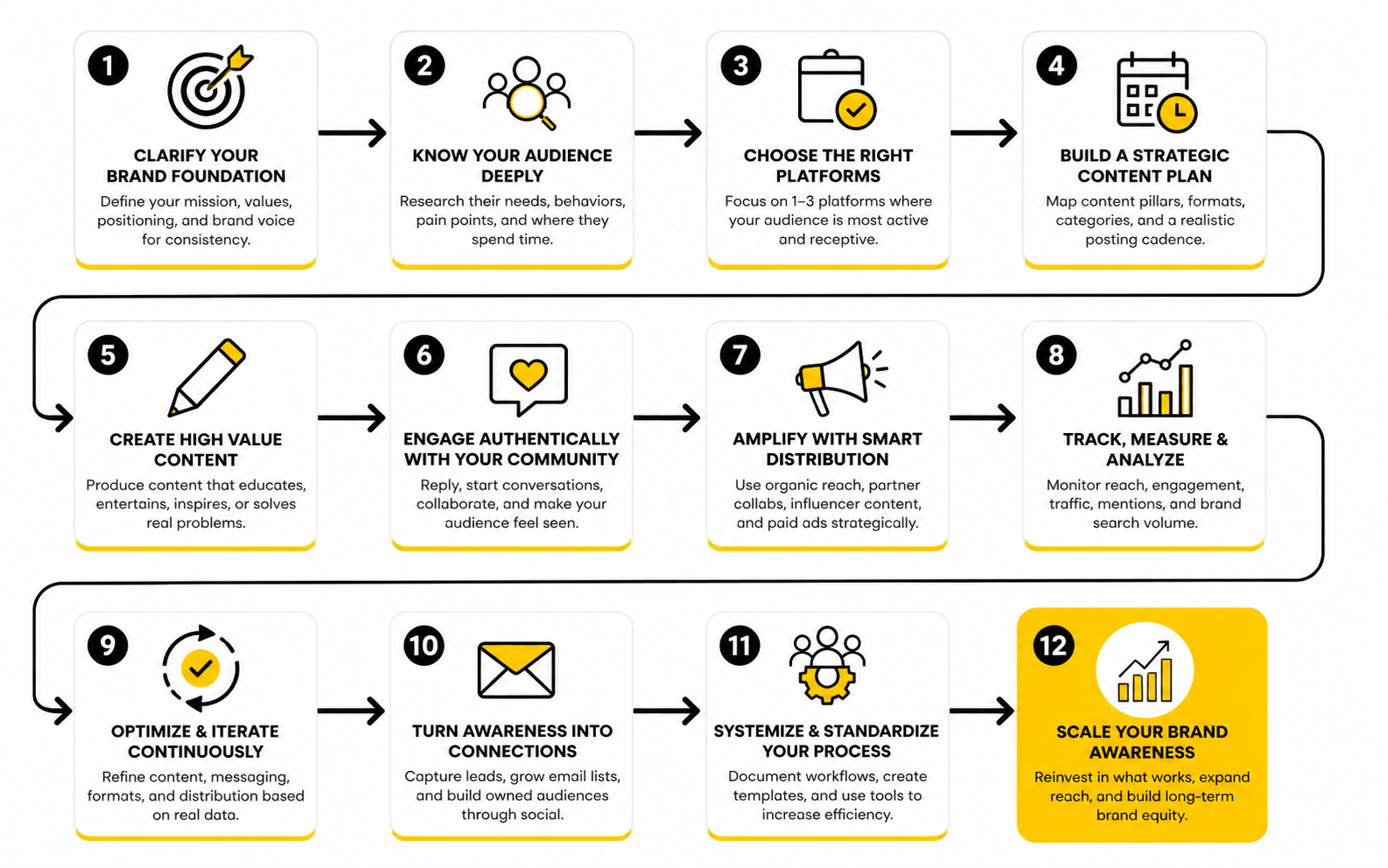
Step 5: Build A Weekly Execution Rhythm
The process becomes tangible when you turn the framework into a weekly rhythm. Without a rhythm, social media becomes reactive. The team posts when someone has time, copies what competitors are doing, or publishes whatever feels urgent that day.
A simple weekly rhythm can work like this:
This rhythm keeps content focused without making it repetitive. One idea can become a LinkedIn post, a short video, an Instagram carousel, a founder-style opinion post, an email prompt, and a retargeting angle. The audience hears the same strategic point in different ways, which is exactly how memory gets built.
Step 6: Create A Clear Path From Attention To Relationship
Awareness is weaker when it has nowhere to go. If someone discovers your brand and likes the content, what happens next? Do they follow, subscribe, comment, join a list, download a resource, start a chat, book a call, or visit a relevant page?
This is where a lot of social strategies leak value. They create attention, but they do not capture intent. The audience enjoys the content, then disappears back into the feed.
A simple next step solves that problem. A creator or small business might use a link hub like Anything to organize key actions. A brand running comment-to-message campaigns might use ManyChat to move people from a public interaction into a more personal conversation. The point is not to automate everything. The point is to stop wasting signals of interest.
Step 7: Feed Insights Back Into The System
The best awareness systems improve because the team pays attention. Comments reveal objections. Saves show which ideas people want to revisit. Shares show which messages people are willing to attach their own reputation to. Profile visits and branded search can indicate that social content is creating curiosity beyond the post itself.
Do not review only the obvious metrics. Reach matters, but reach without memory is thin. Engagement matters, but engagement without relevance can send the strategy in the wrong direction.
A practical review should ask three questions each week. What did people notice? What did they understand? What did they do next? When those answers get clearer, the brand’s social media becomes more than a publishing habit. It becomes a learning system.
Statistics And Data
Measurement is where brand awareness through social media either becomes a serious growth system or stays a vague marketing phrase. The point is not to collect more numbers. The point is to understand which signals show that people are noticing the brand, remembering the message, trusting the proof, and moving closer to a business outcome.
This is important because awareness data can be misleading when it is read in isolation. A post with high reach may have weak relevance. A post with modest reach may create strong comments, saves, profile visits, branded searches, or direct messages from the right audience. The numbers only matter when they help you make a better decision.
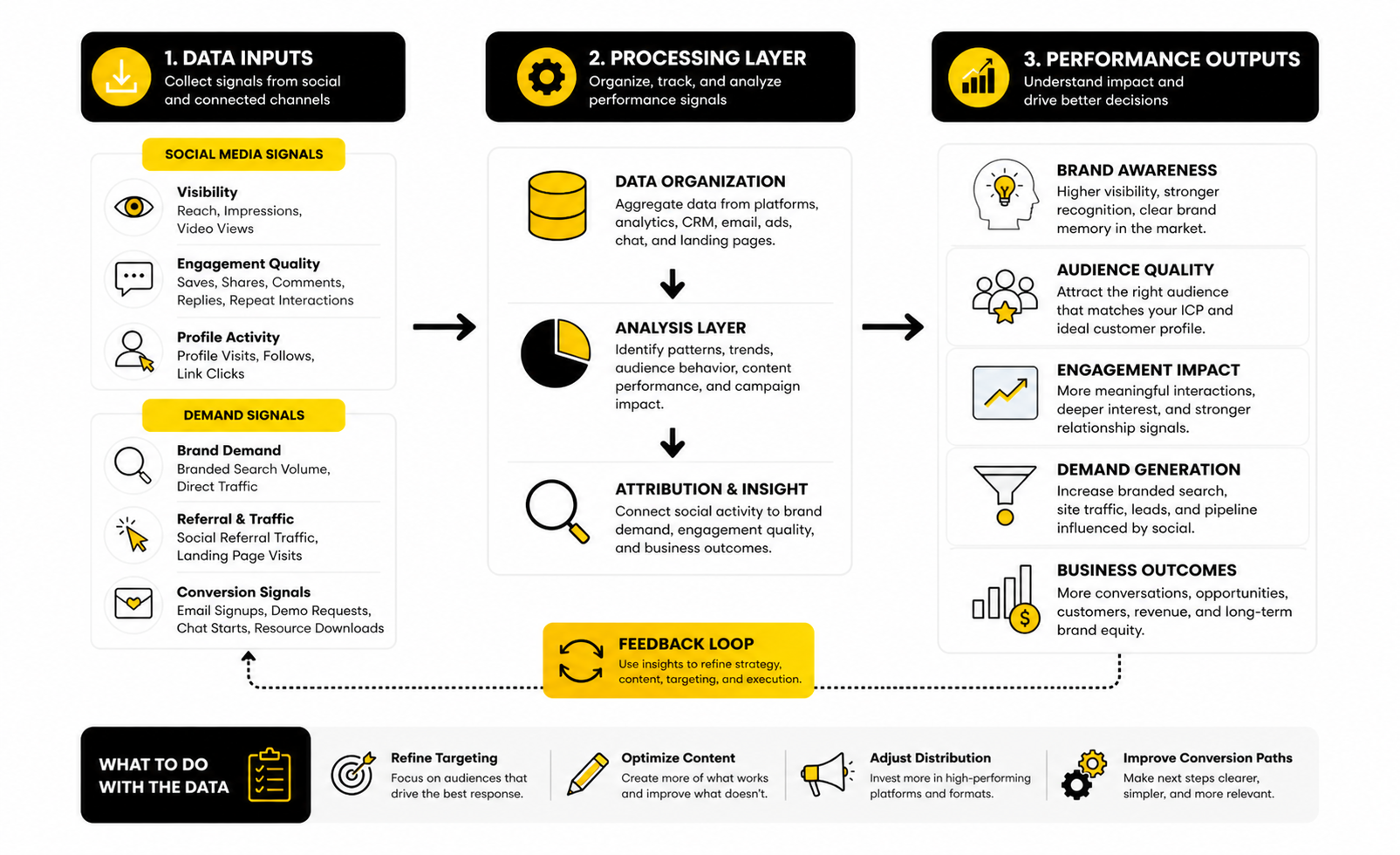
The cleanest way to measure awareness is to separate your metrics into layers. Do not mix everything into one dashboard and call it “performance.” Brand awareness has different stages, and each stage needs a different interpretation.
The Four Measurement Layers
The first layer is visibility. This includes reach, impressions, video views, follower growth, share of voice, and paid social ad reach. These numbers tell you whether the market is seeing the brand often enough to create familiarity, but they do not prove that people understand or trust the brand yet.
The second layer is engagement quality. This includes saves, shares, meaningful comments, profile visits, content completion, replies, and repeat interactions from the same audience segment. These signals are stronger than casual likes because they show that the content was useful, memorable, or worth passing along.
The third layer is brand demand. This includes branded search volume, direct traffic, social referral traffic, email signups from social, demo requests influenced by social, and people mentioning the brand by name in conversations. This is where awareness starts turning into intent.
The fourth layer is commercial movement. This includes assisted conversions, retargeting performance, lead quality, sales cycle changes, returning visitor conversion rates, and customer acquisition cost changes across audiences exposed to social content. This layer matters because brand awareness is not supposed to live forever at the top of the funnel.
What Benchmarks Can And Cannot Tell You
Benchmarks are useful, but they are not a strategy. The 2025 Rival IQ Social Media Industry Benchmark Report shows that engagement rates and posting frequency vary heavily by platform and industry, with TikTok still producing stronger engagement than Instagram, Facebook, and X for many brand categories. That is helpful context, but it does not mean your brand should blindly chase TikTok if your buyers do not use it for the problem you solve.
The better way to use benchmarks is as a reality check. If your engagement rate, posting consistency, or audience growth is far below similar brands, you may have a distribution or creative problem. If your numbers are above the benchmark but leads are low quality, you may have a relevance or positioning problem.
Benchmarks should start a diagnosis, not end the conversation. A strong social media report does not say, “This post beat the benchmark, so it worked.” It says, “This post beat the benchmark with the right audience, strengthened the right message, and created the next signal we wanted.”
Reach Only Matters When It Builds Recognition
Reach is often the first number people celebrate, and sometimes that is fair. If nobody sees the brand, nothing else can happen. But reach becomes dangerous when the team treats it as the final proof of success.
A viral post can bring attention from people who will never buy, never remember the brand, and never connect the content to the business. That can still have value if the brand is built for mass-market reach, but most companies need a more focused interpretation. The question is not just “How many people saw this?” but “Did the right people see this enough times to remember something useful?”
This is why frequency and message consistency matter. If a campaign reaches 500,000 people once with a weak message, it may create less practical awareness than reaching 50,000 relevant people several times with a clear point of view. Brand memory is built through repeated, relevant exposure.
Engagement Should Be Judged By Intent, Not Volume
Engagement is not automatically good. Some posts get comments because they are controversial, vague, polarizing, or funny in a way that has nothing to do with the brand. That can inflate the report while weakening the strategy.
For awareness, higher-quality engagement usually looks like people saving a useful framework, sharing a post with a colleague, asking a serious question, clicking the profile, replying to a story, or commenting with a problem the brand can actually solve. Those actions show that the content is creating a stronger relationship than passive scrolling.
The 2025 Sprout Social Index is based on surveys of more than 4,000 consumers and 1,200 marketers, and it reinforces how central social media has become to the consumer-brand relationship. That matters because engagement is no longer just a content metric. It is a public signal of how responsive, relevant, and human the brand feels.
Brand Search Is One Of The Cleanest Awareness Signals
Branded search is one of the most useful signals because it shows that people remembered the brand enough to look for it. They may have seen a post, heard a creator mention, watched a short video, or noticed a comment thread, then moved to Google or another search environment to learn more. That step matters.
This is also why social media should be measured alongside search data. If social reach and engagement rise, but branded search stays flat for months, the content may be entertaining without making the brand memorable. If branded search rises after a focused campaign, the awareness layer is likely creating curiosity beyond the platform.
Do not overcomplicate this at the beginning. Track branded search volume, direct traffic, homepage visits, profile clicks, and landing page visits from social. Over time, compare these signals with campaign periods, content themes, creator collaborations, and paid boosts.
Social Referral Traffic Needs Context
Social referral traffic can undercount the real impact of social because people do not always click directly from a post. They may see the brand on LinkedIn, later search it on Google, then return directly a week later. That journey still started with social, even if analytics does not give social the full credit.
This does not mean you should ignore referral traffic. It means you should read it alongside other signals. A low number of tracked clicks may still be acceptable if branded search, direct traffic, email signups, or sales conversations show that social content is influencing demand.
Use UTM links where they make sense, especially for campaign-specific resources, landing pages, lead magnets, or event registrations. A simple page builder or funnel tool like ClickFunnels can help keep campaign paths cleaner, but the bigger point is discipline. If the path from social to the next step is messy, your measurement will be messy too.
Paid Social Metrics Should Separate Attention From Memory
Paid social can generate fast visibility, but not every paid impression creates awareness worth paying for. CPM, reach, frequency, video view cost, and click-through rate are useful, but they do not tell the whole story. You need to know whether the campaign made the brand more recognizable to the right audience.
A practical paid awareness review should look at three groups of data. First, check delivery metrics like reach, frequency, CPM, and completed views. Second, check response metrics like saves, shares, profile visits, site visits, and engaged-view actions. Third, check follow-on metrics like branded search lift, retargeting pool growth, assisted conversions, and lead quality.
The Digital 2025 Global Overview Report warns that social ad reach data can show unusual gains and declines because platform reporting changes over time. That is exactly why teams should avoid overreacting to one platform number. Watch trends, compare multiple signals, and focus on whether the audience is becoming easier to reach, recognize, and convert.
The Best Dashboard Is Simple Enough To Use Weekly
A good awareness dashboard does not need twenty tabs. It needs a small set of metrics that connect to decisions. If a metric does not change what you will do next, it probably does not belong in the weekly view.
A practical weekly dashboard can include:
The team should review this dashboard with one question in mind: what should we do differently next week? If a pillar creates saves but no clicks, it may need a clearer next step. If a format creates reach but no profile visits, the hook may be too broad. If a platform creates fewer impressions but better leads, it may deserve more attention than the louder channel.
What Good Measurement Changes In Practice
Good measurement makes the content sharper. It shows which ideas people remember, which objections keep appearing, which proof assets reduce doubt, and which platforms are creating real business signals. That feedback should shape the next round of content, not sit inside a report.
It also helps teams defend the role of brand awareness. When social data connects to branded search, email growth, retargeting efficiency, lead quality, and assisted revenue, awareness becomes easier to explain. It stops sounding like a soft activity and starts looking like a system that improves the rest of marketing.
That is the real value of measurement. Not prettier charts. Better decisions.
Professional Implementation And Measurement
At this stage, brand awareness through social media becomes an operating model. The strategy is no longer “post more and hope people notice.” It becomes a managed system with ownership, quality control, platform decisions, risk management, and a clear link between brand activity and commercial outcomes.
This is where many teams get exposed. They can create a few good posts, but they cannot keep the message consistent across campaigns, creators, employees, paid media, and customer-facing teams. Scaling awareness is not about making the content machine louder. It is about making the brand easier to recognize while more people and channels get involved.
The goal is control without killing creativity. A social presence that feels over-approved becomes bland. A social presence with no guardrails becomes messy. Professional implementation sits in the middle: clear enough to protect the brand, flexible enough to stay alive in the feed.
Build The Brand System Before You Scale The Content System
The first scaling mistake is hiring more creators, agencies, or freelancers before the brand system is clear. More output will not fix a weak message. It usually makes the weakness more visible.
A usable brand system should define the audience, positioning, proof points, tone, visual rules, core claims, prohibited claims, and the few messages the brand wants to repeat until the market remembers them. This does not need to be a 90-page brand book nobody opens. It should be practical enough that a content lead, designer, founder, creator partner, and paid media buyer can all use it.
This matters because social content moves faster than most approval processes. If people do not have clear rules, they either wait too long for permission or improvise in ways that dilute the brand. A lean system gives the team speed without turning the brand into a free-for-all.
Choose Platform Depth Before Platform Spread
A brand does not win awareness by being average everywhere. Platform spread looks impressive in a planning document, but it often creates shallow execution. The brand posts on LinkedIn, Instagram, TikTok, YouTube, X, Facebook, Pinterest, and Threads, then realizes every platform needs a different creative language, posting rhythm, comment culture, and measurement model.
The more carefully move is to choose platform depth first. Pick the platforms where your audience already pays attention to the problem you solve, then build strong native execution there. The Digital 2025 social media overview shows that people use multiple platforms for different reasons, which is exactly why copy-pasting the same post everywhere is weak strategy.
Depth means understanding what each platform is supposed to do in the awareness system. LinkedIn might build authority and B2B familiarity. TikTok might create discovery and category education. YouTube might support deeper trust. Instagram might reinforce visual identity, creator proof, and social validation. The decision should follow audience behavior, not internal preference.
Balance Founder-Led, Brand-Led, And Community-Led Content
Founder-led content can be powerful because people often trust people faster than companies. A founder can explain the market, share a point of view, respond to questions, and make the brand feel more accountable. But founder-led awareness becomes risky when the entire brand depends on one person’s posting energy.
Brand-led content gives the company consistency. It can carry frameworks, product education, customer proof, campaign assets, and polished storytelling. The risk is that it can become too safe if nobody with a real voice is willing to say something specific.
Community-led content adds the strongest external signal. Customers, creators, partners, employees, and users can make the brand feel more believable because the message is not only coming from the company. The 2025 Edelman Brand Trust report points to personal relevance and emotional connection as major trust drivers, which is why human voices around the brand matter so much.
Use Creators For Credibility, Not Just Reach
Creator partnerships should not be treated as rented distribution only. Reach matters, but credibility matters more. A creator who speaks to the exact audience with the right level of trust can create better awareness than a much larger account with loose relevance.
The tradeoff is control. Highly scripted creator content may protect the brand, but it often removes the creator’s natural credibility. Completely open-ended creator content may feel authentic, but it can miss the strategic message or create claims the brand cannot support.
The better approach is to brief creators on the problem, audience, proof, boundaries, and desired takeaway, then let them communicate in their own style. That keeps the awareness message intact without making the post feel like corporate copy. For campaigns with multiple creators, track not only views and engagement, but also branded search, profile visits, comment themes, and downstream traffic during the campaign window.
Connect Organic And Paid Instead Of Treating Them Separately
Organic social is where a brand learns what people care about. Paid social is where a brand can scale what already shows promise. When these two teams operate separately, brands waste money promoting messages that have not earned organic proof yet.
Use organic content as a testing ground for hooks, angles, objections, explanations, and proof assets. If a post gets high-quality saves, shares, serious comments, profile visits, or inbound questions from the right audience, it may deserve paid support. If a post gets broad engagement but weak relevance, do not automatically turn it into an ad.
A practical workflow is simple. Let organic identify the messages that create resonance, then use paid to increase frequency with the right audience. From there, send people to a focused page, resource, webinar, product demo, or funnel instead of a generic homepage. Tools like GoHighLevel can help teams connect ads, follow-up, pipeline activity, and automation, but the system only works if the message is clear before the automation starts.
Protect The Brand From Measurement Distortion
The biggest measurement risk is rewarding the wrong behavior. If the team is judged only on reach, it will chase reach. If creators are judged only on views, they will optimize for views. If the agency is judged only on posting volume, it will produce more content whether or not the brand becomes more memorable.
This is how brand awareness through social media slowly turns into noise. Everyone appears busy, the dashboard looks active, and the market still cannot explain why the brand matters. That is expensive because it creates the feeling of momentum without the business benefit of real recognition.
The fix is to score content against strategic signals, not just platform signals. Did it strengthen the brand memory? Did it attract the right audience? Did it create proof, questions, saves, branded search, direct traffic, retargeting growth, or sales conversations? If not, the post may have performed inside the platform while failing the business.
Manage Brand Safety Without Becoming Boring
Social media rewards speed, opinion, humor, and cultural timing. Brands need some of that energy if they want to feel alive. But they also need guardrails because a careless post can create confusion, backlash, legal risk, or trust damage.
Brand safety should cover claims, regulated topics, competitor references, customer data, testimonials, AI-generated content, employee advocacy, creator disclosures, and response protocols. This does not mean every post needs legal review. It means the team knows where the red lines are before a fast-moving conversation starts.
The key is separating risk from discomfort. A strong point of view may feel uncomfortable because it takes a position. That is not the same as being reckless. The best brands are clear enough to be remembered and careful enough to be trusted.
Plan For Message Fatigue Before It Shows Up
Consistency builds memory, but repetition without evolution creates fatigue. Your audience should recognize the brand’s core ideas, but they should not feel like every post is the same post with a new graphic. This is one of the harder tradeoffs in awareness strategy.
The solution is to keep the strategic message stable while rotating the angle. You can explain the same core idea through mistakes, myths, frameworks, examples, objections, data, behind-the-scenes decisions, customer questions, product use cases, and founder opinions. The audience keeps hearing the same point, but the experience stays fresh.
A useful test is whether someone could summarize your brand after seeing ten posts. If they cannot, your message is too scattered. If they can summarize it after three posts and feel bored by the fourth, your execution is too repetitive.
Build Owned Channels Around Social Attention
Social platforms are excellent for discovery, but they are not fully owned. Algorithms change, reach fluctuates, accounts get limited, and audience behavior shifts. That is why serious awareness strategies should turn some social attention into owned relationships.
Owned channels include email lists, SMS lists where appropriate, communities, webinars, events, podcasts, customer lists, and CRM records. The point is not to pull people out of social forever. The point is to avoid depending on platforms for every future touchpoint.
This is especially important when a brand starts getting attention. More reach means more opportunity, but also more leakage if there is no capture path. A simple newsletter, resource funnel, booking flow, or customer journey inside a platform like Systeme.io can help turn awareness into a relationship the brand can actually follow up with.
Scaling Requires Better Decisions, Not Just More Content
The mature stage of brand awareness is not bigger content volume. It is better decision-making. The brand knows which audience matters, which messages are worth repeating, which platforms create real movement, which creators add credibility, and which metrics predict future demand.
That kind of clarity compounds. Content gets easier to brief. Paid campaigns get sharper. Sales conversations start warmer. Customer proof becomes more useful because the team knows which doubts it needs to remove.
This is the point where social media stops feeling like a daily scramble. It becomes a brand asset. Not because every post wins, but because the system keeps teaching the market what to remember.
Common Mistakes, Practical Fixes, And FAQ
The final layer of brand awareness through social media is the ecosystem around the content. A post can introduce the brand, but the ecosystem determines what happens after that first moment of attention. The profile, comments, landing page, email capture, retargeting, creator mentions, customer proof, and sales follow-up all shape whether the audience remembers the brand or forgets it by tomorrow.
This is where good brands separate themselves. They do not treat awareness as a loose collection of posts. They build a system where each touchpoint makes the next one easier, clearer, and more credible.
Mistake 1: Posting Without A Clear Brand Memory
The most common mistake is publishing content without deciding what the audience should remember. This creates activity, but not strategic recognition. The brand may look active on social media while the market still cannot explain what it does, who it helps, or why it is different.
The fix is to write one simple memory statement before planning content. Use this format: “We want this audience to remember us as the brand that helps them achieve this outcome by solving this problem in this specific way.” If a post does not support that memory, it needs a stronger angle or it should not be published.
Mistake 2: Confusing Reach With Real Awareness
Reach is useful, but it is not the finish line. A post can reach a large audience and still fail if the wrong people see it or if the message does not connect back to the brand. This is why big numbers can create false confidence.
The fix is to review reach with relevance. Look at who engaged, what they said, whether they visited the profile, whether branded search moved, and whether the post created a useful next action. Awareness should make the brand easier to remember, not just easier to scroll past.
Mistake 3: Trying To Sound Like Every Other Brand
Many brands become forgettable because they copy the safest style in their market. They use the same phrases, the same carousels, the same inspirational hooks, and the same generic advice. The result is content that feels acceptable but invisible.
The fix is to develop a sharper point of view. Your brand does not need to be loud for the sake of being loud. It needs to be clear enough that the right people can tell the difference between you and the alternatives.
Mistake 4: Creating Attention With No Follow-Up Path
A strong post can create curiosity, but curiosity disappears quickly when there is no clear next step. If the profile is confusing, the link is generic, the landing page is unrelated, or the follow-up is slow, the awareness value leaks. Social media moves fast, and interested people need an easy way to move closer.
The fix is to connect each campaign to a simple action. That might be a resource, newsletter, product demo, consultation, event, community, or automated chat flow. For brands that rely on conversations from comments and direct messages, ManyChat can help turn social interest into a more structured relationship.
Mistake 5: Measuring Too Late
Some teams wait until a campaign ends before they look at the data. That makes optimization slow. By the time they understand which messages worked, the budget, timing, and creative window are already gone.
The fix is to review signals while the campaign is still live. Watch comments, saves, shares, profile visits, branded search, landing page activity, and lead quality early enough to adjust. Measurement should not be a post-mortem only. It should guide the next move.
What Is Brand Awareness Through Social Media?
Brand awareness through social media is the process of making the right audience recognize, understand, and remember your brand through social platforms. It is not just about reach or follower count. The stronger goal is to connect your brand with a clear problem, outcome, category, or point of view in the buyer’s mind.
That awareness can come from posts, videos, comments, creators, employee content, customer proof, paid campaigns, and community conversations. The important part is consistency. People should see different pieces of content and still understand the same core brand message.
Why Is Brand Awareness Important For Social Media Marketing?
Brand awareness makes every later step easier. When people already recognize your brand and understand why it matters, they are more likely to click, follow, search, subscribe, ask questions, or consider buying. Without awareness, every sales message has to work harder because the audience is starting cold.
This is especially important because the social feed is crowded. The Digital 2025 Global Overview Report shows that social media is a major part of daily internet behavior, which means brands are competing for attention in a very active environment. Recognition helps you avoid being just another post in the feed.
Which Social Media Platforms Are Best For Brand Awareness?
The best platform depends on where your audience already pays attention and how they evaluate brands in your category. LinkedIn often works well for B2B authority, hiring, consulting, agencies, SaaS, and professional services. TikTok and Instagram can work well for visual discovery, creator-led content, culture, and consumer-facing categories.
YouTube is useful when the product needs deeper explanation or when search-driven video content matters. Facebook groups, communities, and niche forums can still be valuable when the audience trusts peer conversations. The right answer is not “be everywhere.” The right answer is to go deep where your audience is most likely to notice and remember you.
How Do You Measure Brand Awareness On Social Media?
Measure brand awareness through layers instead of one metric. Start with visibility metrics like reach, impressions, video views, and follower growth. Then review engagement quality through saves, shares, comments, replies, profile visits, and repeat interactions.
After that, look for demand signals like branded search, direct traffic, social referral traffic, email signups, demo requests, chat starts, and resource downloads. The best measurement connects platform behavior to business movement. A post that creates fewer views but more qualified profile visits may be more valuable than a post that reaches a larger but irrelevant audience.
Are Impressions A Good Brand Awareness Metric?
Impressions are useful, but they are incomplete. They show that content was displayed, not that the audience understood, remembered, or trusted the brand. Treat impressions as the beginning of the measurement story.
The better question is what happened after the impression. Did people stop, watch, save, share, comment, search the brand, visit the profile, or click into a next step? If not, the content may have generated exposure without meaningful awareness.
How Long Does It Take To Build Brand Awareness Through Social Media?
There is no fixed timeline because it depends on audience size, category maturity, posting quality, platform fit, paid support, creator involvement, and message clarity. Some campaigns can create fast visibility, but durable awareness usually takes repeated exposure over time. People need to see the brand enough times, in enough relevant contexts, to form a clear memory.
A practical way to think about it is in campaign cycles. Run a focused message for several weeks, measure recognition and demand signals, then refine the next cycle. Do not change the core message every few days just because one post underperformed.
What Content Works Best For Brand Awareness?
The best awareness content makes the audience understand the brand faster. That can include educational posts, category explanations, short videos, founder opinions, customer proof, creator collaborations, behind-the-scenes content, original research, product use cases, and useful frameworks. The format matters less than the clarity of the message.
Strong content usually does one of three jobs. It makes the problem more visible, makes the brand’s approach more believable, or makes the next step feel safer. If a post does none of those things, it may still get engagement, but it is not building much brand value.
Should Brand Awareness Content Include Calls To Action?
Yes, but the call to action should match the audience’s stage. Not every awareness post needs to push for a demo, consultation, or purchase. Sometimes the better next step is to follow, save, comment, download a guide, join a newsletter, watch a longer video, or visit a focused resource page.
The key is to avoid dead-end attention. If someone becomes interested, they should know what to do next. A simple landing page, link hub, newsletter, or funnel built with a tool like Systeme.io can help turn casual attention into an owned relationship.
How Often Should A Brand Post For Awareness?
Posting frequency should be high enough to create repeated exposure, but not so high that quality collapses. Benchmarks can help set expectations, but they should not replace judgment. The 2025 Rival IQ Social Media Industry Benchmark Report shows that engagement and posting patterns vary widely by industry and platform, which is why copying another brand’s cadence can be misleading.
A better starting point is consistency you can sustain. Publish fewer strong posts before you publish a larger volume of weak ones. Once the message, workflow, and measurement system are working, increase frequency carefully.
What Is The Difference Between Brand Awareness And Lead Generation?
Brand awareness helps people recognize and trust the brand before they are ready to act. Lead generation captures people who are willing to raise their hand, submit information, book a call, or request something specific. Both matter, but they solve different problems.
The mistake is expecting every awareness post to behave like a lead generation ad. Some content should create familiarity and trust. Other content should capture demand. The best social strategy connects both, so awareness makes lead generation more efficient over time.
Can Small Businesses Build Brand Awareness Without A Big Budget?
Yes. Smaller businesses can build awareness by being sharper, more consistent, and more personal than larger competitors. They may not have the same media budget, but they can often move faster, show the people behind the brand, and speak more directly to a niche audience.
The practical path is to choose one strong message, focus on one or two platforms, publish consistently, use proof wherever possible, and create a clear next step for interested people. A small brand does not need everyone to know it. It needs the right people to remember it for the right reason.
What Role Do Creators And Influencers Play In Brand Awareness?
Creators can help a brand borrow trust, language, and audience access. The best creator partnerships are not just about large follower counts. They are about relevance, credibility, and whether the creator can explain the brand in a way the audience actually believes.
The brand should provide direction without scripting away the creator’s voice. Share the audience, product truth, proof points, boundaries, and desired takeaway. Then let the creator communicate naturally. That balance protects the message while keeping the content believable.
How Does Paid Social Support Brand Awareness?
Paid social helps increase reach, frequency, and targeting control. It can put the right message in front of the right audience more consistently than organic alone. But paid social works best when it amplifies a message that has already shown organic resonance or strategic value.
Do not use paid spend to force weak content into the market. Use paid to scale proven angles, strengthen retargeting audiences, support creator campaigns, and drive people toward focused next steps. Platforms and funnels can help with execution, but paid media still depends on message quality.
What Is The Biggest Mistake Brands Make With Social Media Awareness?
The biggest mistake is treating social media as a posting channel instead of a brand memory system. Brands publish content, watch the numbers, and assume activity equals progress. It does not.
The better approach is more disciplined. Decide what you want to be remembered for, create content that reinforces that memory, measure signals beyond reach, and connect attention to a next step. That is how awareness becomes an asset instead of a calendar.
Build a stronger local presence with BAAM AI
Turn your website, Google profile, social channels, and AI visibility into one growth engine
Most businesses do not need more random marketing activity. They need a consistent presence system that helps the right people find them, trust them, and take action. BAAM AI brings strategy, local SEO, website updates, Google Maps visibility, social content, AI-search readiness, media production, and reporting into one practical monthly engine.
If you want your marketing to keep working after the campaign ends, start with a free BAAM AI presence audit. See how your business shows up today and where the fastest visibility wins are at BAAM AI.