
BAAM AI Blog
Bossy Copywriting: How Commanding Language Shapes Persuasion and Action
Copywriting as a discipline is about crafting words that persuade people to take action - whether that’s clicking a button, signing up for a newsletter, or buying a product or service. At its heart, effective copy...
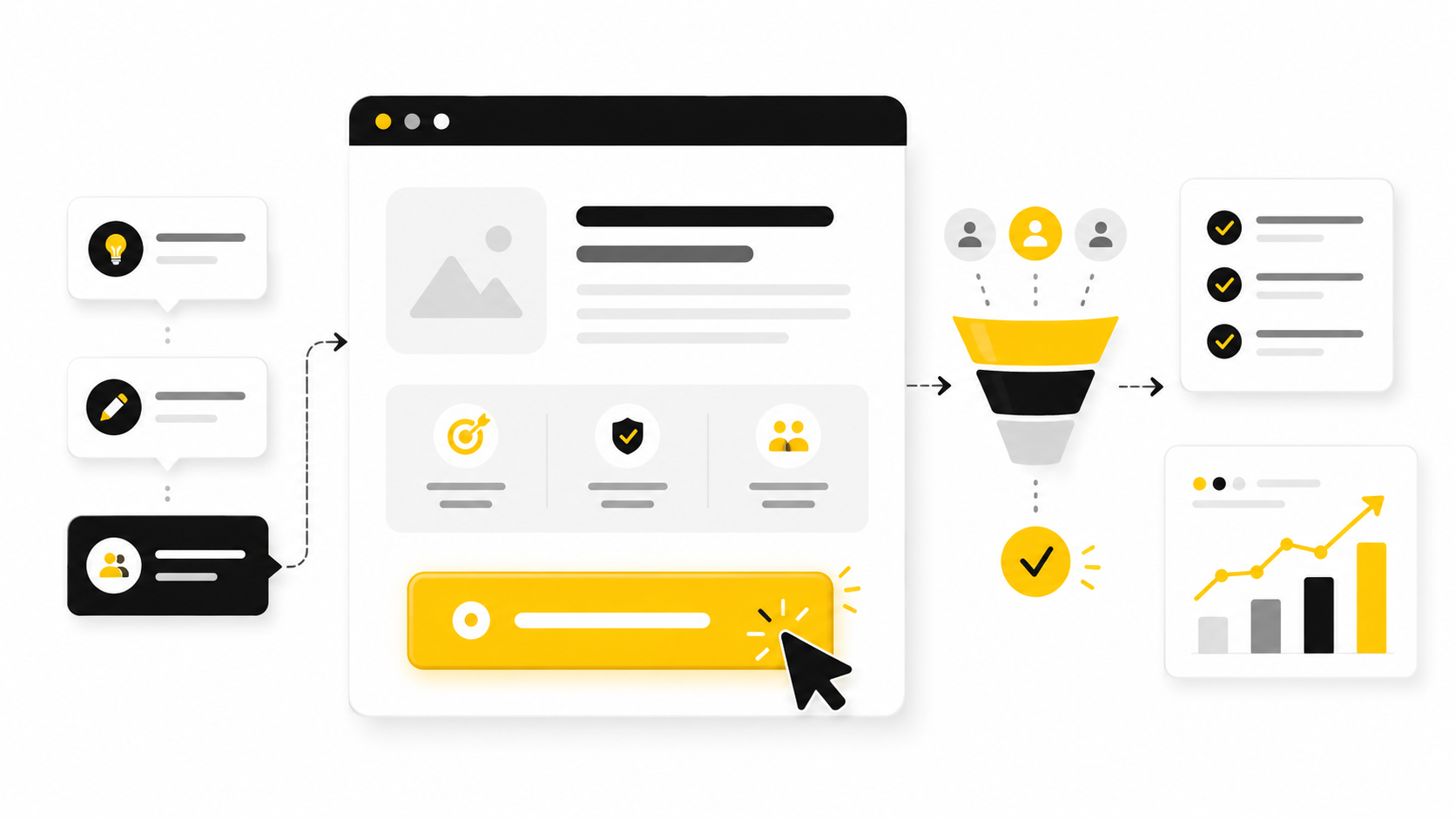
Copywriting as a discipline is about crafting words that persuade people to take action - whether that’s clicking a button, signing up for a newsletter, or buying a product or service. At its heart, effective copy directs a reader toward a specific outcome, often with urgency and clear instruction.
Bossy copywriting refers to a style that uses assertive, directive language to tell the audience exactly what to do next. Unlike softer, brand-building language, bossy copy tends to use clear, unambiguous commands and calls to action that leave little room for confusion about the next step. The intent is immediate action paired with measurable results. In many direct response contexts, this directness can significantly improve conversion rates because the audience knows exactly what is expected.
At the same time, communication research across persuasion and public messaging shows that overly forceful or bossy directives can trigger psychological reactance - a resistance that makes people want to do the opposite of what they’re told. In other words, tone matters just as much as clarity, and there’s a balance to strike between being assertive and being alienating.
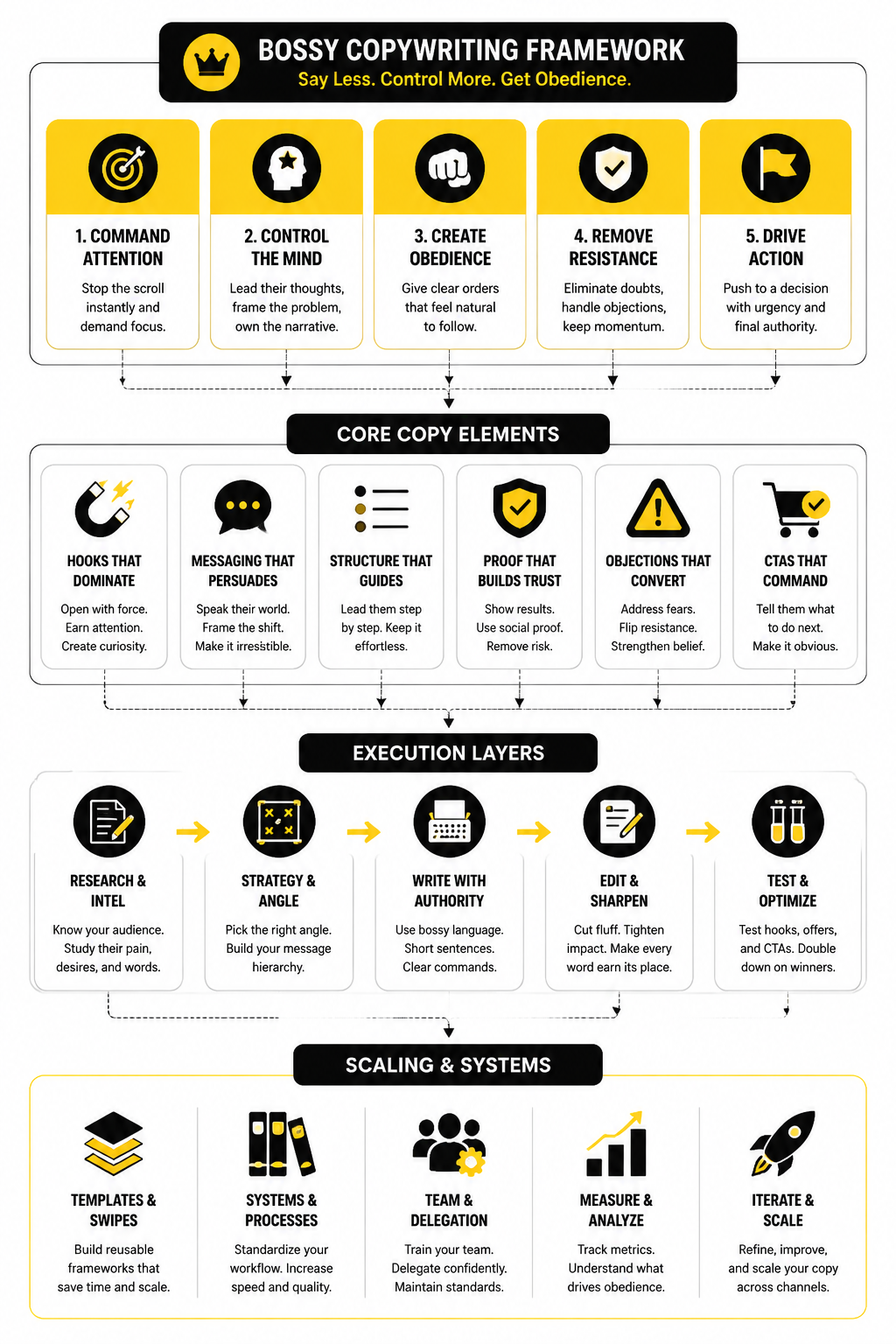
In the coming sections, we’ll first explain how bossy copy fits into broader conversion and copywriting frameworks, then break down the core elements of effective assertive copy. After that, you’ll learn when this style works best (and when it backfires), how professional copywriters implement it thoughtfully, and how to measure and improve its performance over time.
How Bossy Copywriting Fits into Conversion Frameworks
To understand bossy copywriting, it helps to see how it plugs into the larger architecture of direct response and conversion writing. Even though the word bossy can feel informal, the style you’re talking about - directive, action‑oriented language - is exactly what most conversion frameworks are designed to support. These frameworks aren’t just formulas you blindly paste in; they are psychological roadmaps that guide a reader from curiosity to action in a predictable order.
Direct response copywriting frameworks like AIDA (Attention → Interest → Desire → Action) or PAS (Problem → Agitate → Solution) are built around the idea that every piece of persuasive writing must lead someone to do something - to click, buy, sign up, or otherwise respond. In AIDA, for example, the final stage (Action) depends on clear, directive language that leaves no doubt about what the next step is. If you don’t direct someone boldly, you risk watching engagement stall right at the finish line.
Frameworks matter because they help you think in sequences rather than isolated lines. A bossy call to action won’t convert well on its own if the copy hasn’t already captured attention and built desire; the directive moment only becomes powerful after the reader is psychologically primed. This is why most high‑conversion campaigns strategically embed a bossy CTA - like “Click the button to build instant access” - at specific points in the flow rather than haphazardly.
Different frameworks place directive language at slightly different points. In PAS, for example, you agitate a problem and then immediately present a solution with a commanding instruction - “Fix this now by signing up today.” In AIDA, that same command appears after you’ve built enough interest and desire that action feels like the natural next step, not an interruption.
Ultimately, bossy copywriting doesn’t live in isolation: it activates the final stage of a conversion framework. Think of forms like AIDA or PAS as the engine and directive language as the throttle - without it, you don’t leave the starting line. When used thoughtfully, directive elements bring structure, clarity, and measurable momentum to your entire persuasion strategy.
Core Components of Assertive Copy That Converts
Effective bossy copywriting isn’t random yelling into the void - it’s a purpose‑built sequence of actions that guides a reader toward a clear next step. At the heart of implementation are the core elements you must address before a single command line gets written. Strong copywriters always start with strategy and structure, not slogans, because context drives interpretation.
First, define your goal and audience so every directive you write feels relevant and compelling rather than arbitrary. Know exactly what you want the reader to do - download a guide, book a demo, subscribe to a newsletter - and write to convince one person who fits your ideal customer profile. This prevents vague, generic calls to action that force readers to guess what you want.
Next, craft a hierarchy of message elements that supports your bossy language. Your hook and benefits lay the groundwork so that commands like “Get Started Now” hit with context and urgency. If the copy lacks flow and logic, even the boldest directive will fall flat. The hierarchy should guide a reader from problem through benefit to action in a natural progression.
Another piece of the puzzle is rigorous testing and refinement. High‑performing CTAs aren’t guesses - they’re the results of split testing different verbs, placements, and value propositions to see what drives the best engagement. A variation of phrasing like “Start My Free Trial” often outperforms generic language - and using first‑person phrasing can further boost relevance and conversions.
Practical Steps for Implementing Bossy Copy
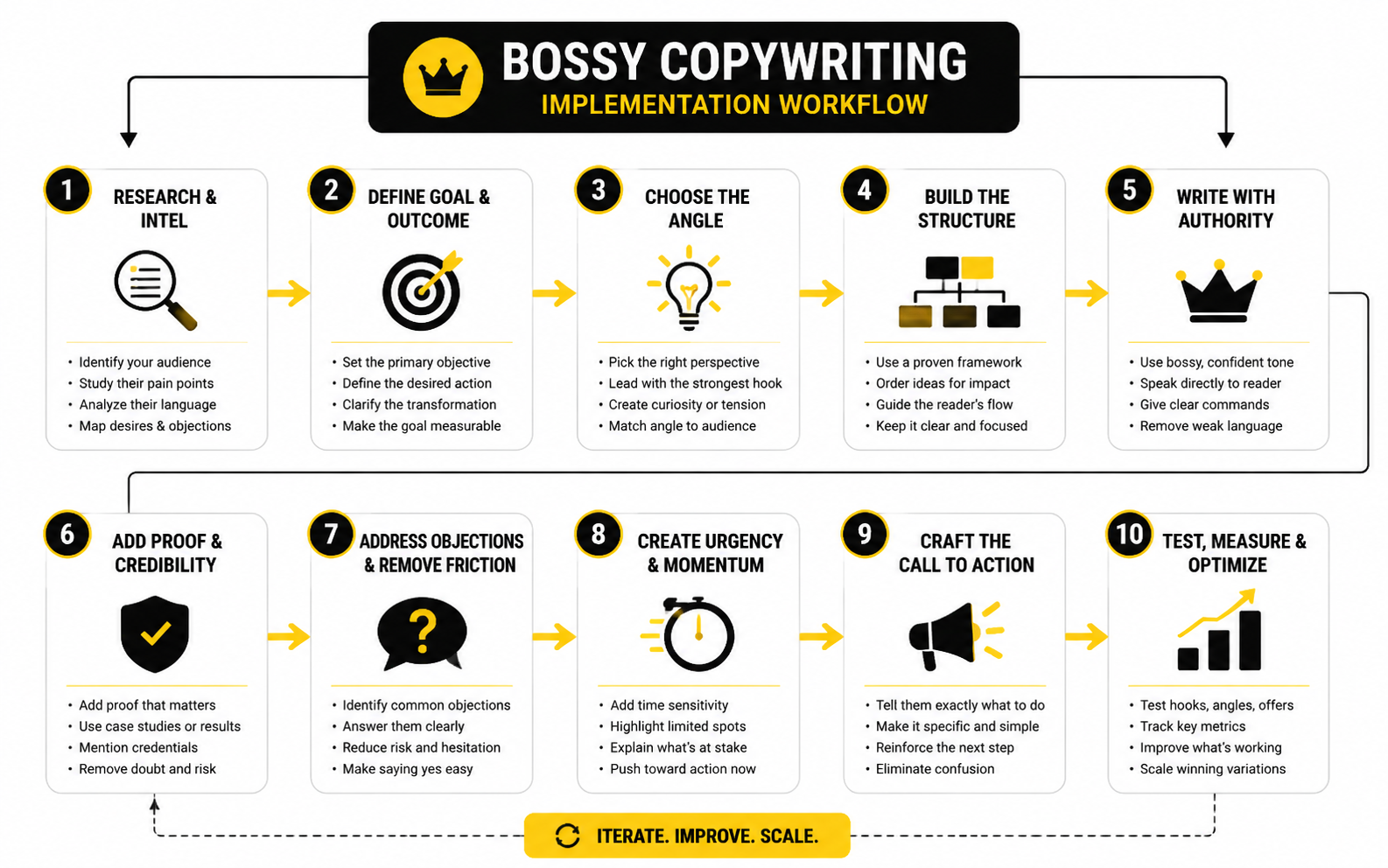
Below is a tangible, step‑by‑step approach you can use whenever you’re ready to write bossy, action‑oriented copy:
Before writing a single command, gather insights from customer interviews, reviews, or past campaigns to understand motivations and objections. A clear picture of your audience’s needs enables you to tailor directive language that genuinely resonates.
Decide on the one thing this piece of copy must achieve - the conversion goal. This could be a signup, a download, a purchase, or a registration. Short copy that tackles more than one goal confuses the reader and weakens the impact of your CTA.
Structure your copy so that it naturally leads a reader toward the command. Start with the hook, move into benefits, handle objections, and conclude with your directive. If your logic doesn’t flow, even strong calls to action will feel jarring.
Don’t save all directive language for the end. A primary CTA above the fold signals what action you want most visitors to take, while secondary CTAs after key benefits or proofs reinforce direction at moments of high engagement.
Use strong verbs - Get, Start, Claim, Join - and connect them with specific outcomes or benefits (e.g., “Get Your Free Guide Now”). This combination helps your CTA feel both authoritative and value‑driven.
A single clear path is more persuasive than multiple competing CTAs on the same page. Too many options can cause analysis paralysis, reducing conversions even when your directive language is solid.
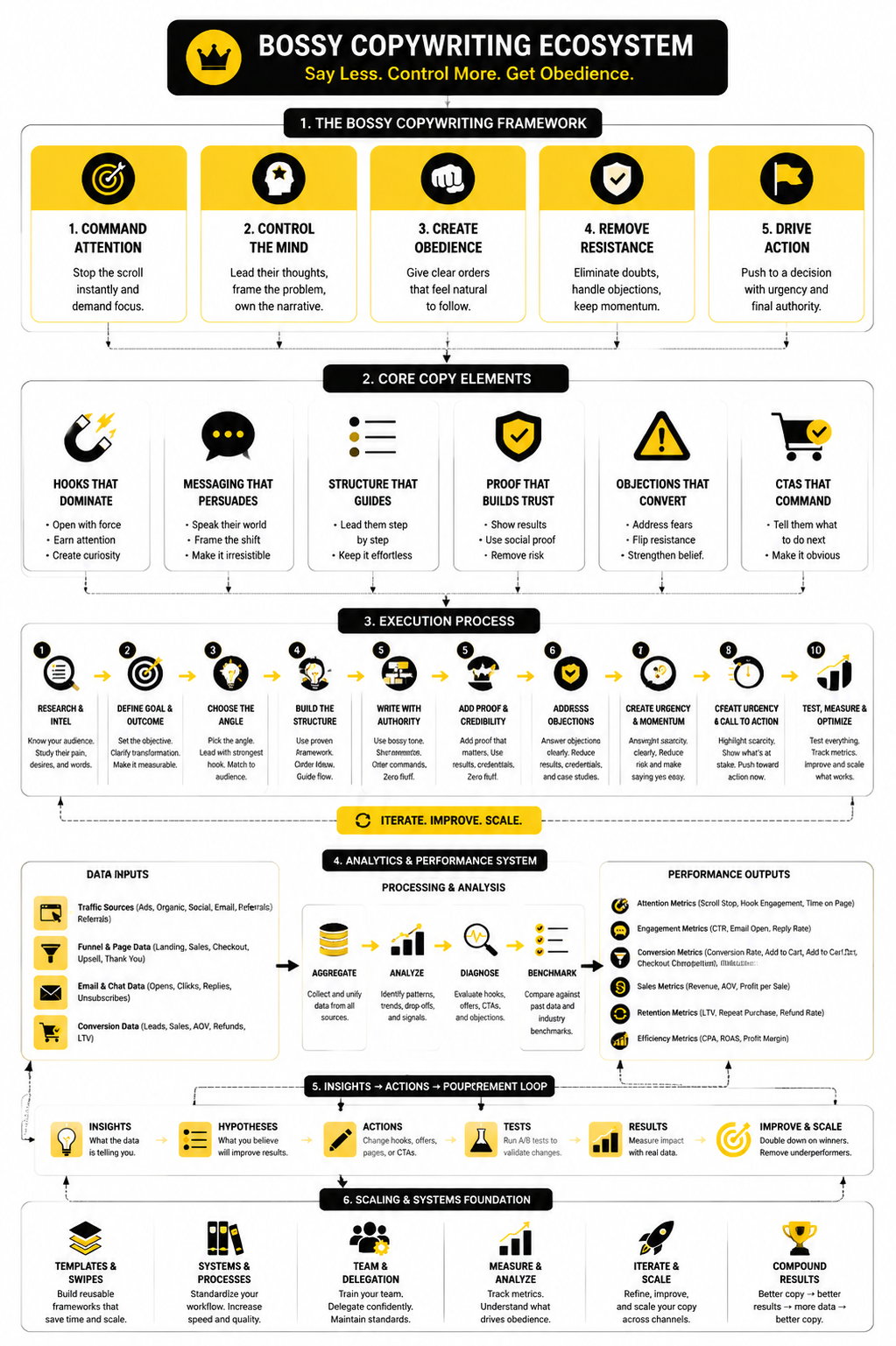
The work doesn’t end after writing. Track performance metrics and run A/B tests to see which phrases and placements produce the best results. A systematic approach to measurement ensures your bossy language remains effective as audience behaviors evolve.
This process isn’t rigid; think of it as a playbook you can adapt to landing pages, emails, ads, and other conversion touchpoints. The key is consistency: every time you implement bossy copywriting, start with strategy, build logical support, and let compelling commands do the heavy lifting.
Data and Benchmarks That Show Why Bossy Copywriting Works
Measuring bossy copywriting isn’t about counting words - it’s about tracking impact. You want to know whether directive language is actually moving the needle on the metrics that matter, from click‑through rates to conversions and revenue. When copywriters analyze performance data, they focus on concrete, comparable numbers that reveal how changes in wording and placement change behavior. The numbers aren’t just impressive - they’re diagnostic, telling you what to tweak next.
A core benchmark across digital marketing is conversion rate - the percentage of visitors who take the desired action. Across tens of millions of landing pages, the overall median conversion rate sits around 6.6%, but pages with focused, single actions and strong copy can outperform that significantly. Pages with a single, clear CTA have been measured converting at 13.5%, compared to multi‑link pages that tend to underperform. This demonstrates how clarity and directive language eliminate friction and hesitation in decision‑making.
At the click level, CTA wording and personalization matter quantitatively. Tests show that personalized CTA text - that speaks directly to the user - can deliver more than double the conversion rate of generic calls to action, while reducing noise around the command increases submissions and actions taken.
From a practical standpoint, most visitors scan content quickly and only engage with the most directive messages. Data on user attention reveals that up to 90% of visitors who read a headline also read the CTA, making the command message arguably the most important eight words on the page. Interpreting this, you can see that directive copy is not just a creative flourish - it’s the final psychological lever that converts attention into action.
Placing and optimizing bossy language also ties into where users engage. Inline CTAs embedded within the flow of content generate significantly higher engagement than sidebar or hidden elements, and placement above the fold can improve click‑through by over 50% compared to buried calls.
Why These Numbers Matter for You
These numbers make clear that bossy copywriting isn’t an abstract style - it’s a measurable performance tactic rooted in human response patterns and conversion science. IMAGE 4
When Bossy Copywriting Gets Tricky: Strategic Tradeoffs and Risks
As you move beyond basic implementation, it’s critical to adopt a more nuanced view of bossy copywriting - not just how to write directive language, but when and why it can sometimes undermine your goals. The effectiveness of forceful, action‑oriented language isn’t absolute; it depends on audience expectations, context of the message, and the emotional climate of your communication. Without strategic consideration, even well‑intended bossy language can trigger resistance or damage trust.
Psychological research on messaging shows that when people feel their autonomy is being threatened - for instance by overtly commanding phrases - they can enter a state called psychological reactance, which motivates them to resist the request and sometimes do the opposite of what you intended. This “boomerang effect” is especially strong in text‑only communication with limited contextual cues, where firm language may come off as abrasive rather than helpful.
This doesn’t mean bossy copywriting is bad - it’s a potent tool - but it does mean you must weigh audience psychology against conversion goals. For example, highly directive calls to action might perform well in transactional contexts (like checkout pages or short, high‑intent ads), but the same language in a long‑form blog post could feel pushy and erode reader trust. In environments where users expect autonomy and subtle guidance (e.g., informational articles or community forums), softer imperative language that respects choice can be more effective.
Another expert consideration is message fatigue and skepticism. Audiences exposed repeatedly to aggressive CTAs or exaggerated sales pressure begin to tune them out or mistrust the brand altogether. Marketing reporting and analytics often reveal this pattern when click‑through rates decline even though traffic and placement remain constant - a sign that the tone of your copy no longer resonates. Choosing overly assertive or hyperbolic language in pursuit of a short‑term spike can erode long‑term engagement and brand equity.
In practical terms, advanced practitioners balance three strategic tradeoffs:
Scaling bossy copywriting also requires infrastructure - A/B tests that measure not just conversions but downstream behavior (like churn, return visits, or time on site) can reveal when directive language garners action but harms deeper engagement. This data‑driven mindset ensures you’re not optimizing a click in isolation but optimizing for sustainable impact over time.
Ultimately, expert copywriters know bossy copywriting is a spectrum tool, not a hammer. When wielded with consideration for audience autonomy, context, and long‑term relationship health, directive language becomes a balanced persuasion lever that drives action without unintentional pushback or disengagement.
1. What is bossy copywriting?
Bossy copywriting is a style of writing that uses assertive, directive language to guide readers toward a specific action, often through strong calls to action and clear commands. It’s used to reduce ambiguity and increase conversion rates in marketing campaigns.
2. How is bossy copywriting different from persuasive copy?
While persuasive copy influences decision-making subtly, bossy copywriting gives explicit instructions. Persuasive copy builds desire, but bossy copy tells the audience exactly what to do next, often creating a sense of urgency.
3. When should I use bossy copywriting?
Bossy copywriting works best in high-intent scenarios like landing pages, product demos, or checkout flows. It’s effective when readers are ready to act and need clear guidance to complete the desired action.
4. Can bossy copywriting backfire?
Yes. If the audience perceives the copy as too forceful, it can trigger resistance known as psychological reactance, where readers intentionally avoid the suggested action. Testing tone and placement helps mitigate this risk.
5. What metrics indicate successful bossy copy?
Key metrics include click-through rates, conversion rates, form submissions, and downstream behaviors like purchases or sign-ups. Comparing variations through A/B testing can reveal which phrasing and placement perform best. (shno.co)
6. How do I write an effective bossy CTA?
Use strong verbs, specific outcomes, and urgency. Examples include “Get My Free Guide Now” or “Start Your Trial Today.” First-person phrasing often increases engagement by making the instruction feel personal. (topexperiencia.com)
7. How can I avoid overusing bossy language?
Balance directive CTAs with softer guidance in other parts of your content. Reserve bossy language for high-intent moments where clarity is paramount, and use testing to ensure the tone resonates.
8. Is bossy copywriting suitable for email campaigns?
Yes, especially for transactional emails like trial activations, webinars, or sales promotions. Strategic placement of direct CTAs can significantly improve engagement without overwhelming the recipient.
9. How does context influence bossy copywriting effectiveness?
The audience’s expectations and the channel matter. What works on a landing page may feel pushy in a blog or social media post. Context-sensitive adjustments preserve both engagement and trust.
10. Can bossy copywriting be scaled across multiple campaigns?
Yes, but scaling requires consistent frameworks, testing, and monitoring for audience fatigue. Use performance data to refine commands, ensure relevance, and maintain the effectiveness of directive language across channels.
11. Are there any industries where bossy copywriting excels?
High-intent, transactional industries like SaaS, e-commerce, and online education often benefit most. Anywhere a user is ready to act, a clear, directive approach tends to outperform softer messaging.
12. How do I integrate bossy copywriting with brand voice?
Adapt commands to fit your brand’s personality. You can be assertive while staying aligned with your tone, whether it’s professional, playful, or empathetic, ensuring the messaging feels authentic rather than jarring.
Build a stronger local presence with BAAM AI
Turn your website, Google profile, social channels, and AI visibility into one growth engine
Most businesses do not need more random marketing activity. They need a consistent presence system that helps the right people find them, trust them, and take action. BAAM AI brings strategy, local SEO, website updates, Google Maps visibility, social content, AI-search readiness, media production, and reporting into one practical monthly engine.
If you want your marketing to keep working after the campaign ends, start with a free BAAM AI presence audit. See how your business shows up today and where the fastest visibility wins are at BAAM AI.