
BAAM AI Blog
Automate Campaigns Without Losing The Human Touch
Automation is where email marketing becomes scalable, but it is also where bad strategy becomes painfully obvious. If the message is irrelevant, automation only helps you send the wrong thing faster. If the journey...
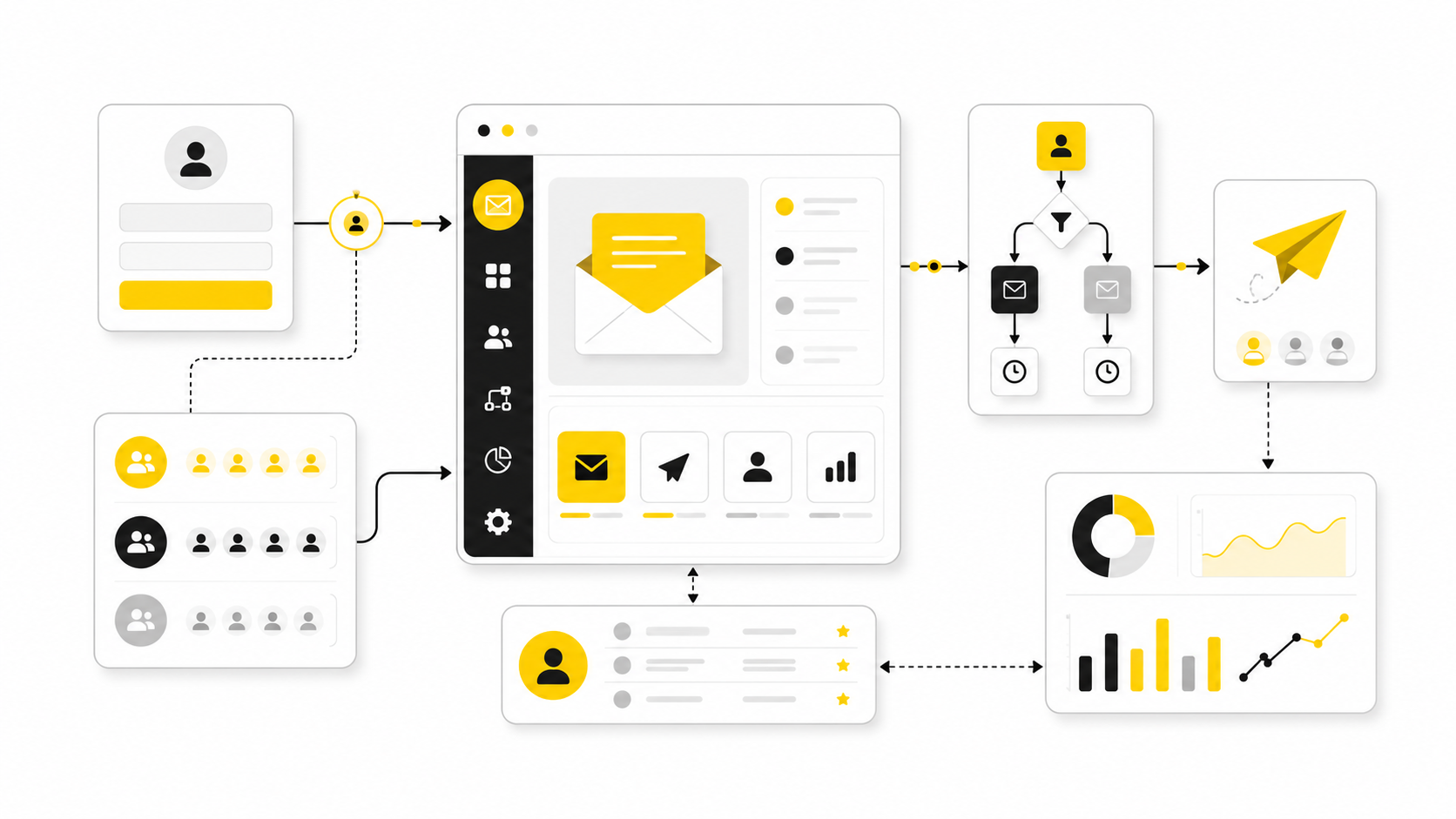
Automation is where email marketing becomes scalable, but it is also where bad strategy becomes painfully obvious. If the message is irrelevant, automation only helps you send the wrong thing faster. If the journey is clear, automation helps you deliver useful follow-up without manually chasing every subscriber.
The goal is not to make the brand feel robotic. The goal is to make the right message arrive when it is genuinely useful. A welcome email should feel timely, a cart reminder should feel helpful, a renewal notice should feel clear, and a reactivation email should feel respectful.
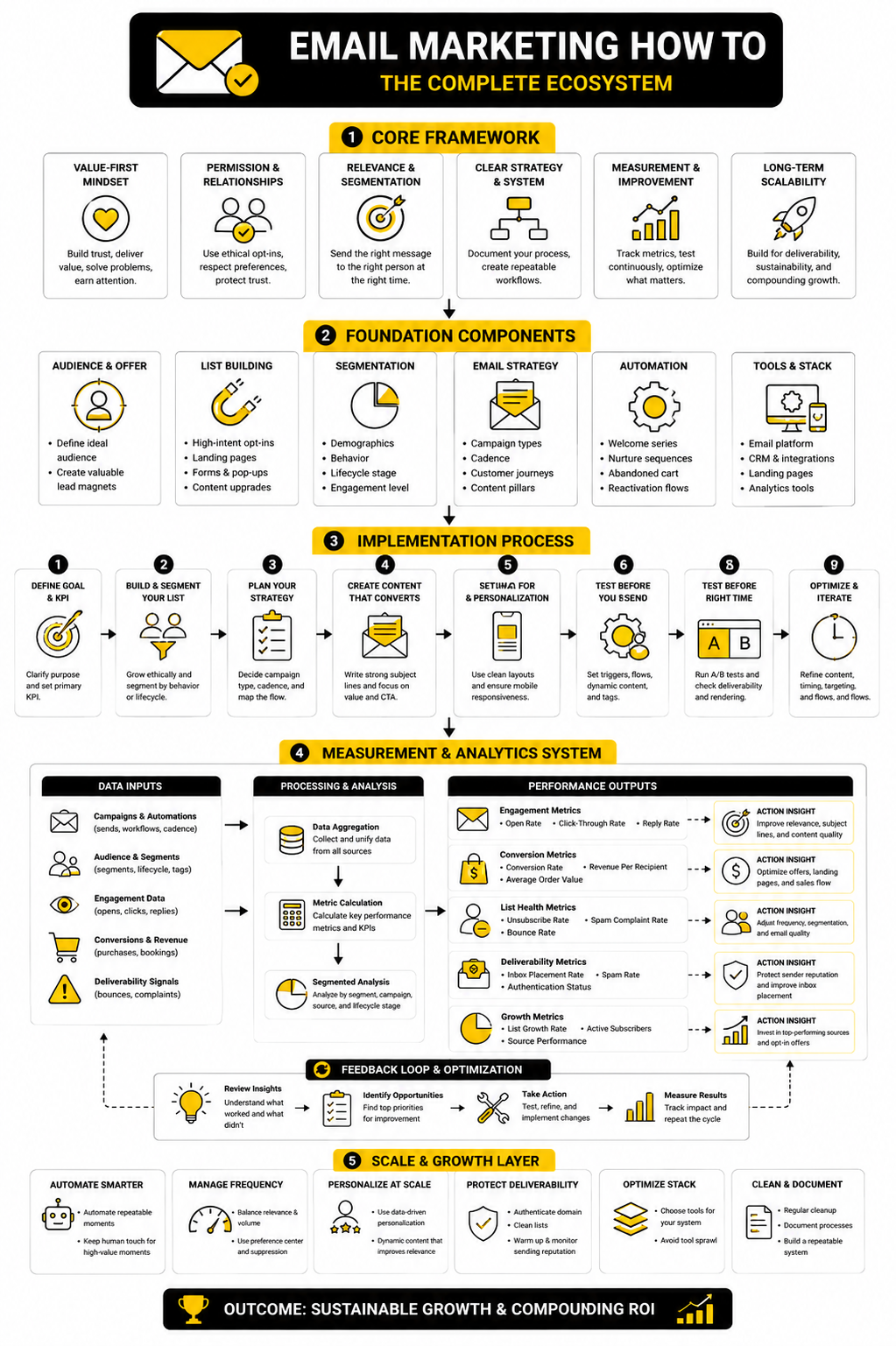
This is why advanced email marketing how to work is less about “more automations” and more about better judgment. You need to decide which moments deserve automation, which moments deserve human follow-up, and which moments deserve silence. That judgment is what separates a professional email system from a noisy machine.
Use Automation For Moments That Repeat
Automate the moments that happen often and have a predictable next step. New subscribers need orientation. New customers need onboarding. Abandoned carts need reminders. Inactive subscribers need a reactivation path. Qualified leads need fast routing.
These moments are ideal because the subscriber context is clear. You know what happened, you know why it matters, and you can design a helpful next message. That is very different from building a giant automation maze based on weak assumptions.
Start with the repeatable workflows that protect revenue or improve customer experience. Once those are stable, add more advanced flows. Scaling too early usually creates complexity that nobody wants to maintain.
Keep Human Review In High-Value Moments
Not every email should be fully automated. If a lead requests a custom quote, asks a detailed question, replies with buying intent, or shows high-value behavior, a human touch can matter more than another sequence. Automation should support that handoff, not replace it.
This is especially true for agencies, consultants, B2B teams, local services, high-ticket offers, and sales-led businesses. A workflow can tag the contact, create a CRM task, notify the team, and send a short confirmation. The actual follow-up may still be better when it comes from a person who understands the situation.
A CRM-centered platform like GoHighLevel can help when email, pipeline activity, tasks, calendars, and lead notifications need to work together. But the principle matters more than the tool: automate the routing, not the relationship.
Manage Frequency Before It Becomes A Problem
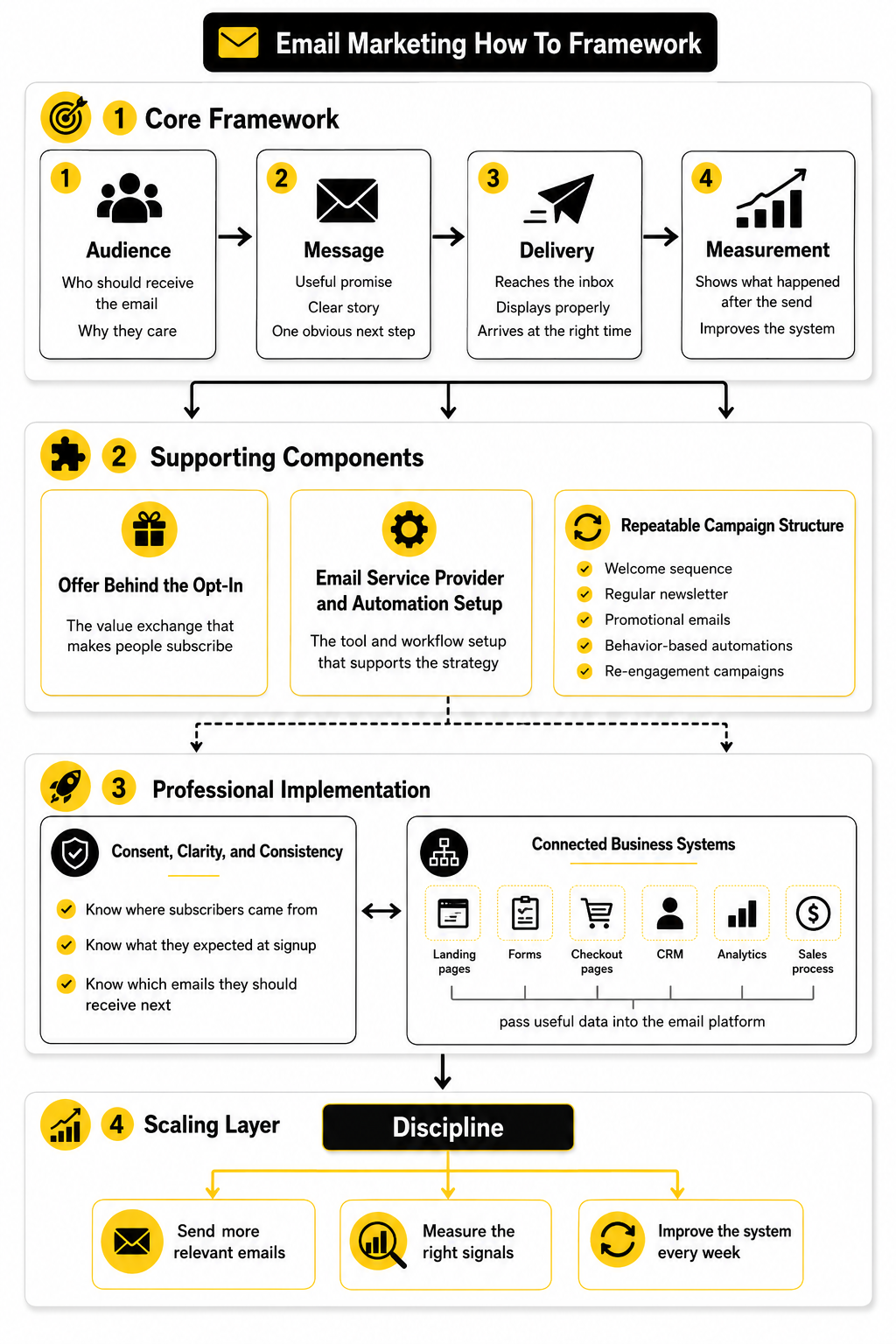
Frequency is one of the hardest strategic tradeoffs in email marketing. Send too little and people forget why they joined. Send too much and they stop opening, unsubscribe, or complain. The right answer depends on the audience, offer, buying cycle, and value of each message.
The mistake is using one fixed frequency for every subscriber. Someone in a launch window may expect several emails in a week. A long-term newsletter subscriber may prefer a steady weekly rhythm. A cold subscriber who has not clicked in months should not receive the same pressure as a high-intent prospect.
Mailbox providers are also more sensitive to poor sending behavior than many marketers realize. Google’s sender guidance says senders should keep spam rates below 0.1% and avoid ever reaching 0.3%, which means a small number of complaints can create a real deliverability problem at scale. Frequency is not just a content decision. It is a reputation decision.
Build A Preference Center
A preference center gives subscribers more control before they unsubscribe completely. It can let people choose topics, email frequency, product categories, content types, or whether they want promotional emails. This helps you preserve relationships that might otherwise disappear.
Do not make the preference center complicated. Most people will not carefully manage twenty options. Give them a few meaningful choices and make the page easy to understand.
This is useful for businesses with multiple audiences. A founder, ecommerce buyer, agency owner, and local business lead may all join from different sources and want different emails. A preference center helps you respect those differences without creating a completely separate brand experience for every person.
Suppress People From Irrelevant Sends
Suppression is one of the most underrated advanced tactics. Sometimes the best email decision is not sending. If someone just bought, just complained, just entered a sales sequence, or has not engaged in a long time, they may need to be excluded from a campaign.
Suppression protects the subscriber experience. It also protects your reporting because you stop mixing people into campaigns where they do not belong. That makes your click rates, conversion rates, unsubscribe rates, and revenue per recipient easier to interpret.
Create simple suppression rules before campaigns go out. Remove recent buyers from first-purchase promos, remove active sales opportunities from generic offers, remove unsubscribed or bounced contacts permanently, and treat inactive subscribers carefully. This is basic hygiene, but it makes the whole system cleaner.
Scale Personalization Carefully
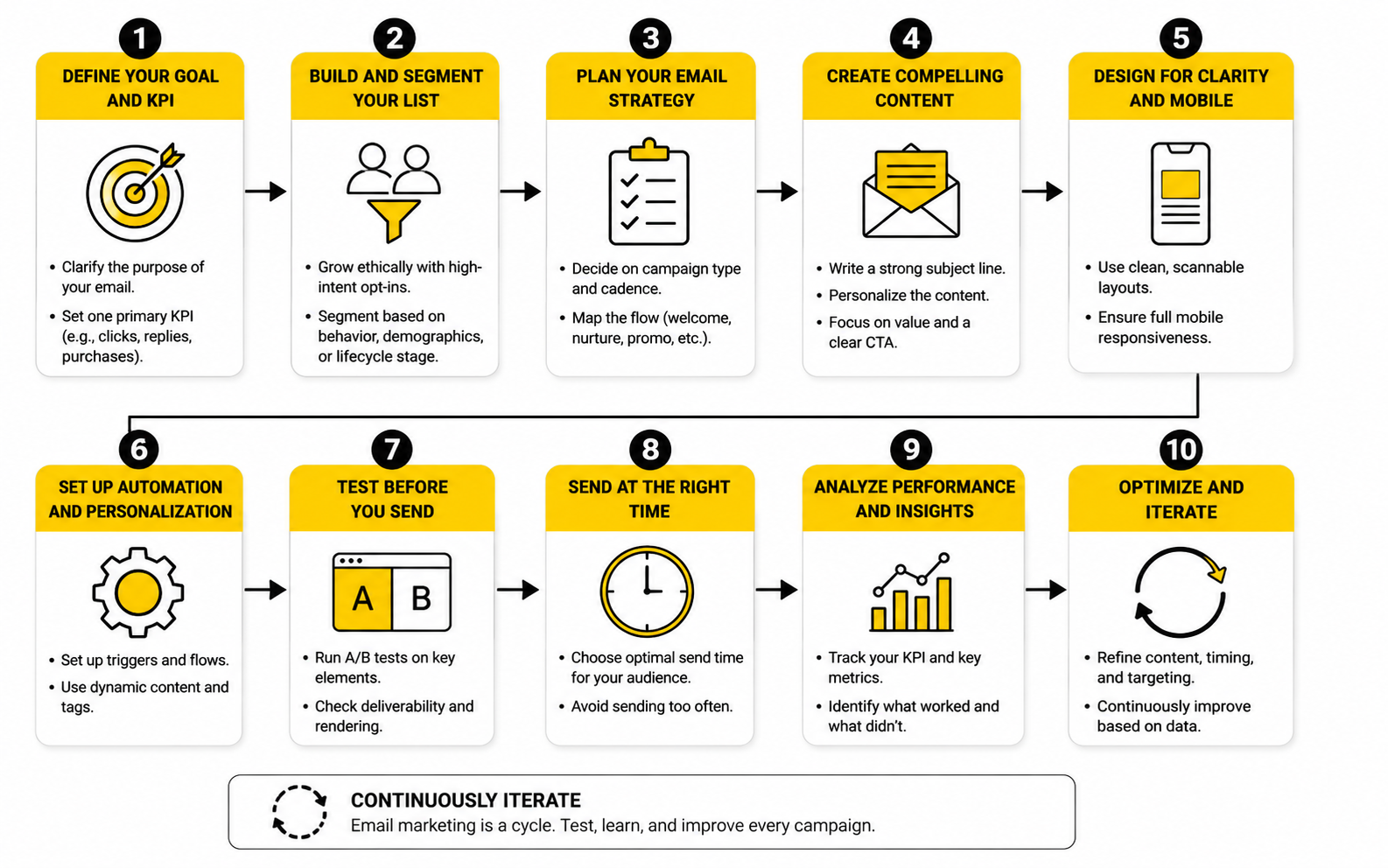
Personalization is powerful when it makes the email more relevant. It is weak when it only inserts a first name and pretends the message is customized. Real personalization uses context: behavior, lifecycle stage, product interest, purchase history, location, industry, or stated preferences.
The opportunity is getting bigger because AI and automation can help marketers produce more variations, analyze intent faster, and adapt journeys more efficiently. McKinsey’s 2025 work on personalized marketing notes that companies are using AI and generative AI to scale tailored experiences across customer interactions. That is useful, but only when the underlying data is accurate.
Bad personalization is worse than no personalization. If you recommend the wrong product, mention an outdated action, or use data in a creepy way, the reader notices. The line is simple: personalization should feel helpful, not invasive.
Use Dynamic Content Only When It Improves Relevance
Dynamic content lets different subscribers see different blocks inside the same email. That can be useful for product recommendations, regional offers, event reminders, lifecycle messaging, and customer-specific next steps. It can also become a mess if you use it without a clear reason.
Start with high-impact variations. Show customers a different call to action than non-customers. Show beginners different education than advanced users. Show buyers related resources instead of acquisition offers.
Keep the logic easy to audit. If nobody on the team can explain who sees which content and why, the setup is too fragile. Advanced does not mean complicated; advanced means controlled.
Be Careful With AI-Generated Email
AI can help with drafts, subject line variations, segmentation ideas, content repurposing, and testing plans. It can speed up production and help small teams ship more consistently. Used well, it is a useful assistant.
But AI should not replace judgment. It can produce generic copy, overstate claims, invent details, or make every brand sound the same. That is dangerous in email because subscribers build trust through repeated interactions.
Use AI for leverage, then edit with human standards. Check the claim, sharpen the angle, remove fluff, match the brand voice, and make the offer specific. The reader does not care that the email was efficient to produce; they care whether it was worth opening.
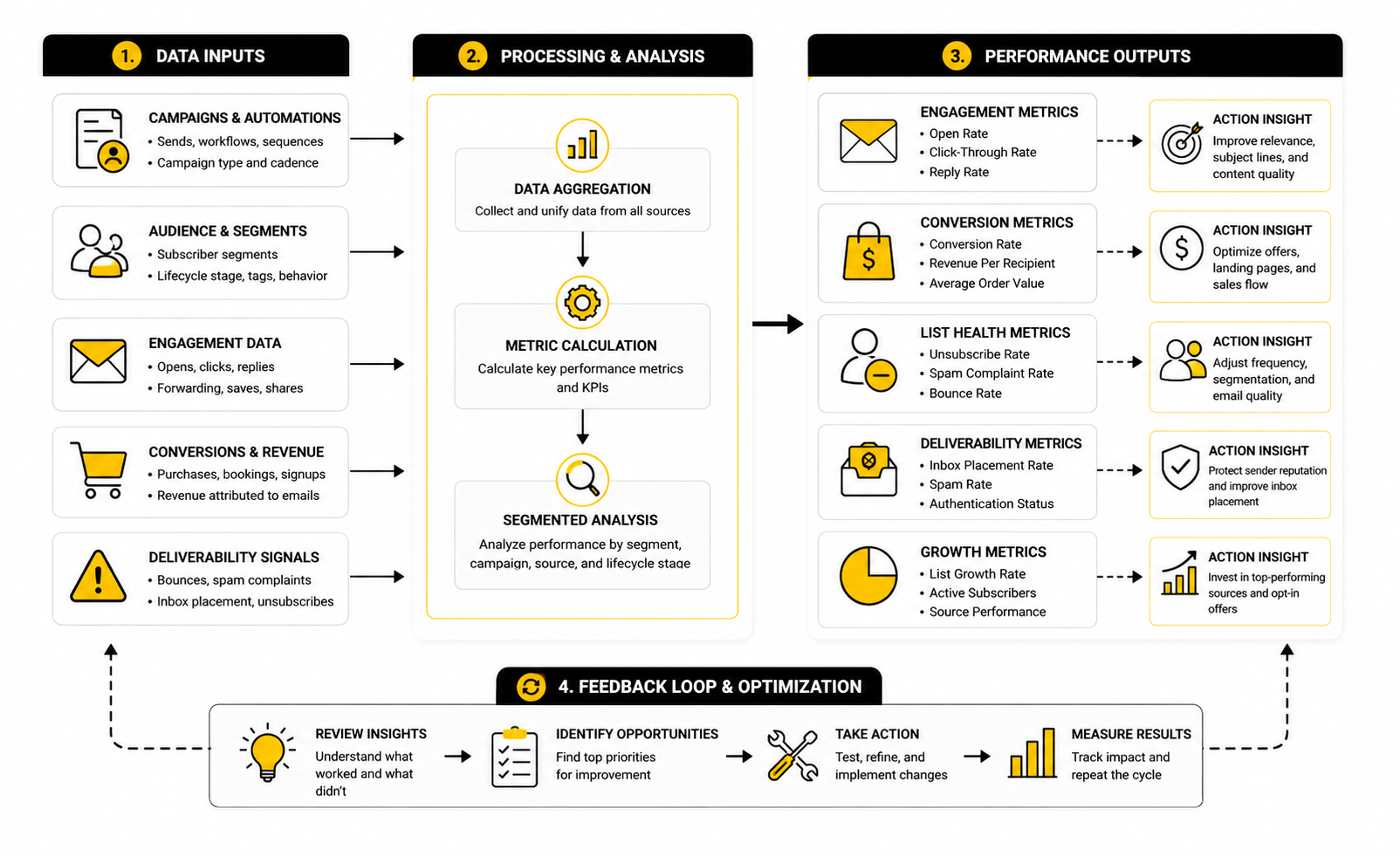
Protect Deliverability As You Grow
Deliverability becomes more important as volume increases. A small list can sometimes survive messy habits for a while. A larger list exposes every weakness: old subscribers, low engagement, weak authentication, misleading subject lines, poor segmentation, and careless frequency.
The technical foundation matters. SPF, DKIM, and DMARC help mailbox providers verify that your sending domain is legitimate. One-click unsubscribe and fast unsubscribe processing also matter for major mailbox providers because they reduce frustration and help subscribers leave without hitting spam.
Validity’s 2025 deliverability benchmark reported that Europe had an 89.1% inbox placement rate, which sounds strong until you remember the practical implication: even a good regional average still leaves meaningful room for lost revenue when large campaigns miss the inbox. Deliverability is not a switch you flip once. It is a system you protect every send.
Warm Up New Domains And Sending Patterns
Do not suddenly send large campaigns from a new domain or a cold sender identity. Mailbox providers look for patterns, and sudden volume spikes can look risky. Gradual sending helps establish reputation.
Start with engaged subscribers first. These are the people most likely to open, click, reply, and avoid complaints. Positive engagement gives your sender reputation a better foundation before you expand to colder segments.
The same logic applies when changing platforms or sending infrastructure. Moving from one email provider to another does not magically transfer trust. Plan the transition, monitor performance, and avoid aggressive volume changes during the move.
Clean The List Before It Hurts You
List cleaning is not about vanity. It is about removing dead weight before it damages deliverability and reporting. If people never open, never click, never buy, and never respond, continuing to email them can make your engaged audience harder to reach.
Use a reactivation campaign before removing inactive contacts. Give people a clear reason to stay, ask them to click if they still want your emails, and then suppress or remove people who remain inactive. This is not losing value; it is protecting the value that remains.
Be careful with purchased, scraped, imported, or very old lists. They often contain invalid emails, spam traps, and people who never gave meaningful consent. That kind of list growth is not an asset. It is risk disguised as reach.
Choose Tools Based On The System You Need
Tool choice should follow strategy. A creator sending a weekly newsletter does not need the same setup as an agency managing client pipelines. An ecommerce brand does not need the same setup as a consultant selling high-ticket calls.
For simple email campaigns and automations, platforms like Brevo or Moosend can be enough. For funnels and sales pages, ClickFunnels or Systeme.io may fit better. For CRM-heavy follow-up, booked calls, pipelines, client accounts, and multi-channel workflows, GoHighLevel is often the more natural category.
Do not buy a complex platform because you hope it will create the strategy for you. It will not. The best tool is the one your team can actually use to execute the customer journey you designed.
Avoid Tool Sprawl
Tool sprawl happens when every problem gets solved with another subscription. One tool for forms, one for landing pages, one for email, one for SMS, one for CRM, one for booking, one for reporting, and suddenly nobody knows where the truth lives. That creates broken handoffs and messy data.
Sometimes multiple tools are necessary. But each tool should have a clear job, and the connection between tools should be reliable. If subscriber data does not move cleanly from form to email platform to CRM to reporting, the system will feel harder than it needs to be.
Audit your stack every few months. Remove tools that no longer serve the process. Consolidate when it improves execution. Keep separate tools when specialization genuinely improves performance.
Document The System Before Scaling The Team
A growing email program needs documentation. Otherwise every campaign depends on the memory of one person. That becomes risky when the team changes, a freelancer joins, or a campaign needs to move quickly.
Document your main segments, tags, automations, naming conventions, campaign review process, and suppression rules. Keep it simple, but keep it current. A basic operating document can prevent expensive mistakes.
This is also where expert-level email marketing becomes operational. You are not just writing better emails. You are building a system that other people can understand, maintain, and improve without breaking the customer experience.
Build a stronger local presence with BAAM AI
Turn your website, Google profile, social channels, and AI visibility into one growth engine
Most businesses do not need more random marketing activity. They need a consistent presence system that helps the right people find them, trust them, and take action. BAAM AI brings strategy, local SEO, website updates, Google Maps visibility, social content, AI-search readiness, media production, and reporting into one practical monthly engine.
If you want your marketing to keep working after the campaign ends, start with a free BAAM AI presence audit. See how your business shows up today and where the fastest visibility wins are at BAAM AI.