
BAAM AI Blog
Alex Cattoni: The Practical Guide To Modern Copywriting That Sounds Human And Still Converts
Alex Cattoni has become one of the most recognizable voices in modern copywriting because her message hits a nerve: people are tired of sleazy marketing, recycled templates, and sales pages that sound like they were...

Alex Cattoni has become one of the most recognizable voices in modern copywriting because her message hits a nerve: people are tired of sleazy marketing, recycled templates, and sales pages that sound like they were written by a robot with a countdown timer addiction.
Her work through Copy Posse is built around a simple but powerful idea. Good copy should sell, but it should not manipulate. It should make people feel seen, clarify the value of an offer, and move the right buyer toward a confident decision.
That is why studying Alex Cattoni is useful even if you never plan to become a full-time copywriter. Her approach sits at the intersection of messaging, audience psychology, ethical persuasion, brand voice, content strategy, and conversion-focused writing. In other words, it is not just about writing better words. It is about building a better way to communicate online.
this guide is split into six parts so each idea has room to breathe. We will start with the big picture, then move into the practical framework behind Alex Cattoni’s copywriting style, and finally connect it to implementation for creators, founders, freelancers, and marketers. The goal is not to worship a personal brand, but to extract the useful principles behind why her work resonates.
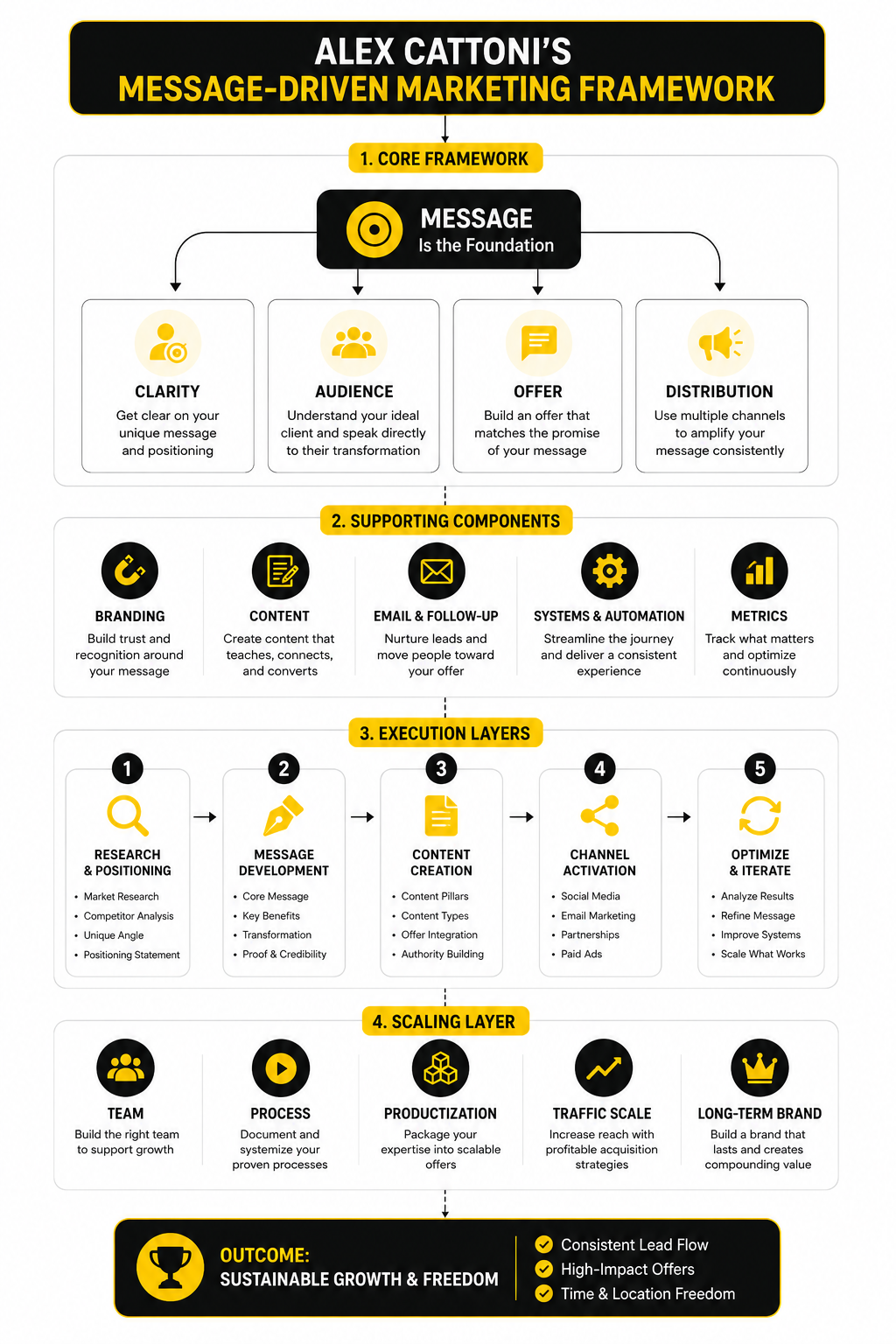
Why Alex Cattoni Matters In Modern Copywriting
Alex Cattoni matters because she represents a shift that a lot of brands still have not fully caught up with. The old-school direct response world often treated the customer like a target to corner, pressure, and “close.” Her style pushes in a different direction: write with conviction, understand the buyer deeply, and make the offer clear enough that the right person can say yes without feeling tricked.
That distinction is important because buyers are more skeptical than ever. They have seen the fake urgency, the inflated income claims, the over-polished testimonials, and the “secret system” language a thousand times. So when a brand communicates like a real human, with specificity and restraint, it instantly feels different.
This is where Alex Cattoni’s influence is useful for founders, creators, coaches, agencies, and freelancers. She does not position copywriting as magic words that force conversions. She frames it as the bridge between a real problem, a real offer, and a real decision.
The Problem With Traditional Online Copy
Traditional online copy often leans too hard on formulas without understanding the person reading the page. You can spot it immediately: dramatic pain points, exaggerated promises, endless urgency, and a tone that sounds like every other funnel in the niche. The structure may be technically “correct,” but the message feels empty because it is not grounded in real customer insight.
That kind of copy creates a short-term spike at best and long-term distrust at worst. It may get clicks from curious people, but it does not build a brand people want to follow, recommend, or buy from again. This is especially dangerous for personal brands because your words are not separate from your reputation.
Alex Cattoni’s approach is different because it brings brand voice and conversion strategy into the same conversation. The copy still has a job to do, but it does not need to sound desperate to do it. Strong copy can be bold, direct, emotional, and persuasive without treating the reader like they are clueless.
Why Human Copy Converts Better
Human copy works because people do not buy from a headline, a button, or a funnel step in isolation. They buy when the message makes them feel understood and the next step feels safe, relevant, and worth taking. That means the best copy is not just clever writing; it is clear thinking expressed in a way the buyer actually recognizes.
This is where many marketers get it wrong. They chase better hooks before fixing the offer, clearer benefits before understanding objections, and stronger calls to action before building trust. The result is copy that sounds loud but does not land.
Alex Cattoni’s work is useful because it reminds you to slow down before you write. Know who you are speaking to. Know what they want. Know what they are afraid of. Then write in a way that makes the decision feel obvious, not forced.
The Copy Posse Framework: Ethical Persuasion Without Boring Copy
The Copy Posse philosophy is built around the idea that copy can sell without being sleazy. That sounds simple, but it changes how you approach every part of the writing process. Instead of asking, “How do I get someone to buy?” the better question becomes, “How do I help the right person understand why this is the right next step?”
That shift matters because ethical persuasion is not weak persuasion. It still uses emotion, contrast, specificity, proof, and urgency when those things are honest and relevant. The difference is that the copy does not manufacture pressure just to push a sale.
For anyone building funnels, landing pages, emails, webinars, or social content, this is the useful takeaway. You do not need to choose between being persuasive and being trustworthy. The real skill is learning how to do both at the same time.
Message Before Mechanics
The first layer of the framework is message before mechanics. Before you worry about the headline formula, email length, button text, or funnel layout, you need to know what you are really saying. A weak message does not become strong because you placed it inside a better template.
This is where many beginners waste time. They collect swipe files, copy frameworks, and headline prompts, but they never define the buyer’s actual problem in plain language. So the writing ends up polished on the surface and confused underneath.
A stronger process starts with the offer, the audience, and the emotional context around the buying decision. What is the person trying to solve? What have they already tried? What do they believe is standing in their way? Once those answers are clear, the copy has something real to work with.
Clarity Before Cleverness
Clever copy can be fun, but clarity is what makes people act. If the reader has to work too hard to understand what you offer, who it is for, or why it matters, the copy has already failed. This is true whether you are writing a sales page, a YouTube script, a welcome email, or a short social post.
Alex Cattoni’s style often feels punchy because it keeps the message moving. The language is conversational, but it is not careless. The point is always to reduce friction, remove confusion, and help the reader connect the dots faster.
That is a practical lesson for anyone writing online. Do not hide weak positioning behind wordplay. Say the important thing clearly first, then add personality once the message is already strong.
Personality With A Purpose
Personality is not the same as random jokes, slang, or edgy language. In good copy, personality helps the reader understand the brand’s point of view. It creates familiarity, but it also creates distinction.
This is one reason Alex Cattoni stands out in a crowded education market. The tone has attitude, but the attitude supports the mission. It makes the brand feel alive without distracting from the lesson.
For your own copy, the goal is not to imitate her voice. That would miss the point completely. The goal is to build a voice that sounds like you, speaks to your audience, and still moves the reader toward a clear action.
The Core Components Of Alex Cattoni’s Messaging Style
The next layer is where the Alex Cattoni approach becomes more practical. Once the message is clear and the persuasion is grounded in trust, the copy needs structure. Not a stiff template that makes every brand sound the same, but a working process that helps you turn research into words people actually respond to.
This is where many writers accidentally skip the hard part. They jump from “I need a sales page” straight into writing headlines, bullets, and calls to action. The better move is to build the message from the inside out so every line has a reason to exist.
The strongest copy usually comes from a sequence: understand the buyer, clarify the promise, identify the resistance, shape the proof, and then write the page, email, script, or funnel. That is not glamorous. It is just what works.
Start With The Buyer’s Real Problem
Before writing anything, you need to understand the problem in the buyer’s own language. Not the polished version the brand uses internally. Not the vague category-level problem like “needs better marketing” or “wants more sales.” The real problem is the daily frustration, fear, desire, or bottleneck that makes someone finally look for a solution.
This matters because people rarely buy because your offer exists. They buy because something in their current situation has become annoying, expensive, embarrassing, risky, or limiting enough to change. The copy has to meet them there before it can move them anywhere else.
For example, a freelancer does not just want “better clients.” They may be tired of chasing low-budget leads, rewriting proposals from scratch, or feeling invisible next to louder competitors. That specific emotional context gives the copy texture, and texture is what keeps it from sounding like everyone else.
Define The Promise Without Inflating It
A strong promise is not the biggest claim you can legally get away with. It is the clearest believable outcome your offer can help create. This is one of the most important lessons to pull from Alex Cattoni’s style because the message stays persuasive without sliding into hype.
The promise should answer a simple question: what meaningful change can the right person expect if they take the next step? If the answer is too vague, the copy feels weak. If the answer is too inflated, the copy feels suspicious.
The sweet spot is specific, desirable, and grounded. You can say the offer helps someone write clearer sales pages, build a stronger portfolio, improve their email messaging, or create a more confident launch strategy. You do not need to promise instant wealth, effortless success, or overnight authority to make the offer feel valuable.
Map The Buyer’s Resistance
Every buying decision has resistance. Sometimes it is price. Sometimes it is timing. Sometimes it is fear of failure, fear of being judged, or the quiet belief that “this probably works for other people, but not for me.” Good copy does not ignore those objections; it handles them with respect.
This is where ethical persuasion becomes very practical. You are not trying to steamroll the reader. You are trying to understand why a reasonable person might hesitate and then give them the context they need to decide.
That context can come through proof, explanation, comparison, specificity, or a sharper description of who the offer is and is not for. When the objection is real, address it directly. When the objection comes from confusion, simplify the message. When the objection comes from distrust, do not add more hype. Add clarity.
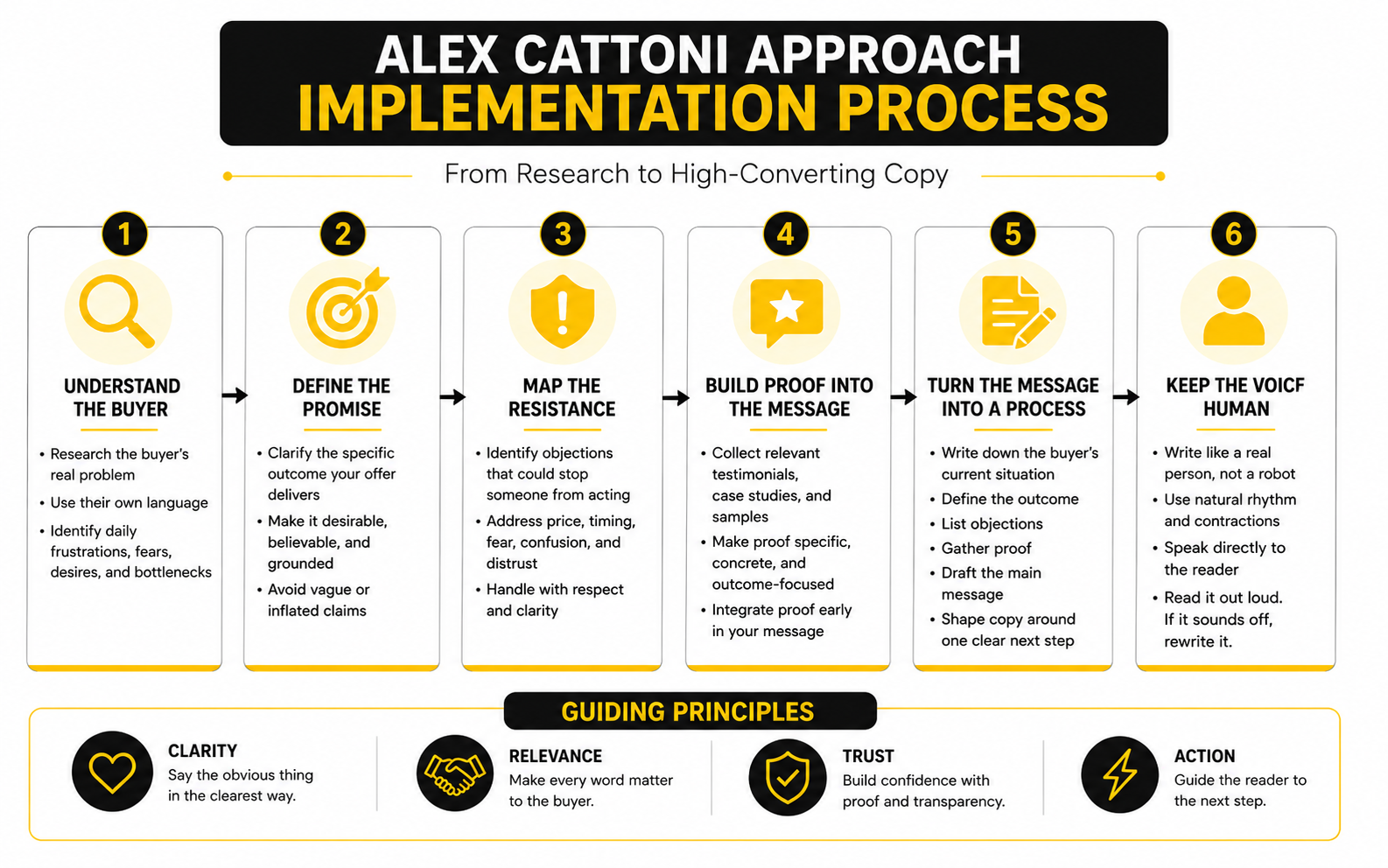
Build Proof Into The Message Early
Proof should not be treated as decoration near the end of a page. It should shape the message from the beginning. Testimonials, portfolio samples, customer language, screenshots, case studies, credentials, and process details all help the reader answer one question: can I trust this?
But proof only works when it supports the actual promise. A random testimonial saying “this was amazing” is weaker than a specific testimonial explaining what changed, what problem was solved, or why the process felt different. The more concrete the proof, the less pressure your copy has to apply.
For a personal brand, proof can also include consistency. If someone has watched your videos, read your emails, seen your posts, and heard the same point of view repeated clearly over time, trust starts before the sales page. That is why the content surrounding the offer matters just as much as the offer page itself.
Turn The Message Into A Practical Writing Process
Once the buyer, promise, resistance, and proof are clear, the actual writing becomes much easier. You are no longer staring at a blank page trying to sound smart. You are arranging useful pieces in the order the buyer needs to hear them.
A practical process could look like this:
This is simple, but it is not shallow. It forces you to think before you write, which is exactly where better copy comes from. The words become sharper because the strategy underneath them is sharper.
Keep The Voice Human All The Way Through
The final component is voice. Once the structure is in place, the copy still needs to sound like a person wrote it. This is where Alex Cattoni’s influence is especially obvious: the writing can be direct, punchy, and conversion-focused without becoming stiff or fake.
A human voice uses contractions naturally, varies sentence rhythm, and says the obvious thing plainly instead of hiding behind marketing jargon. It does not need to be casual every second, but it should feel like someone is speaking with the reader, not performing at them. That difference is subtle, but buyers feel it.
The test is simple. Read the copy out loud. If it sounds like something you would never say to a real person, rewrite it. Strong copy should feel intentional, but it should still breathe.
Statistics And Data: What Your Copy Is Really Telling You
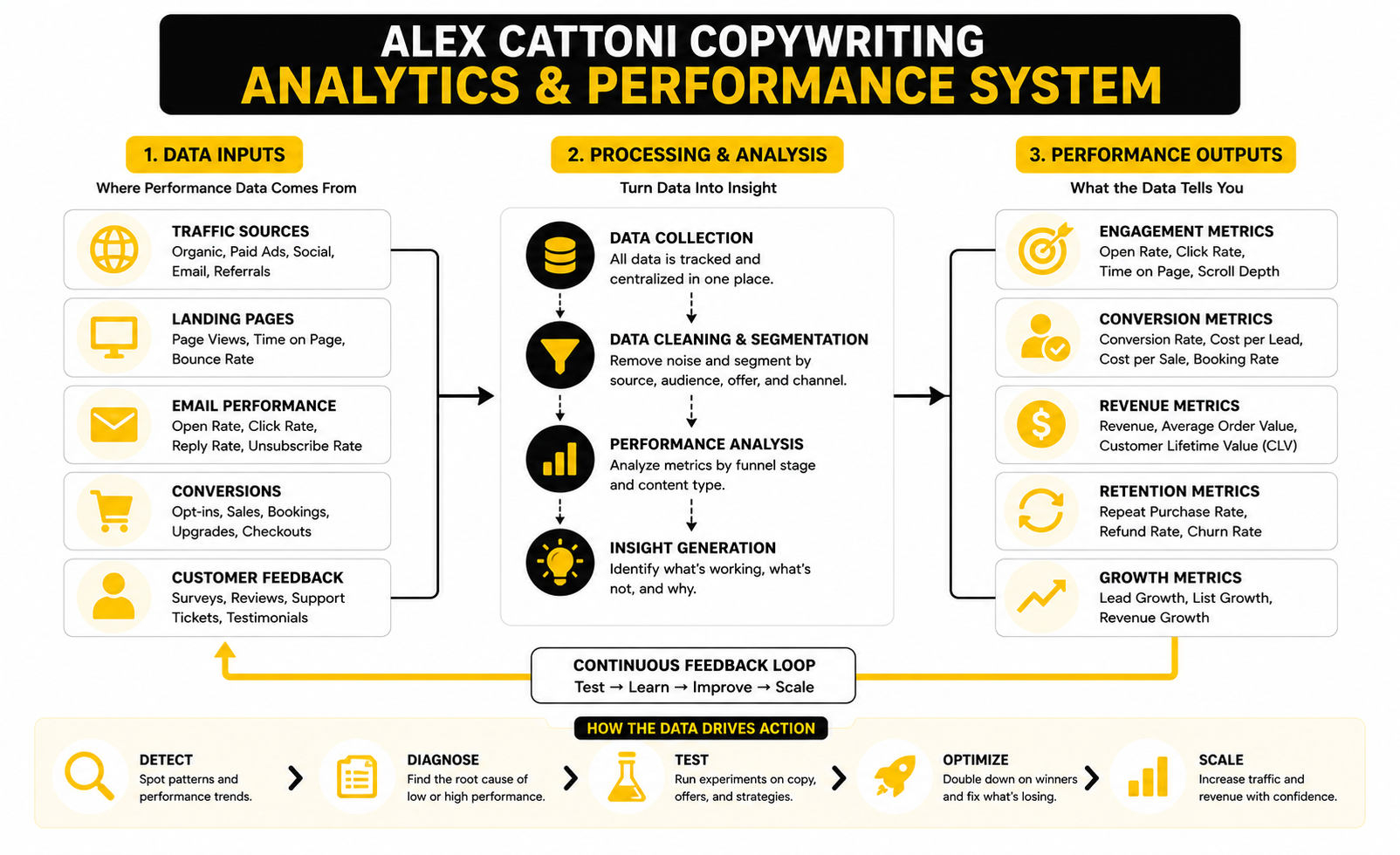
The Alex Cattoni approach is not just about writing copy that sounds better. The real test is whether the message helps the right people move. That means you need to measure how your copy performs after it goes live, because the data will usually show you where the message is clear, where the buyer is confused, and where the offer still needs work.
The mistake is treating analytics like a scoreboard for your ego. High numbers feel good, low numbers feel bad, and nothing useful changes. A better way to use data is to treat every metric as feedback on a specific part of the buyer journey.
If people open but do not click, the hook may be stronger than the offer. If people click but do not convert, the landing page may not be answering the right objections. If people convert but refund, churn, or disengage quickly, the promise may be attracting the wrong buyer or setting the wrong expectation.
Email Metrics Show Whether The Message Earns Attention
Email is one of the cleanest places to measure copy because each step tells you something different. The open rate shows whether the sender name, subject line, and timing earned enough attention to get a chance. The click-through rate shows whether the email body created enough interest to move someone toward the next step. The unsubscribe rate shows whether the message still fits the audience you are sending it to.
This is why you should not obsess over one number in isolation. A high open rate with weak clicks usually means the subject line did its job, but the body did not make the next step feel relevant. A lower open rate with strong clicks can still be a useful campaign if the people who opened were highly qualified.
For context, Brevo’s 2025 email benchmark shows an average open rate of 21% and an average click-through rate of 3.96%. Those numbers are not a universal target, and they should not become an excuse to accept mediocre performance. They are a reference point that helps you ask better questions about your own list, niche, offer, and traffic quality.
Landing Page Metrics Reveal Message Friction
A landing page is where your message gets pressure-tested. People arrive with some level of interest, but the page has to turn that interest into a decision. If the page is not converting, the problem is not always the design, the button color, or the length of the page.
Often, the issue is message friction. The headline does not match the traffic source. The promise is too vague. The proof does not support the claim. The call to action asks for too much commitment before the reader feels enough trust.
This is where Alex Cattoni’s copywriting principles become measurable. Clarity should reduce bounce. Stronger objection handling should improve scroll depth and click intent. Better proof should increase form submissions, trial starts, bookings, or purchases because the reader has fewer reasons to hesitate.
Social Metrics Show Resonance, Not Revenue By Themselves
Social media metrics can be useful, but they are easy to misread. A post with strong engagement does not automatically mean the message will convert. A post with fewer likes can still be more valuable if it attracts the right people, starts better conversations, or sends qualified traffic to an offer.
This matters because content is often the first place people experience your brand voice. If you are studying Alex Cattoni, do not just look at how her content sounds. Look at how the content creates familiarity before someone ever reaches a sales page.
The key is to separate attention metrics from intent metrics. Reach, impressions, and engagement show whether the content is being noticed. Saves, replies, profile visits, clicks, email signups, and booked calls show whether the content is creating movement.
Engagement Benchmarks Need Context
Benchmarks are useful only when you understand what they are comparing. A 1% engagement rate on a large Instagram account may produce more total interactions than a higher engagement rate on a smaller platform. That is why Buffer’s engagement analysis warns that engagement rate and total engagement volume are not the same thing.
This is a practical point, not a technical one. If you only chase percentage-based engagement, you may optimize for content that performs well inside a platform but does not build a serious audience or support your offer. If you only chase reach, you may attract attention from people who will never buy.
The better move is to connect social data to the rest of the funnel. Which posts lead to profile clicks? Which topics lead to email subscribers? Which content themes create replies from people who match your ideal customer? That is where the data starts becoming useful.
The Metrics That Actually Matter
You do not need to track everything. In fact, tracking too much usually creates noise. The goal is to choose a small set of metrics that show whether the copy is helping people move from awareness to trust to action.
For most creators, freelancers, and small teams, the practical dashboard should include:
Each metric should lead to a decision. If attention is low, improve the hook or distribution. If interest is low, sharpen the promise and make the next step more relevant. If action is low, fix the offer, proof, objection handling, or checkout experience.
Data Should Improve The Message, Not Replace Judgment
Numbers can tell you what happened, but they cannot always tell you why. That is where human judgment still matters. A low conversion rate could mean the copy is weak, but it could also mean the traffic is cold, the offer is mispriced, the audience is wrong, or the page is asking for too much too soon.
This is why measurement should sit beside customer research, not replace it. Read replies. Review sales calls. Study objections. Watch where people hesitate. The best insights often come from combining analytics with the exact words buyers use when they describe their problem.
That is also why Alex Cattoni’s style remains relevant in an analytics-heavy marketing world. Data can show you where the friction is, but better copy comes from understanding the human reason behind that friction. The numbers point to the problem. Your message has to solve it.
Professional Implementation: Content, Funnels, Email, And Offers
Once the strategy is clear and the metrics are in place, the next challenge is execution at a professional level. This is where a lot of people struggle, not because they cannot write, but because they treat every asset as a separate project. The email sequence says one thing, the landing page says another, the social content has a different voice, and the offer page introduces objections the rest of the funnel never handled.
That is not a copywriting problem only. It is a system problem. If you want to apply the Alex Cattoni style in a serious way, the message has to stay consistent across every touchpoint while still adapting to the job of each channel.
This is where professional copy starts to separate itself from beginner copy. Beginner copy tries to sound good line by line. Professional copy makes the entire buying journey feel coherent.
Build A Message System Before You Build More Assets
A message system is the set of core ideas your brand repeats until the market understands what you stand for. It includes your main promise, your point of view, your audience definition, your proof, your offer language, and the objections you regularly address. Without that system, every new page, email, and post becomes harder to write than it needs to be.
This is especially important for personal brands. If someone discovers you through YouTube, follows you on Instagram, joins your email list, and eventually lands on your offer page, the experience should feel connected. The tone can shift slightly by platform, but the underlying message should not feel like it came from four different businesses.
Alex Cattoni is a useful reference here because her brand has a clear worldview. Copywriting is not presented as trickery. Marketing is not presented as manipulation. The repeated message is that better words can create better businesses when they are used with clarity, personality, and ethics.
Decide What Each Channel Is Supposed To Do
Not every piece of copy should carry the same weight. A short social post should not be expected to close a complex high-ticket offer by itself. A landing page should not have to explain years of brand context if your content never prepared the audience. A checkout page should not have to rebuild trust from zero.
Each channel needs a specific job. Social content earns attention and starts belief shifts. Email deepens trust and creates momentum. Landing pages clarify the offer and handle objections. Sales pages turn interest into a decision. Checkout copy reduces last-minute friction.
When you understand the job of each channel, your copy becomes more focused. You stop cramming every argument into every asset. That makes the buyer journey feel cleaner, and clean beats clever more often than people want to admit.
Use Funnels Without Letting Funnels Flatten The Brand
Funnels are useful because they organize the path from first touch to conversion. They help you decide what the reader needs to see next, what action they should take, and where follow-up should happen. For creators, coaches, agencies, and service providers, a simple funnel can be the difference between random attention and predictable lead flow.
The risk is that funnels can make your brand sound generic if you rely too heavily on templates. You have seen this before: the same webinar promise, the same urgency language, the same “limited spots” framing, and the same fake transformation arc. It might look like a funnel, but it does not feel like a brand.
A better approach is to use funnel structure without outsourcing the message. Tools like ClickFunnels, Systeme.io, or GoHighLevel can help you build the path, but they cannot decide what your audience needs to believe before they buy. That part still comes from research, positioning, and sharp copy.
Scale The Message Without Diluting The Voice
Scaling copy gets tricky because more assets usually means more people touching the message. A founder writes one version. A contractor writes another. An agency edits the funnel. An AI tool drafts emails. Suddenly the brand voice starts drifting.
This is why a voice guide matters. Not a fluffy brand document full of words like “bold,” “friendly,” and “authentic,” but a practical guide that shows how the brand actually speaks. It should include sample headlines, approved phrases, banned phrases, offer descriptions, proof points, objection responses, and examples of what sounds off-brand.
The goal is not to control every sentence. The goal is to protect the emotional texture of the brand as the business grows. If the voice disappears during scaling, the copy may become more efficient, but it also becomes easier to ignore.
Be Careful With AI-Assisted Copy
AI can help speed up research organization, outline development, angle exploration, and first drafts. Used well, it can make a copywriter faster. Used lazily, it produces average copy at scale, which is not a strategy.
The biggest danger is that AI often smooths out the friction that makes a message distinctive. It can default to safe phrases, generic benefits, and predictable structures. That is fine for internal drafts, but it is not enough for public-facing copy where differentiation matters.
The practical rule is simple: use AI to support the process, not replace the thinking. Feed it real customer language, real objections, real offer details, and real proof. Then edit aggressively so the final copy sounds like a brand with a point of view, not a content machine trying to sound helpful.
Avoid The Biggest Strategic Risks
Advanced copywriting is not just about increasing conversion rates. It is also about avoiding decisions that quietly damage trust. The most dangerous mistakes often look profitable in the short term but create problems later.
Here are the risks to watch:
This is not about being timid. It is about building copy that can scale without becoming fragile. The stronger the claim, the stronger the responsibility.
Treat Trust As The Asset You Are Actually Scaling
The deeper lesson is that copy does not scale by getting louder. It scales by making the brand easier to trust across more moments. That means the sales page, emails, content, testimonials, offers, and onboarding all need to support the same expectation.
When the message is aligned, people do not feel like they are being pushed through a funnel. They feel like each step confirms what they already suspected: this brand understands the problem and has a credible way to solve it. That is a much stronger position than relying on urgency or hype.
This is where Alex Cattoni’s approach is worth taking seriously. The best copy is not just persuasive at the point of sale. It builds belief before the sale, reinforces confidence during the sale, and protects trust after the sale.
Final Takeaways
Alex Cattoni is worth studying because her approach points to where online copywriting has been moving for years. The market is not getting less skeptical. Buyers are not getting more patient with vague promises, fake urgency, or generic templates. The brands that win are the ones that communicate clearly, build trust early, and make the next step feel natural.
The practical lesson is simple: do the thinking before you do the writing. Understand the buyer, define the promise, map the resistance, gather proof, write with a real voice, and then measure what happens. That process is not as flashy as a secret headline formula, but it is far more useful when you are building something you want to last.
Alex Cattoni’s style is not something to copy line for line. It is something to learn from. The real goal is to build your own message system: one that sounds like you, serves your audience, supports your offer, and still converts without making you cringe when you read it back.
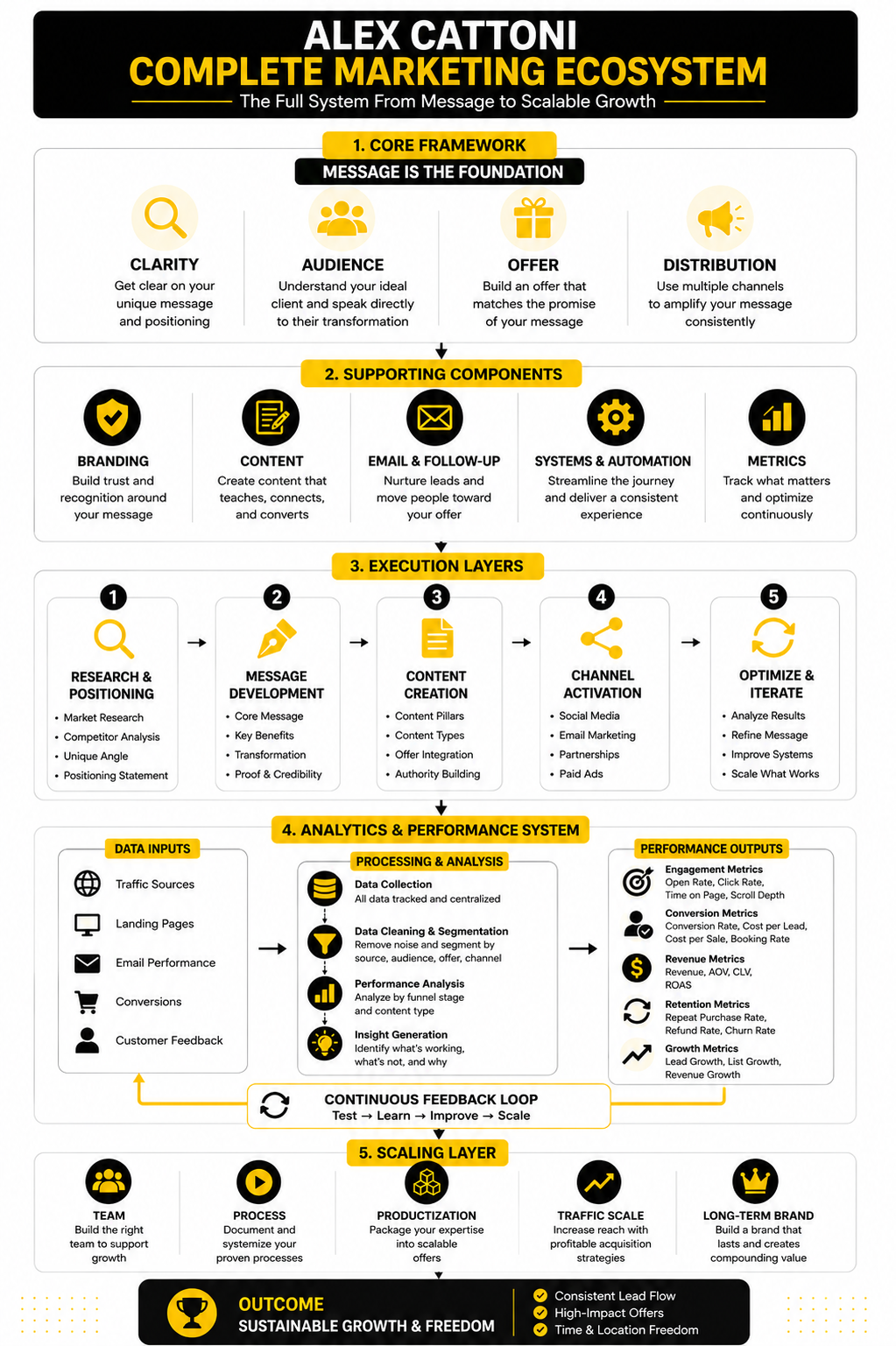
Who Is Alex Cattoni?
Alex Cattoni is the founder of Copy Posse, a copywriting and marketing education brand focused on modern, ethical, personality-driven marketing. Her public work includes copywriting tutorials, business training, messaging advice, and content for freelancers, creators, and entrepreneurs. She is especially known for teaching copywriting in a way that feels more human than the old-school hard-sell approach.
What Is Copy Posse?
Copy Posse is Alex Cattoni’s education and community brand for copywriters and marketers. The brand teaches copywriting, messaging, content strategy, and marketing skills for people who want to write more persuasive copy without relying on sleazy tactics. Its positioning is built around modern marketing, ethical persuasion, and helping people use their words with more confidence.
Why Is Alex Cattoni Popular In Copywriting?
Alex Cattoni is popular because she makes copywriting feel practical, current, and less intimidating. A lot of copywriting education can feel either overly aggressive or overly academic, but her style is direct and approachable. She explains the strategy behind copy in a way that helps beginners understand what to do while still giving experienced marketers useful reminders about clarity, voice, and trust.
Is Alex Cattoni’s Copywriting Style Only For Beginners?
No, the principles apply beyond beginner copywriting. Beginners can use her approach to understand foundations like headlines, offers, audience research, and sales pages. More experienced marketers can use the same principles to refine positioning, improve funnel consistency, strengthen brand voice, and remove weak messaging from higher-level campaigns.
What Can Marketers Learn From Alex Cattoni?
Marketers can learn that persuasion works better when it is built on clarity, specificity, and trust. Her approach reinforces the idea that copy should not just grab attention; it should help the right person understand why an offer matters. That means better customer research, stronger positioning, more useful proof, and a voice that does not sound like every other brand in the niche.
Is Ethical Copywriting Less Effective Than Traditional Direct Response?
Ethical copywriting is not weaker copywriting. It still uses urgency, emotion, proof, contrast, and strong calls to action when those elements are truthful and relevant. The difference is that ethical copy does not depend on manipulation, fake scarcity, inflated claims, or pressure that damages long-term trust.
How Do You Apply Alex Cattoni’s Approach To A Sales Page?
Start by clarifying the buyer’s real problem, then define the specific promise your offer can support. After that, map the objections, collect proof, and structure the page so each section answers a natural question in the buyer’s mind. The final sales page should feel like a guided decision, not a pile of disconnected persuasion tricks.
How Do You Apply This Style To Email Marketing?
In email, the approach starts with earning attention honestly and keeping the message relevant after the open. The subject line should create curiosity without misleading the reader. The body should make one clear point, build enough interest to justify the click, and connect naturally to the next step instead of forcing a hard pitch every time.
How Do You Know If Your Copy Is Working?
Your copy is working when the right people are taking the right next step. That could mean more qualified leads, stronger email clicks, better sales page conversions, higher booking quality, lower refund rates, or better customer feedback. The key is to connect the metric to the part of the message it reflects, instead of treating every number as a random win or loss.
What Are The Biggest Mistakes People Make When Studying Alex Cattoni?
The biggest mistake is copying the surface-level voice instead of understanding the strategy underneath it. Her style works because it combines personality, clarity, structure, and audience understanding. If you only copy the tone, you end up with imitation instead of positioning.
Can AI Replace The Kind Of Copywriting Alex Cattoni Teaches?
AI can help with drafts, research organization, outlines, and idea generation, but it cannot replace the strategic judgment behind strong copy. The best copy still needs real customer insight, offer understanding, voice control, proof selection, and ethical decision-making. AI can speed up the process, but it should not be trusted to define the message on its own.
What Should A New Copywriter Focus On First?
A new copywriter should focus on understanding buyers before trying to master every format. Learn how to identify problems, write clear promises, handle objections, and explain offers in plain language. Once those fundamentals are solid, sales pages, emails, ads, landing pages, and scripts become much easier to write.
Is Personal Brand Voice Really That Important?
Yes, especially when the brand depends on trust. A strong voice helps people recognize you, remember you, and understand your point of view faster. But voice only works when it supports the message; personality without clarity is just noise.
What Tools Help Implement This Kind Of Copywriting?
The tools depend on the channel you are building. For funnels and sales pages, platforms like ClickFunnels, Systeme.io, and GoHighLevel can help organize the buyer journey. For email and audience communication, tools like Brevo, Moosend, and ManyChat can support follow-up, segmentation, and conversion paths.
Build a stronger local presence with BAAM AI
Turn your website, Google profile, social channels, and AI visibility into one growth engine
Most businesses do not need more random marketing activity. They need a consistent presence system that helps the right people find them, trust them, and take action. BAAM AI brings strategy, local SEO, website updates, Google Maps visibility, social content, AI-search readiness, media production, and reporting into one practical monthly engine.
If you want your marketing to keep working after the campaign ends, start with a free BAAM AI presence audit. See how your business shows up today and where the fastest visibility wins are at BAAM AI.