
BAAM AI Blog
Advanced Scaling and Strategic Tradeoffs
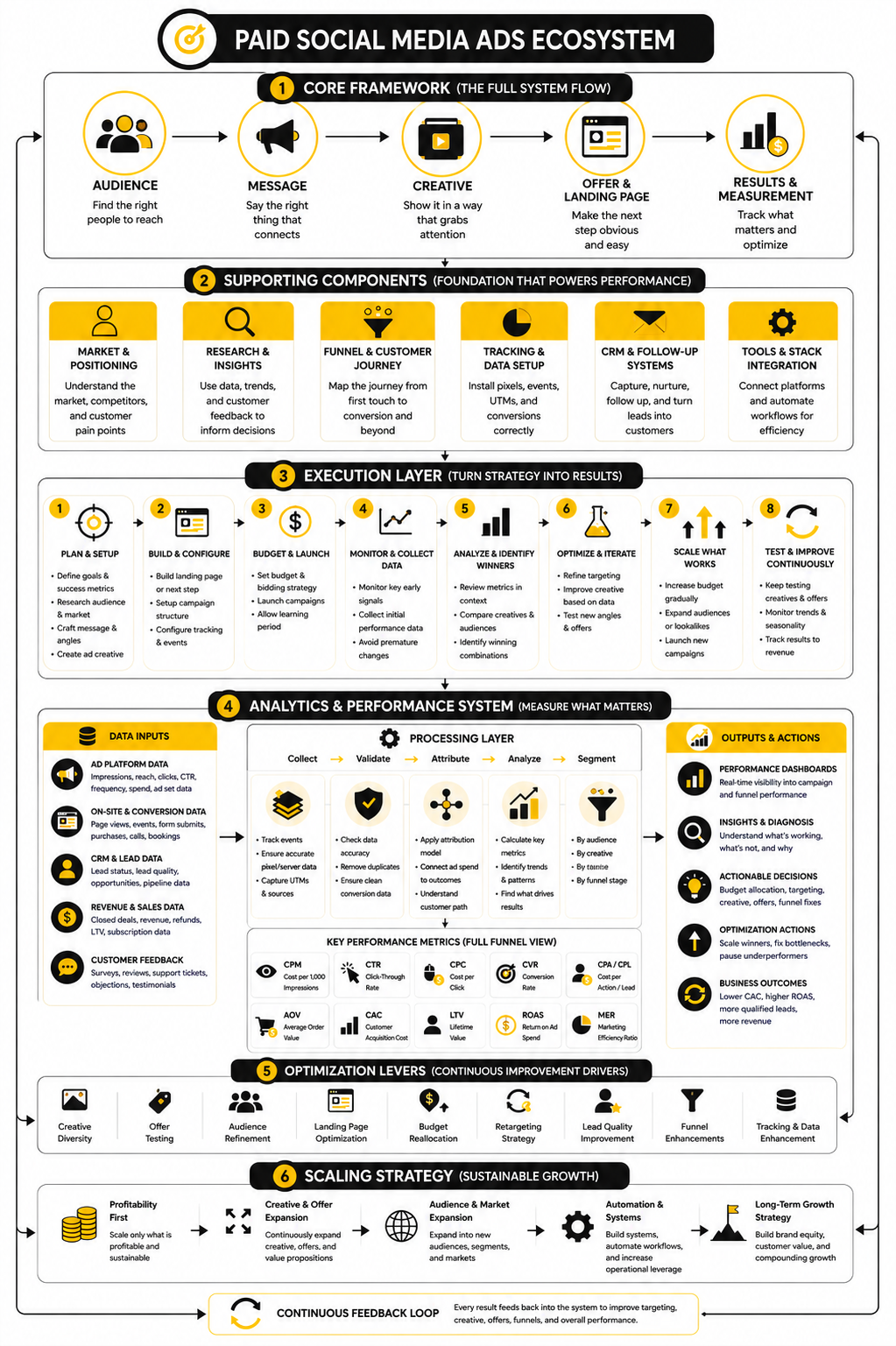
Scaling paid social media ads is not just increasing the budget on a winning campaign. That can work for a while, but it also exposes every weak point in the system. As spend rises, small problems become expensive...
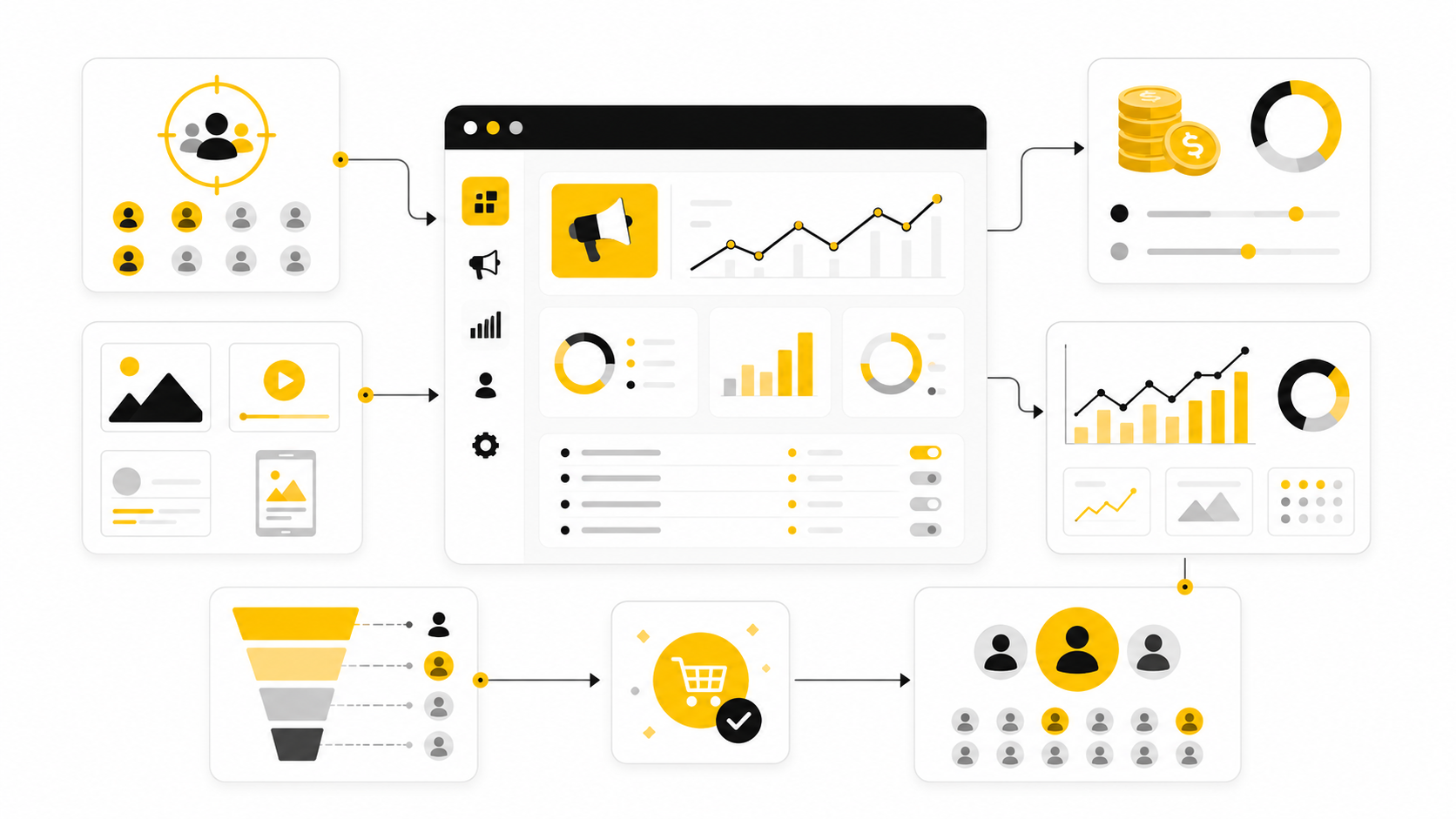
Scaling paid social media ads is not just increasing the budget on a winning campaign. That can work for a while, but it also exposes every weak point in the system. As spend rises, small problems become expensive problems: creative fatigue appears faster, attribution gets noisier, lead quality can drop, and the sales team may not be able to handle the extra volume.
The goal of advanced scaling is controlled expansion. You want more reach, more conversions, and more revenue without losing the economics that made the campaign worth scaling in the first place. That requires better judgment, not just more aggressive media buying.
Scaling Vertically Versus Horizontally
Vertical scaling means increasing spend inside campaigns, ad sets, or ads that are already working. It is usually the first move because it is simple and direct. If a campaign is profitable at $200 per day, you might test whether it stays profitable at $300, $500, or $1,000 per day.
Horizontal scaling means expanding the system with new audiences, new creative angles, new offers, new placements, new platforms, or new funnel paths. This is often more stable over time because you are not forcing one campaign to carry the entire growth target. You are building more ways for the business to acquire customers.
The tradeoff is speed versus durability. Vertical scaling can move fast, but performance may break when the platform runs out of easy conversions. Horizontal scaling takes more work, but it creates a stronger system because the account is not dependent on one winning ad, one audience, or one funnel.
Do Not Scale Before the Funnel Can Handle It
More traffic does not fix a weak funnel. It only shows the weakness faster. If the landing page is unclear, the offer is soft, the CRM is disorganized, or the sales process is slow, scaling paid social media ads will magnify those problems.
Before increasing spend, check the operational side. Can the team respond to leads quickly? Can the checkout handle volume without technical issues? Are booking reminders working? Are abandoned carts being recovered? Are sales reps tracking outcomes consistently?
This is where many campaigns fail in a frustrating way. The ad account looks like it is doing its job, but revenue does not grow at the same pace because the back end cannot convert the extra demand. Scaling only makes sense when the whole business can absorb the traffic.
Creative Diversity Becomes the Main Growth Lever
As accounts mature, creative diversity becomes more important than tiny targeting adjustments. Meta describes creative diversification as building unique campaign assets for different personas, use cases, and contexts in its creative diversification guidance. That direction matters because automated delivery systems need a wider range of inputs to find different pockets of demand.
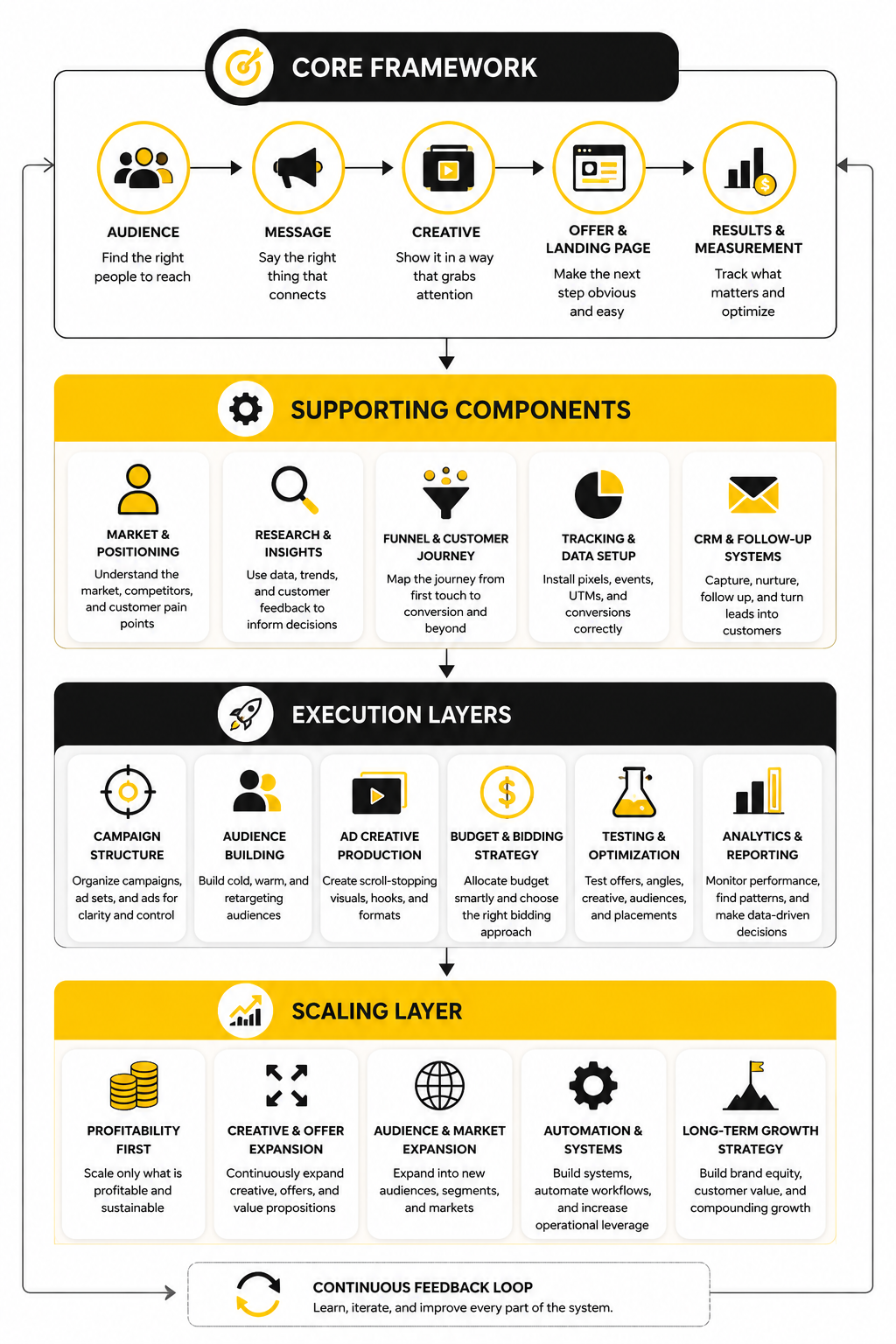
This does not mean producing endless versions of the same ad. A new caption, new background, or new button color is not real creative diversity. Real diversity means different angles, different proof points, different formats, different openings, different offers, and different emotional triggers.
A mature account should have a steady creative pipeline. That pipeline might include founder videos, creator-style videos, static proof ads, product demonstrations, customer objections, direct response offers, comparison ads, educational clips, and retargeting-specific assets. The more the account spends, the more disciplined this pipeline needs to become.
AI Can Speed Up Production, But It Cannot Replace Strategy
AI is becoming deeply embedded in campaign planning, buying, optimization, and measurement. The IAB State of Data 2025 report frames AI as a force reshaping the full media campaign lifecycle, from segmentation and activation to performance measurement. That is a real shift, and paid social teams should use it.
But AI does not remove the need for strong strategy. It can help generate creative variations, summarize performance, suggest patterns, produce scripts, classify comments, and speed up research. It cannot fully understand your positioning, margin structure, customer objections, brand taste, or sales process unless you feed it the right inputs and review the output with human judgment.
The risk is creative sameness. If every advertiser uses the same AI-assisted hooks, templates, and visuals, the feed gets flooded with ads that look polished but feel interchangeable. The advantage goes to teams that use AI for speed while keeping the thinking, taste, and customer insight human.
Automation Works Best With Better Inputs
Modern ad platforms are pushing advertisers toward automated campaign types, broader targeting, and AI-assisted optimization. That can be powerful because the platform has more freedom to find conversions. But automation does not magically turn weak inputs into strong results.
The input quality still matters. Better creative gives the algorithm more ways to match messages to people. Better conversion tracking gives it cleaner signals. Better landing pages give it more successful outcomes to learn from. Better CRM feedback helps separate low-quality leads from real buyers.
Think of automation as a multiplier. If the system is strong, automation can help it move faster. If the system is weak, automation can spend money faster while making the problem harder to diagnose.
Signal Loss Makes First-Party Data More Important
Privacy changes, browser restrictions, consent requirements, and platform limitations have made tracking less complete than it used to be. The IAB State of Data 2025 Companion Guide highlights how AI-powered models and probabilistic approaches are being used to address signal loss and measurement gaps. That is useful, but it is not a reason to ignore your own data.
First-party data is becoming a strategic asset. Email subscribers, customer lists, CRM stages, purchase history, booked calls, quiz answers, product preferences, and sales outcomes help you understand what platform pixels cannot see perfectly. The better your owned data, the better your decisions become.
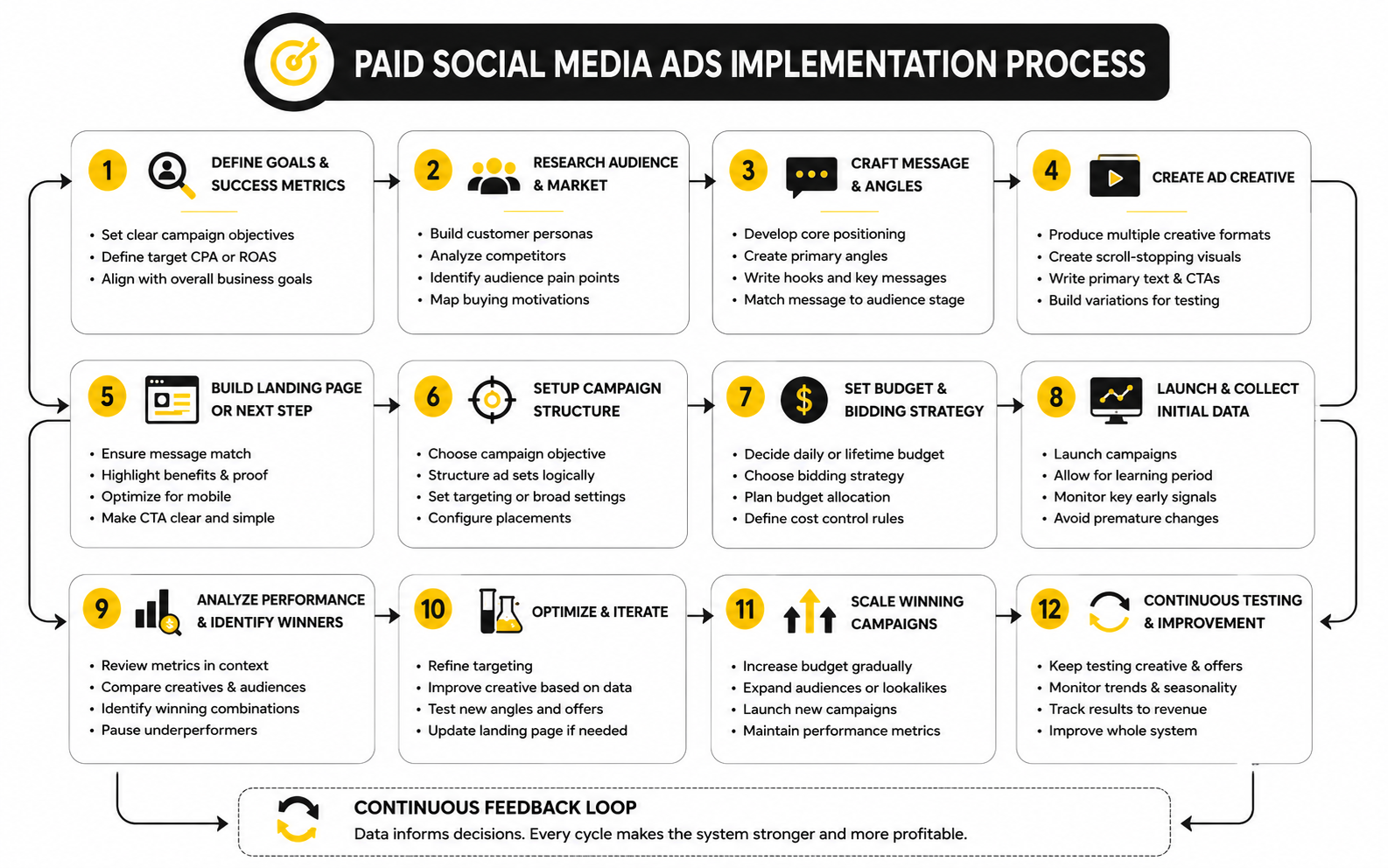
This is also why lead quality tracking matters. A campaign can generate conversions inside the ad platform while producing weak customers in the business. When your CRM tracks qualified leads, show-ups, closed deals, refunds, repeat purchases, and lifetime value, you can optimize toward revenue instead of surface activity.
Retargeting Needs More Care as Privacy Changes
Retargeting used to feel easy because audiences were larger, tracking was cleaner, and attribution looked more direct. Now it requires more thought. Smaller audience pools, consent limitations, and modeled reporting can make retargeting performance harder to interpret.
That does not make retargeting useless. It means your retargeting should be based on stronger intent signals and better messaging. Instead of showing generic reminders to everyone, segment by behavior where possible: product viewers, cart abandoners, video viewers, lead form openers, webinar registrants, booked-call no-shows, and past customers.
The creative should also reflect the stage. Someone who watched 75% of a product demo does not need the same ad as someone who visited one blog post. The closer someone is to buying, the more specific your proof, urgency, and objection handling should become.
Incrementality Matters When Spend Gets Serious
At small budgets, platform-reported performance may be enough to guide early decisions. At higher budgets, you need to ask a harder question: how much revenue did the ads actually create that would not have happened anyway? That is the incrementality question.
This matters because paid social media ads often touch people who were already familiar with the brand. Retargeting, branded demand, email subscribers, and loyal customers can inflate platform-reported results. The campaign may look profitable in the dashboard while adding less new revenue than expected.
Incrementality does not need to be overly academic at first. You can compare holdout regions, pause certain retargeting segments, monitor blended revenue during spend changes, or run structured experiments. Google’s 2025 marketing trends guidance pushes teams to align on KPIs, map media spend, and build an experiments calendar in its measurement-focused planning recommendations. That mindset is exactly what serious scaling requires.
Platform Expansion Should Follow Proof, Not Panic
Adding another platform can be smart, but it should not be an escape route from fixing the current system. If Meta is not working because the offer is weak, TikTok will not magically solve it. If LinkedIn leads are expensive because the sales process is poor, cheaper clicks elsewhere may only create more noise.
Platform expansion makes sense when you have proof that the offer converts, the funnel works, and the business can handle more demand. Then you can adapt the winning message to a new environment. The key word is adapt, not copy.
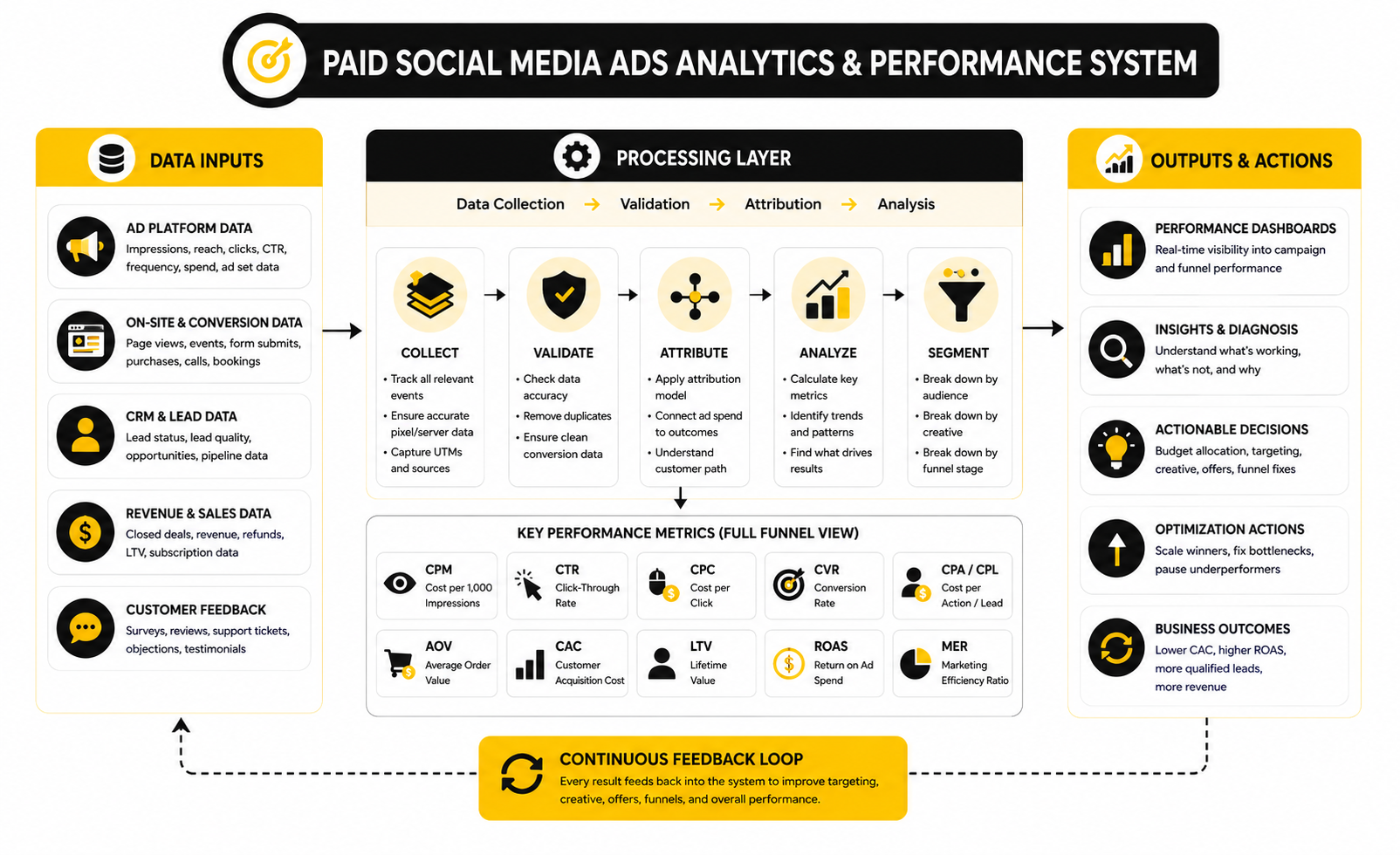
A TikTok ad should feel native to TikTok. A LinkedIn ad should match professional context. A YouTube Shorts ad should respect how people consume short-form video there. The core offer can stay consistent, but the creative language has to fit the platform.
Budget Allocation Should Reflect Confidence
Not every campaign deserves the same budget. A mature account should allocate spend based on confidence, learning value, and business priority. Proven campaigns get the largest share, structured tests get enough budget to produce a signal, and experimental ideas get controlled exposure.
A simple model is to split spend into three buckets. The first bucket supports proven winners. The second funds new creative and offer tests. The third explores new platforms, audiences, or funnel experiments. This keeps growth moving without putting the entire account at risk.
The exact split depends on the business stage. A startup still searching for message-market fit may spend more on learning. A profitable ecommerce brand may protect more budget for proven acquisition. An agency or local business with tight cash flow may need more conservative testing until the sales process is predictable.
Lead Quality Is a Scaling Constraint
Lead generation campaigns can look amazing until the sales team gets involved. Cheap leads are easy to celebrate in the ad account, but they do not matter if they do not answer, qualify, show up, or buy. As spend increases, lead quality often becomes the real constraint.
This is why qualification should be built into the funnel. You can use better form questions, clearer offer language, price framing, calendar filters, pre-call surveys, or automated chat flows. The goal is not to create unnecessary friction; the goal is to stop paying for people who were never realistic buyers.
For service businesses, a connected CRM workflow is essential. GoHighLevel can help organize pipeline stages, appointment reminders, SMS follow-up, and revenue tracking after the lead is generated. For conversational campaigns, ManyChat can help qualify and route people before they reach the sales team.
Landing Page Speed and Clarity Matter More at Scale
At low spend, a weak landing page may be tolerable because the volume is small. At higher spend, every small conversion leak costs real money. A one-point improvement in conversion rate can change the economics of the entire account.
The biggest landing page issues are usually not complicated. The page loads too slowly, the headline is vague, the proof is buried, the CTA is unclear, the form is too long, or the mobile experience feels clunky. Paid social traffic is impatient, especially on mobile, so the page needs to make sense fast.
For ecommerce teams that need faster campaign-specific pages, Replo can help create landing pages without waiting on a full development cycle. For funnels with multi-step offers, order forms, and upsells, ClickFunnels can support a more direct-response structure. The tool is secondary; the conversion logic is what matters.
Compliance and Brand Safety Are Not Optional
As spend grows, risk grows with it. Claims, testimonials, targeting, data collection, AI-generated content, and audience exclusions all need more scrutiny. A small campaign might get away with sloppy wording for a while, but larger campaigns attract more review from platforms, regulators, competitors, and customers.
This is especially important in sensitive categories like health, finance, employment, housing, education, and anything involving minors. A 2026 algorithmic audit of TikTok advertising and minor profiling found concerns around commercial content that can function like advertising even when it sits outside formal ad definitions in research on the Digital Services Act and TikTok advertising. The broader lesson is clear: advertisers need to think beyond technical compliance and consider how the content is actually experienced.
Brand safety also includes where and how your ads appear. If AI-generated assets feel misleading, if creator partnerships are not clearly disclosed, or if claims are exaggerated, short-term performance can create long-term trust problems. Paid social should amplify the brand, not create cleanup work for it.
The Biggest Scaling Risk Is False Confidence
The most dangerous moment in paid social is not when nothing works. It is when something works and the team assumes it will keep working forever. That is when budgets rise, creative testing slows down, reporting gets lazy, and the account becomes dependent on a small number of winners.
False confidence shows up in predictable ways. The team stops testing new hooks because one ad is still carrying the account. Retargeting gets too much credit. Platform ROAS is treated as reality. Sales feedback is ignored. Creative fatigue is dismissed until performance drops hard.
The professional move is to stay paranoid in a useful way. Keep testing while things are working. Keep improving the offer while campaigns are profitable. Keep reviewing lead quality while CPL looks good. Paid social media ads reward momentum, but only if you keep building the next layer before the current one slows down.
Expert-Level Growth Comes From Better Constraints
The best advertisers are not just better at launching campaigns. They are better at identifying constraints. They know whether the business needs a stronger offer, a better angle, a faster page, cleaner tracking, tighter qualification, more creative volume, or a different platform mix.
This is what separates expert-level paid social from beginner-level media buying. Beginners ask, “How do we lower CPC?” Experts ask, “Which constraint is stopping profitable scale?” That question leads to better actions because it looks at the full system.
When you approach paid social media ads this way, scaling becomes less chaotic. You are not chasing hacks, copying competitors, or reacting to every dashboard swing. You are building a system that can learn, adapt, and grow without pretending the platform is the whole business.
Build a stronger local presence with BAAM AI
Turn your website, Google profile, social channels, and AI visibility into one growth engine
Most businesses do not need more random marketing activity. They need a consistent presence system that helps the right people find them, trust them, and take action. BAAM AI brings strategy, local SEO, website updates, Google Maps visibility, social content, AI-search readiness, media production, and reporting into one practical monthly engine.
If you want your marketing to keep working after the campaign ends, start with a free BAAM AI presence audit. See how your business shows up today and where the fastest visibility wins are at BAAM AI.