
BAAM AI Blog
Advanced Klaviyo Leadership Decisions
At this stage, the system is no longer about getting the basics live. The bigger question is how to scale without making the account harder to manage, the customer experience noisier, or the reporting less...
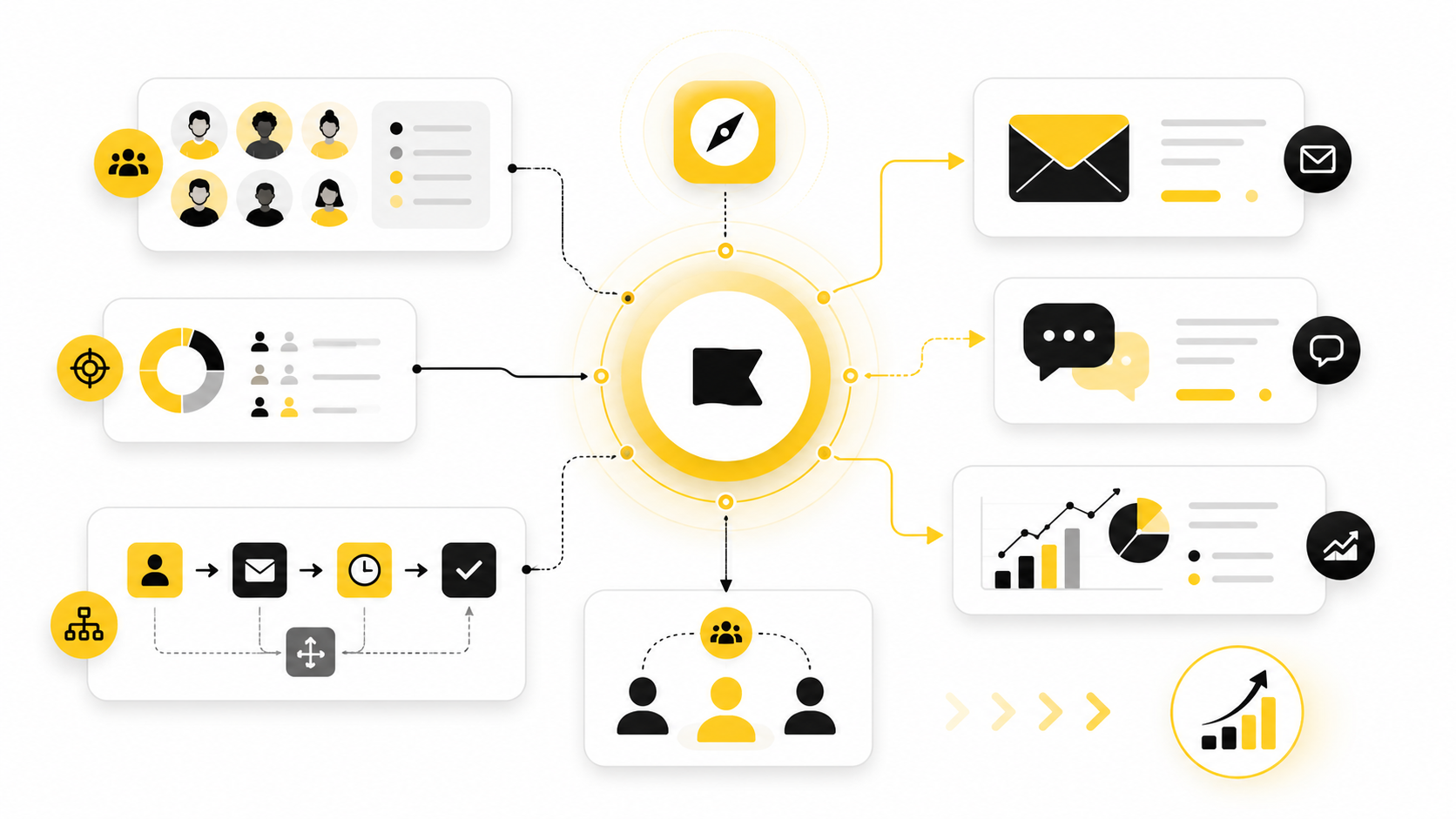
At this stage, the system is no longer about getting the basics live. The bigger question is how to scale without making the account harder to manage, the customer experience noisier, or the reporting less trustworthy. This is where klaviyo leadership becomes more about judgment than setup.
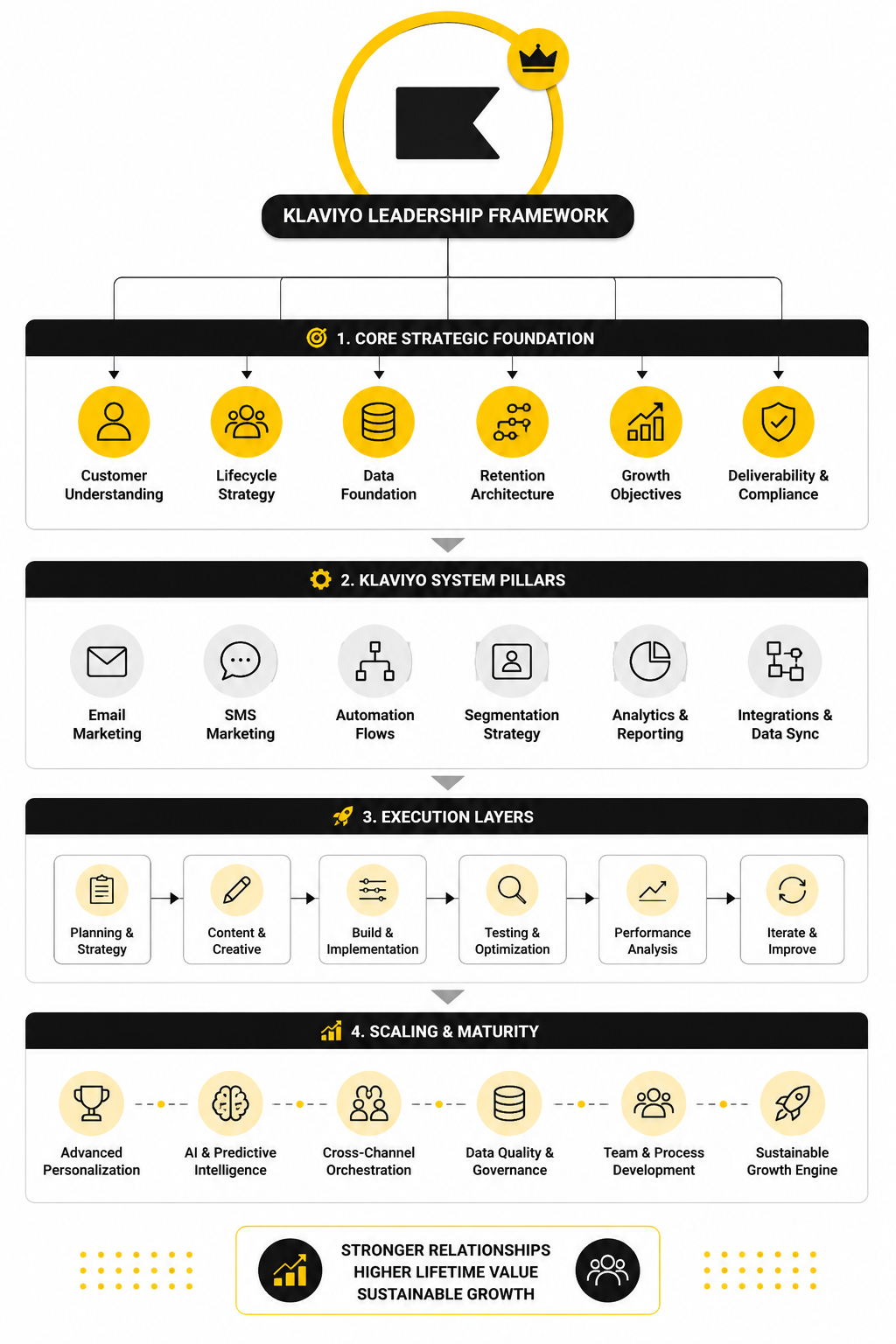
Advanced teams usually do not win because they have the most flows or the most complicated segmentation tree. They win because they know which tradeoffs matter. They understand when to increase send volume, when to hold back, when to introduce AI, when to test a new channel, and when the smartest move is to simplify what already exists.
That is the leadership layer most brands underestimate. More capability creates more responsibility. If nobody is making disciplined decisions, every new feature becomes another way to create confusion.
The Tradeoff Between Growth And Customer Fatigue
Retention marketing has a built-in tension. The business wants more revenue from the list, but customers only have so much attention. Push too softly and the brand leaves money on the table. Push too hard and the list starts to decay.
The danger is that fatigue often shows up slowly. A campaign can still produce revenue while unsubscribe rates rise, spam complaints increase, click quality weakens, or repeat buyers become less responsive. By the time the drop is obvious, the team may have trained customers to ignore anything that is not a major promotion.
Good Klaviyo leadership treats attention as an asset. That means the team needs rules around campaign frequency, SMS use, promotional pressure, and exclusion logic. It also means leaders should be willing to protect high-value customers from unnecessary sends, even when the short-term revenue report would look better with a larger audience.
Deliverability Is A Leadership Issue
Deliverability is often treated like a technical problem, but it is really a leadership problem. Authentication matters, list hygiene matters, and compliance matters, but sender reputation is also shaped by the quality of the marketing decisions being made. If the brand keeps sending irrelevant messages to weak audiences, the mailbox providers eventually notice.
The standards have become stricter. Gmail and Yahoo bulk sender rules pushed brands toward stronger authentication, easier unsubscribes, and closer complaint monitoring, with senders expected to keep spam complaints below 0.3%. That number is not just a compliance detail. It is a warning that poor audience discipline can become a revenue problem.
The practical move is to make deliverability part of the operating rhythm. Review bounce rates, spam complaints, unsubscribes, engagement decay, suppression growth, and domain health before pushing harder on volume. If deliverability weakens, the answer is rarely “send more.” The answer is usually better targeting, cleaner exclusions, stronger consent, and more relevant messaging.
Scaling Beyond Email Without Losing Control
Klaviyo now supports a broader customer communication system than traditional email marketing. The platform’s direction has moved toward a B2C CRM model with email, SMS, mobile push, WhatsApp, analytics, customer service, and AI sitting closer together. That opens up more opportunities, but it also creates more ways to overwhelm customers.
Adding channels should not mean duplicating the same message everywhere. SMS should not simply repeat the email. Push should not become another discount blast. WhatsApp should not be added just because the platform supports it.
The leadership question is channel purpose. Email can educate and merchandise. SMS can support urgency and high-intent reminders. Mobile push can work well for app-based engagement. Customer service data can reveal friction that marketing should address. Each channel needs a reason to exist, and that reason should be obvious to the customer.
AI Should Improve Decisions, Not Replace Leadership
AI is becoming a bigger part of Klaviyo’s product direction. Klaviyo has been expanding AI agents and positioning its platform around more autonomous customer experiences, including marketing and customer agent capabilities described in its AI-first B2C CRM announcements. That direction matters because teams will increasingly have tools that can generate, recommend, segment, summarize, and automate faster than before.
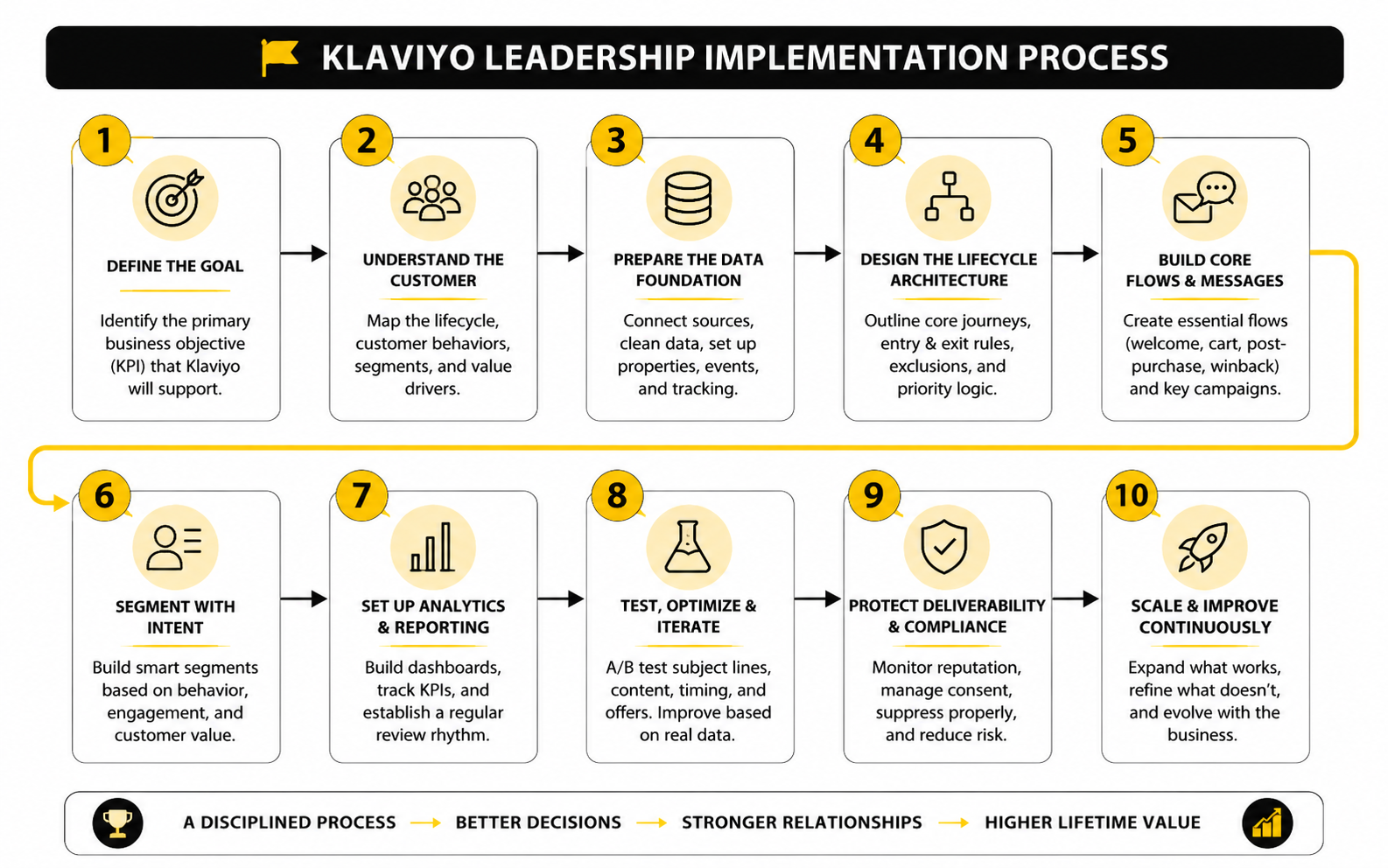
But faster is not automatically better. AI can help draft copy, suggest segments, summarize performance, personalize experiences, and surface opportunities the team might miss. It can also scale mediocre strategy if the underlying goals, data, and guardrails are weak.
Strong Klaviyo leadership uses AI as leverage, not autopilot. The leader still defines the customer promise, brand voice, offer rules, testing standards, approval process, and risk boundaries. AI can accelerate the work, but it should not decide what the brand stands for or how aggressively customers should be contacted.
The Risk Of Over-Automation
Automation is powerful because it responds to customer behavior at the right moment. The risk is that teams start automating everything without thinking about the experience from the customer’s side. A customer can enter a welcome flow, browse flow, cart flow, post-purchase flow, review flow, cross-sell flow, winback flow, and campaign audience faster than the team realizes.
That is how a technically “correct” account becomes a bad experience. Every trigger may make sense in isolation, but the combined pressure can feel excessive. The customer does not care that the messages came from different flows. They only feel that the brand will not stop talking.
This is why exclusions, priority rules, and message caps matter. The team should know which flows override others, which campaigns should suppress recent purchasers, when SMS should pause email pressure, and how long a customer should rest after certain actions. Advanced Klaviyo leadership is often less about adding automation and more about controlling the collisions between automations.
Margin, Discounting, And Revenue Quality
Attributed revenue can hide weak economics. A campaign with a large discount may look like a winner in Klaviyo while quietly damaging margin, lowering perceived value, or teaching customers to wait. That is not a reporting issue. That is a leadership issue.
The team needs to separate revenue volume from revenue quality. A full-price second purchase from a satisfied customer is not the same as a heavily discounted order from someone who only buys during sales. Both show up as revenue, but they do not mean the same thing for the business.
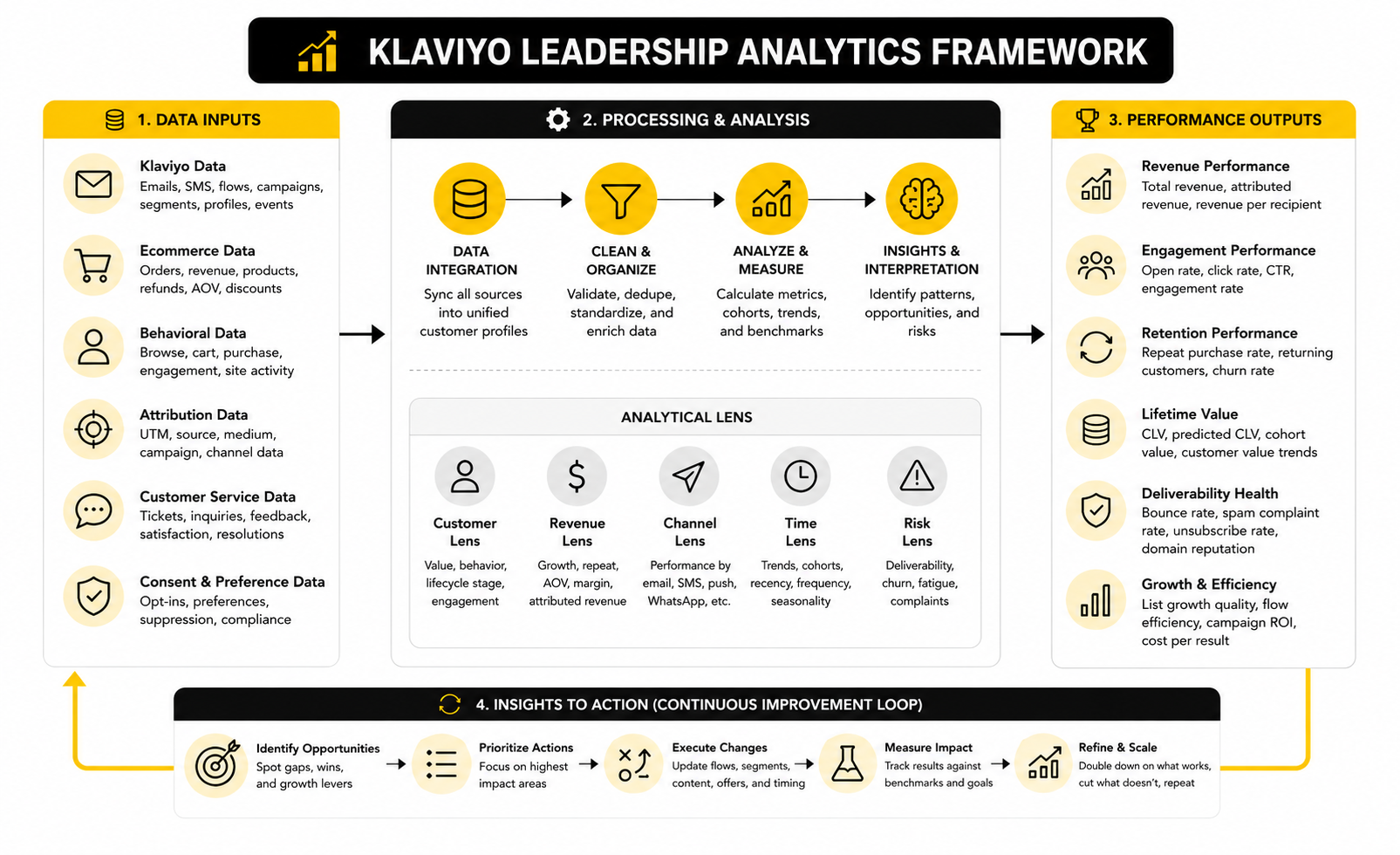
This is where Klaviyo data should be paired with ecommerce and finance context. Look at discount rate, gross margin, product category, first-time versus repeat revenue, refund behavior, and cohort quality. If email and SMS are growing revenue by increasing discount dependency, the channel may be solving this month’s target while creating next quarter’s problem.
Team Ownership And Decision Rights
As Klaviyo becomes more important, ownership has to become clearer. A small brand might have one person managing strategy, copy, campaigns, flows, and reporting. A larger brand may involve retention marketers, designers, developers, lifecycle strategists, analysts, ecommerce managers, and agency partners. Without clear decision rights, the system slows down or gets messy.
The team should know who owns the lifecycle strategy, who approves promotional pressure, who manages deliverability, who updates flows, who reads the data, and who can make changes inside the account. This is not bureaucracy. It is how you prevent well-meaning people from breaking the system.
A practical ownership model usually separates strategy, execution, quality control, and reporting. Strategy decides what the system should do. Execution builds and sends. Quality control protects data, links, logic, compliance, and brand standards. Reporting turns performance into decisions. When those roles are clear, the team can move faster without creating chaos.
When To Bring In Professional Implementation Support
There is a point where internal management is not enough. That does not mean the team is failing. It usually means the account has become valuable enough that mistakes are more expensive.
Professional implementation support makes sense when the brand has messy data, weak lifecycle structure, deliverability concerns, unclear reporting, aggressive growth targets, or multiple channels that need coordination. It can also help when the team has been “doing Klaviyo” for years but cannot clearly explain what is working beyond attributed revenue.
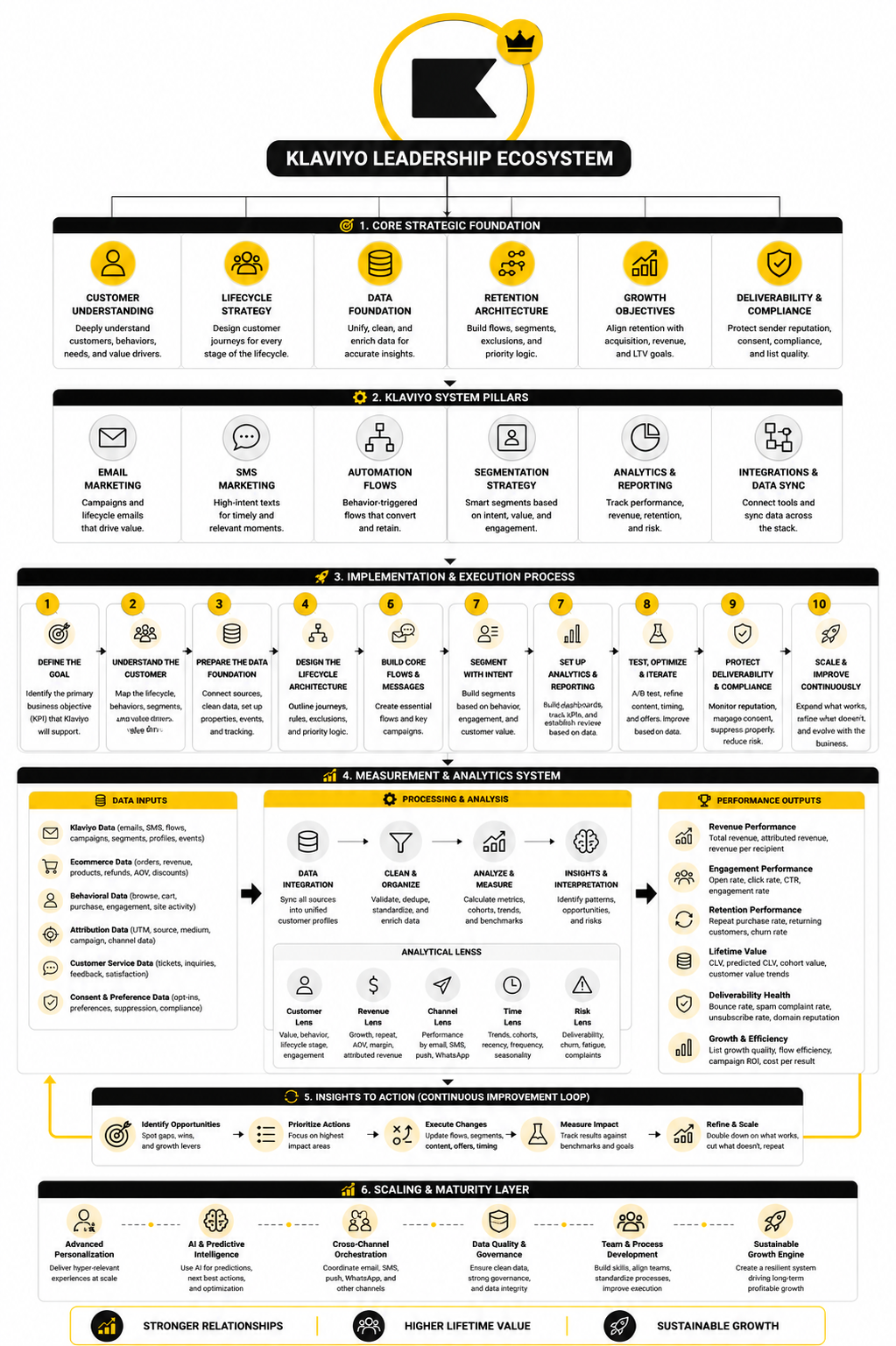
The right partner should not just build flows and disappear. They should help clarify the operating model, improve segmentation, tighten reporting, document the system, and transfer enough understanding back to the team. Good implementation support makes the business less dependent, not more confused.
The Executive View Of Klaviyo Performance
Executives do not need every campaign detail. They need to understand whether the customer growth system is getting stronger or weaker. That means reporting should separate operational metrics from business-level signals.
A useful executive view might include returning customer revenue, repeat purchase rate, customer lifetime value trends, list growth quality, flow revenue efficiency, campaign contribution, deliverability health, discount dependency, and major lifecycle opportunities. The point is not to impress leadership with a complicated dashboard. The point is to show what decisions need to be made.
This is where klaviyo leadership connects marketing to the wider business. If the data shows customers are buying once but not returning, that may involve product education, merchandising, replenishment, customer support, or offer strategy. Klaviyo can help address the issue, but the leader needs to frame it as a business problem, not just an email problem.
The Scaling Principle
The best scaling principle is simple: add complexity only when it creates clarity or measurable lift. A new segment should make a decision better. A new flow should improve a customer moment. A new channel should serve a distinct purpose. A new AI workflow should reduce friction without weakening control.
If complexity does not improve action, it becomes drag. The account gets harder to audit. The team gets slower. Customers receive more mixed messages. Reporting becomes harder to trust.
That is why advanced Klaviyo leadership is disciplined. It is not obsessed with doing everything the platform can technically do. It is focused on building a retention system that is clear, profitable, customer-aware, and resilient enough to keep improving as the business grows.
Build a stronger local presence with BAAM AI
Turn your website, Google profile, social channels, and AI visibility into one growth engine
Most businesses do not need more random marketing activity. They need a consistent presence system that helps the right people find them, trust them, and take action. BAAM AI brings strategy, local SEO, website updates, Google Maps visibility, social content, AI-search readiness, media production, and reporting into one practical monthly engine.
If you want your marketing to keep working after the campaign ends, start with a free BAAM AI presence audit. See how your business shows up today and where the fastest visibility wins are at BAAM AI.