
BAAM AI Blog
Advanced Engagement Marketing Strategy
Once the basics are working, engagement marketing becomes less about adding more campaigns and more about making sharper tradeoffs. This is where many teams get uncomfortable. More channels, more automations, more AI...
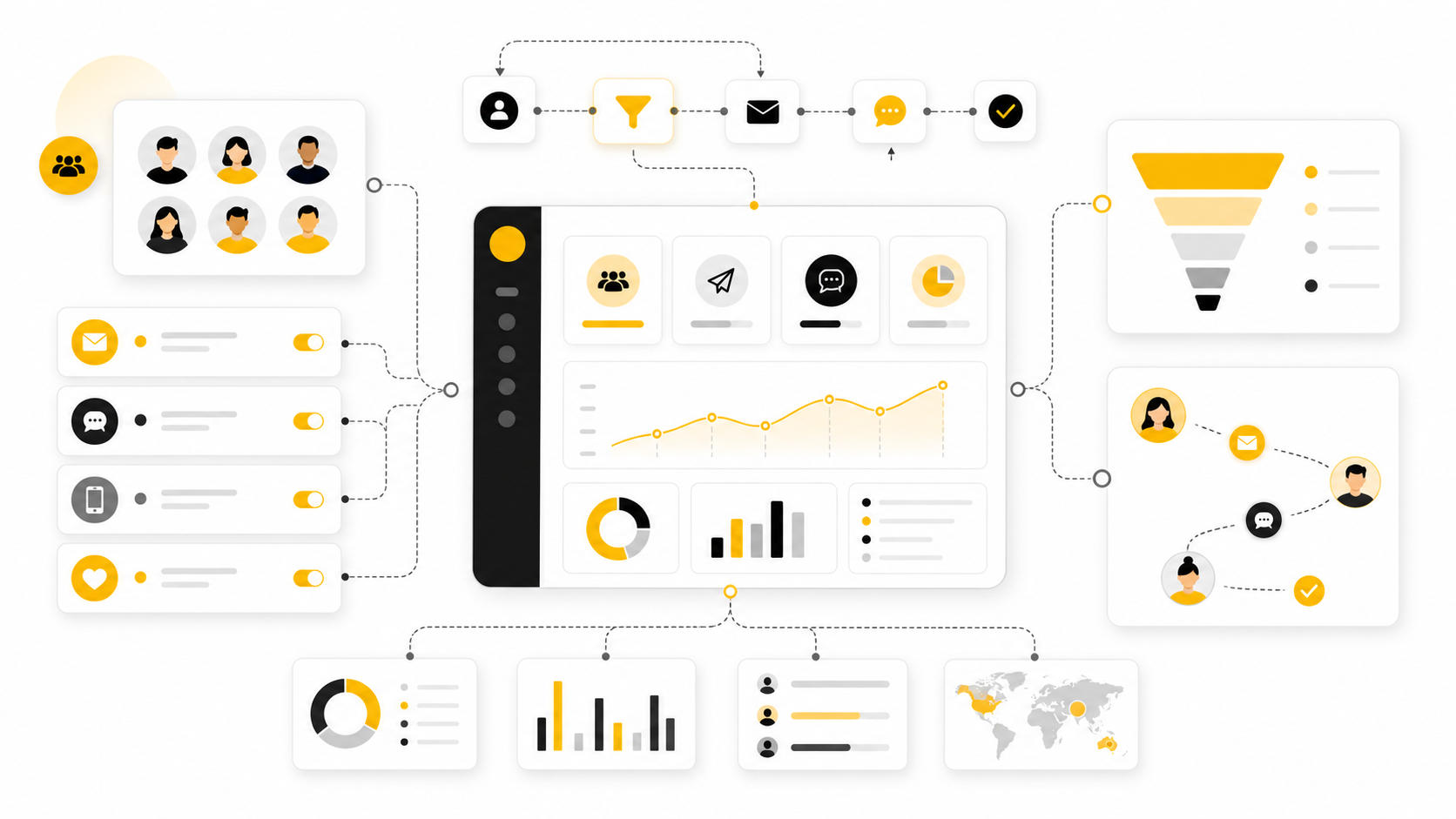
Once the basics are working, engagement marketing becomes less about adding more campaigns and more about making sharper tradeoffs. This is where many teams get uncomfortable. More channels, more automations, more AI tools, and more customer data can create growth, but they can also create confusion if the strategy is not disciplined.
The advanced work is deciding what deserves personalization, what should stay simple, where automation should stop, and which interactions need a human touch. Not every customer signal needs a response. Not every segment needs its own workflow. Not every channel needs to be active every week.
This is the level where engagement marketing turns into an operating model. The brand is no longer just trying to get attention. It is deciding how to earn trust at scale without becoming robotic, invasive, or exhausting.
Personalization Has A Trust Limit
Personalization works when it makes the customer’s life easier. It fails when it makes the customer feel watched, pressured, or manipulated. That line is thin, and brands cross it more often than they realize.
Gartner’s 2025 research found that personalized marketing can create negative experiences for 53% of customers, and those customers were 3.2 times more likely to regret a purchase and 44% less likely to buy again (Gartner personalization research). That is a serious warning. More personalization is not automatically better engagement marketing.
The practical rule is simple: personalize when it increases clarity, convenience, timing, or relevance. Do not personalize just to prove that you have data. If the customer would not immediately understand why the message is helpful, the personalization may feel invasive instead of useful.
Consent Is Part Of The Customer Experience
Consent is not just a legal checkbox. It is part of the relationship. When someone gives you an email address, phone number, preference, quiz answer, or behavioral signal, they are trusting you to use it in a way that feels fair.
Qualtrics XM Institute research found that when consumers trust companies to use personal information responsibly, they are 8 percentage points more comfortable with companies using each personal data type to personalize the experience (consumer preferences for privacy and personalization). That means trust does not only protect the brand. It expands what customers are willing to share.
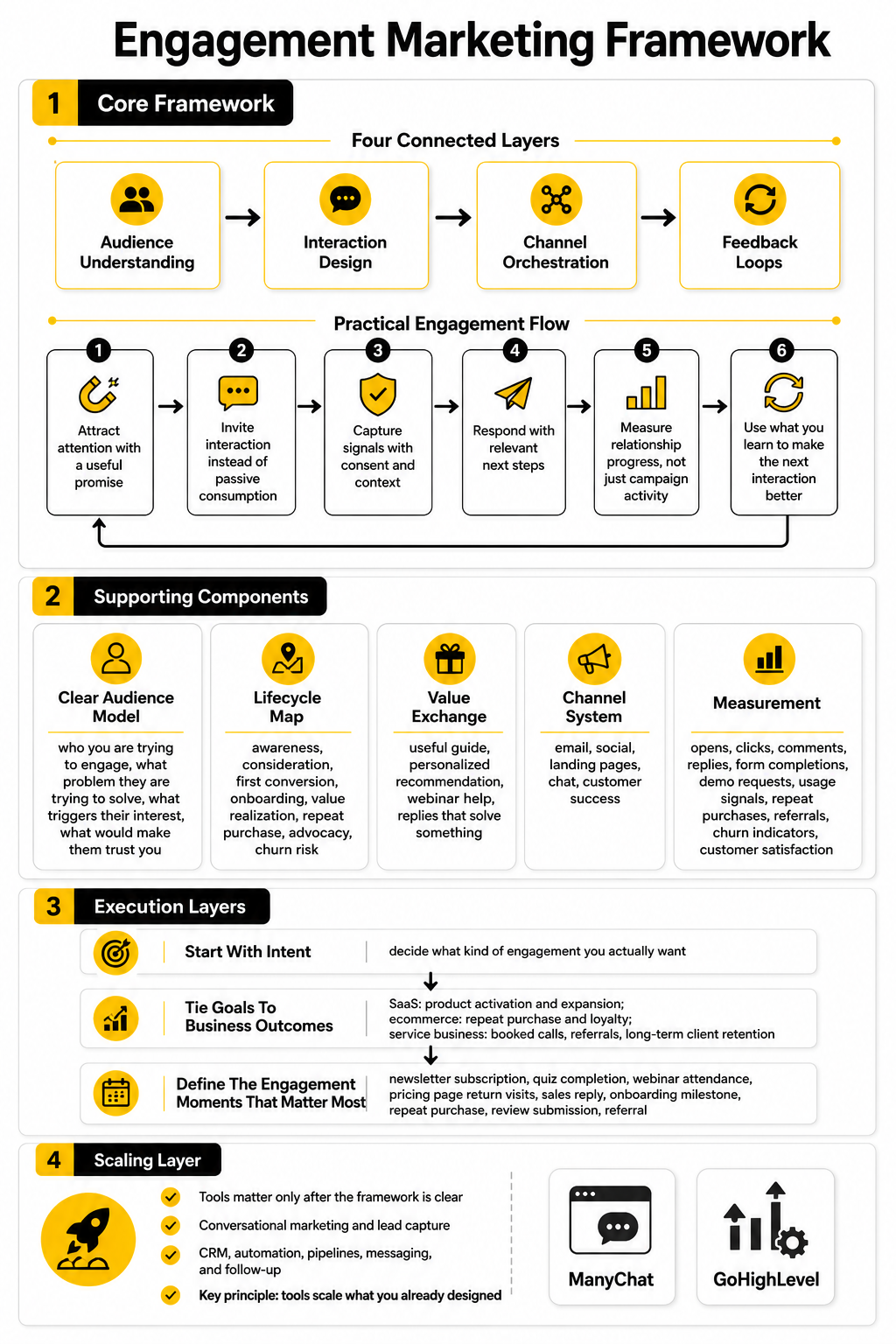
This is why privacy, preference centers, unsubscribe flows, and message frequency are engagement issues. A customer who can control the relationship is more likely to keep it. A customer who feels trapped, confused, or over-messaged will look for the exit.
The Tradeoff Between Automation And Human Judgment
Automation gives engagement marketing scale. Human judgment gives it depth. The mistake is trying to make one replace the other.
Automation should handle predictable moments: welcome flows, reminders, confirmations, routing, segmentation, abandoned checkout, onboarding prompts, review requests, and reactivation sequences. Human judgment should handle moments with emotional weight, strategic value, ambiguity, or high risk. A frustrated customer, a serious buyer, a complex objection, or a major account should not feel like they are trapped in a workflow.
The best systems define escalation rules. If a lead replies with a buying question, route it quickly. If a customer mentions cancellation, create a human task. If a high-value account becomes inactive, trigger personal outreach instead of another generic email. That is how automation supports the relationship instead of flattening it.
Scaling Engagement Without Creating Noise
Scaling engagement marketing does not mean multiplying every message. It means increasing relevance without increasing friction. That requires restraint.
A growing business usually hits a point where more teams want to message the same audience. Product wants announcements. Sales wants follow-up. Marketing wants nurture. Customer success wants onboarding. Events wants registrations. Leadership wants promotions. Without governance, the customer gets buried.
Message governance solves this. It defines who can message which segment, how often, through which channels, and with what priority. This may sound operational, but it protects the customer experience. It also protects performance because over-messaging quietly destroys open rates, reply quality, unsubscribe rates, and trust.
Channel Expansion Should Follow Behavior
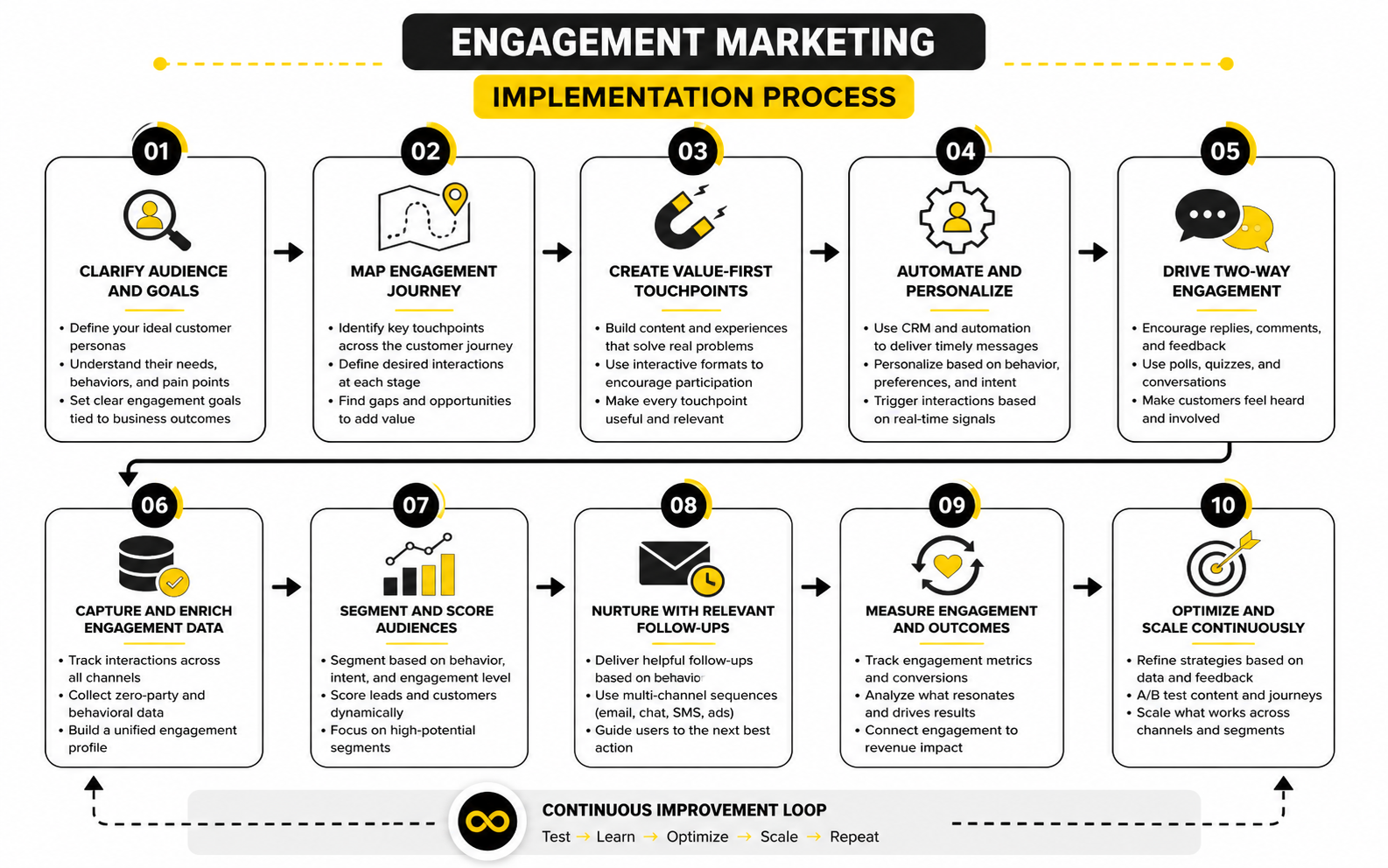
Do not add a channel because it is trending. Add it because customer behavior makes the channel useful. This sounds obvious, but many brands do the opposite.
If customers ask questions in Instagram DMs, conversational automation may be worth building. If buyers need deep evaluation, webinars and comparison content may matter more than short-form social. If customers miss appointments, SMS reminders may create immediate value. If onboarding requires education, lifecycle email and in-app prompts may do more than another ad campaign.
This is where tools should be selected by job, not hype. Buffer can help teams manage social publishing when consistency is the bottleneck. Cal.com can reduce booking friction when sales calls, consultations, or onboarding sessions are important engagement points. Replo can support ecommerce landing page execution when the team needs faster testing around product education, offers, and conversion paths.
AI Should Improve Decisions, Not Just Output
AI can help engagement marketing move faster, but speed is not the main advantage. The better advantage is decision support. AI can help summarize customer conversations, identify common objections, classify support themes, draft segment-specific content, recommend next steps, and surface patterns humans might miss.
But AI also creates risk when teams use it to produce more low-quality communication. Customers already ignore irrelevant messages at scale; Attentive’s 2025 consumer trends research highlights that 81% of consumers ignore irrelevant marketing messages (2025 personalized marketing trends). AI-generated volume does not fix irrelevance. It can make irrelevance cheaper and faster.
Use AI where it improves accuracy, timing, or usefulness. Do not use it to flood the customer journey with more “personalized” content that says nothing new. Better engagement marketing is not more output. It is better judgment, scaled carefully.
Segmentation Should Stay Useful
Segmentation is powerful until it becomes too complicated to manage. A team can create dozens of segments, each with different messages, triggers, and paths. That looks sophisticated on a whiteboard but often becomes impossible to maintain.
The best segmentation is based on meaningful differences in intent, value, lifecycle stage, behavior, or need. A first-time visitor is different from a repeat buyer. A pricing page visitor is different from a newsletter reader. A churn-risk customer is different from a power user. Those differences deserve different treatment because their context is genuinely different.
Avoid segments that do not change the action. If two segments receive the same message, same offer, same timing, and same follow-up, they probably do not need to be separate segments. Segmentation should make the experience better, not make the system harder to operate.
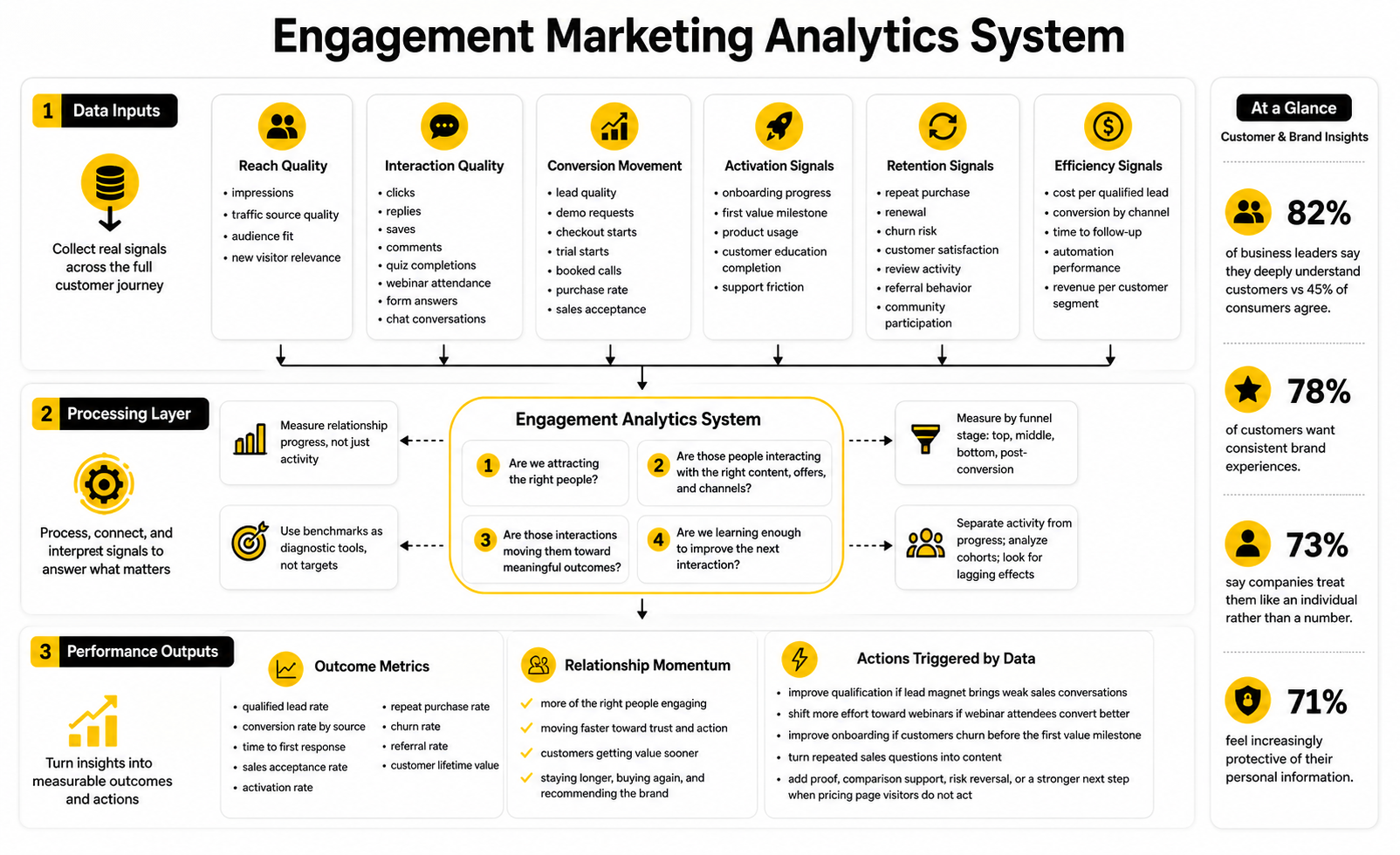
The Risk Of Optimizing For The Wrong Engagement
Not all engagement is healthy. Some interactions look good in a dashboard but weaken the brand. Controversial content can drive comments while attracting poor-fit audiences. Aggressive discounts can drive clicks while training customers to wait. Overly clever quizzes can capture data that never improves the buying journey.
This is why every engagement metric needs a quality check. Ask whether the interaction created better customers, better conversations, better retention, or better insight. If it only created activity, be careful.
A strong engagement marketing strategy protects against this by defining valuable engagement in advance. Valuable engagement might be a qualified reply, a completed onboarding step, a meaningful product action, a repeat purchase, a referral, or a sales conversation with clear intent. Once that is defined, the team can stop chasing shallow wins.
Operational Alignment Becomes The Real Moat
At a certain point, the biggest advantage is not the channel or the tool. It is alignment. The companies that win with engagement marketing usually have better coordination between marketing, sales, customer success, support, product, and leadership.
That alignment shows up in small but powerful ways. Sales knows what content a lead consumed before the call. Customer success knows what promise was made before purchase. Marketing sees which objections appear after demo. Product sees which features create activation or confusion. Support insights feed back into education and onboarding.
This is hard to copy because it is not just software. It is a way of operating. A competitor can copy your funnel, ad angle, or email format, but it is much harder to copy a customer learning system that improves every month.
Budgeting For Engagement Marketing
Engagement marketing budgets should not be split only by channel. They should be split by role in the customer journey. Some budget should create demand, some should capture intent, some should convert, some should activate, and some should retain.
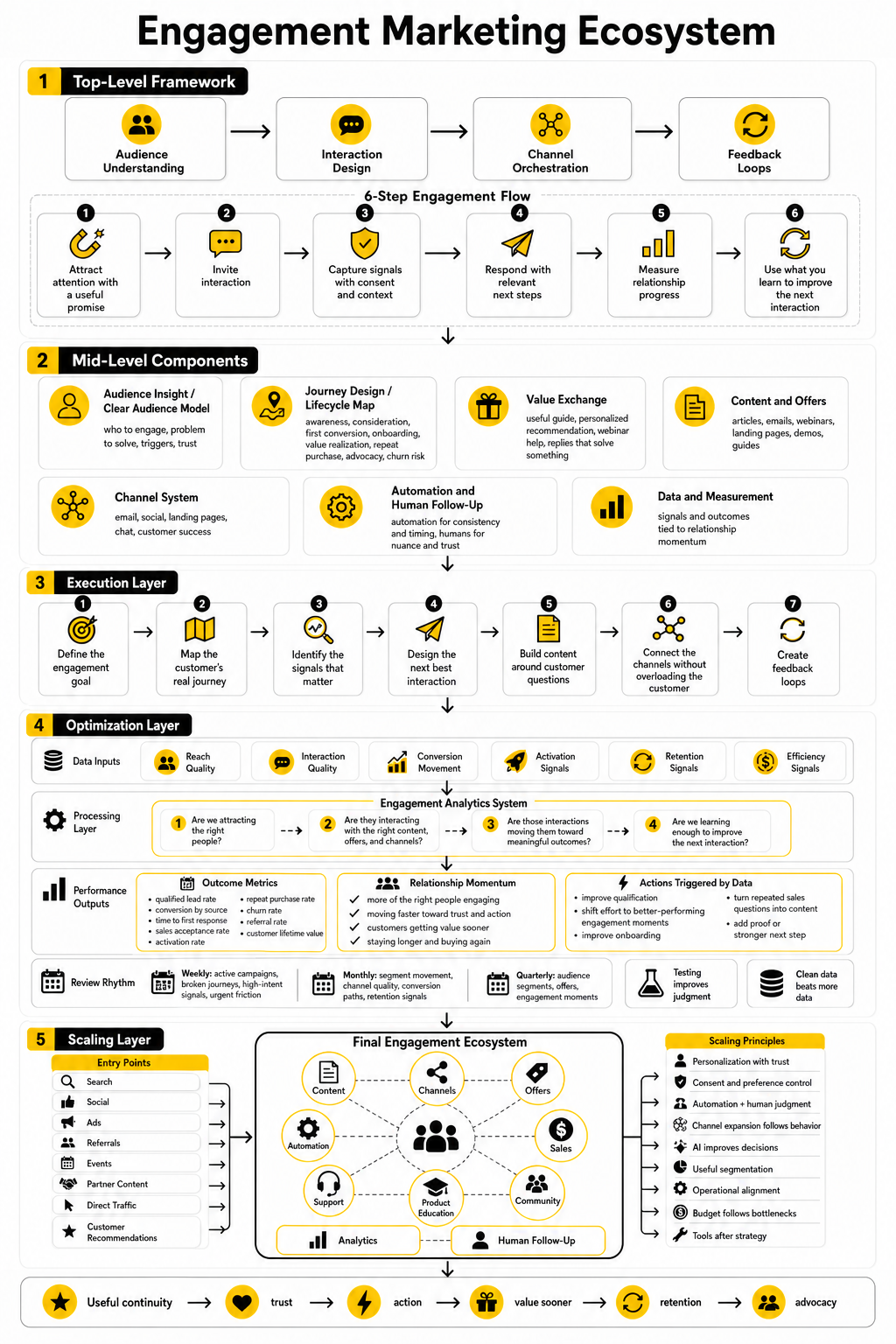
This prevents the common mistake of overfunding acquisition while underfunding the moments that make acquisition profitable. If the business spends heavily on ads but the follow-up is weak, the budget leaks. If the sales team gets leads but onboarding fails, the business pays twice: once to acquire and again through churn.
Budget should follow bottlenecks. If traffic is strong but conversion is weak, improve landing pages, proof, offers, and follow-up. If conversion is strong but retention is weak, improve onboarding and customer education. If retention is strong but acquisition is weak, invest in content, partnerships, referral systems, and paid distribution.
Tool Stack Decisions Should Stay Boring
A good tool stack should make engagement easier to execute and easier to understand. It should not become the strategy. The more advanced the business becomes, the more dangerous tool complexity can be.
Start with the capabilities you actually need: CRM, email, SMS, forms, landing pages, analytics, social scheduling, chat, calendar booking, customer support, and reporting. Then decide whether those should live in one platform or a connected stack. The right answer depends on team size, budget, technical skill, sales process, and customer journey complexity.
For many service businesses and agencies, an all-in-one system like GoHighLevel can reduce tool sprawl when CRM, automation, booking, funnels, and client communication need to work together. For leaner funnel builds, Systeme.io or ClickFunnels may fit when the main need is offer packaging and conversion flow. The decision should be based on execution clarity, not feature lists.
The Expert Standard: Fewer Random Touchpoints, More Meaningful Moments
The mature version of engagement marketing is not louder. It is cleaner. Fewer random messages, stronger signals, better timing, clearer offers, and more useful follow-up.
This is where the strategy becomes very practical. Remove workflows that no longer perform. Combine segments that do not need to be separate. Cut content that does not answer a real customer question. Add human outreach where automation is weakening trust. Improve the moments where customers hesitate, stall, or churn.
The expert standard is simple: every major interaction should have a reason, a signal, and a next step. If it does not, it probably does not belong in the journey. Engagement marketing gets stronger when the customer feels less pressure and more progress.
Build a stronger local presence with BAAM AI
Turn your website, Google profile, social channels, and AI visibility into one growth engine
Most businesses do not need more random marketing activity. They need a consistent presence system that helps the right people find them, trust them, and take action. BAAM AI brings strategy, local SEO, website updates, Google Maps visibility, social content, AI-search readiness, media production, and reporting into one practical monthly engine.
If you want your marketing to keep working after the campaign ends, start with a free BAAM AI presence audit. See how your business shows up today and where the fastest visibility wins are at BAAM AI.